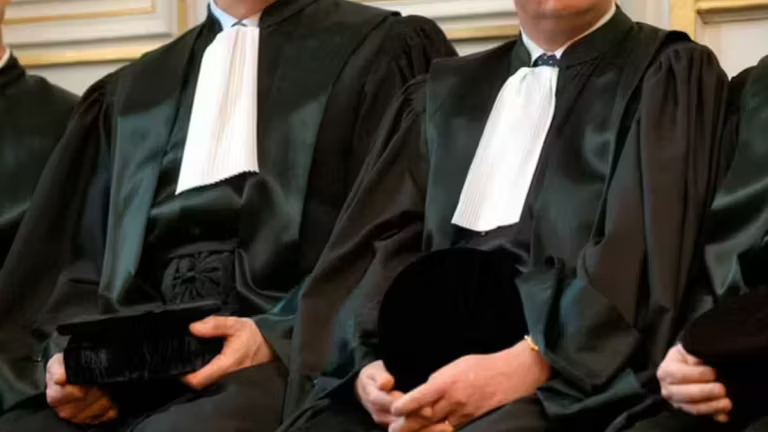
The courts have ruled on the use of a less-lethal launcher during a protest against pension reform. On Monday, January 12, the Paris Criminal Court sentenced a police officer to eight months' imprisonment, suspended, for firing shots deemed unlawful against two demonstrators in January 2020. The court ruled that the use of force was neither necessary nor proportionate, while also rejecting any additional penalty such as a ban on carrying weapons and any entry of the conviction on his criminal record. This decision comes in a sensitive context, marked by ongoing debates on maintaining public order and the use of so-called less-lethal weapons. The court found him criminally responsible but mitigated the sentence in light of the operational context and the defendant's professional background.
The shots were deemed disproportionate in a context of tension.
The events took place on January 9, 2020, during a national day of mobilization against a proposed pension reform. The march, which began at Place de la République, reached the Saint-Lazare train station area when clashes broke out between police and demonstrators. It was during this tense situation that the police officer used his less-lethal launcher twice. According to the court's analysis, the first shot struck a 65-year-old demonstrator while the officer was at a distance far below the standards set by operational guidelines. The rules in force stipulate firing distances between 10 and 50 meters, but the observed distance was approximately two meters. The footage submitted as evidence shows the victim collapsing immediately after the impact, amidst a general panic within the march. A few minutes later, the same officer again opened fire on another protester, aged 41, this time located an estimated distance of eight to ten meters, inside a police cordon where tear gas was being dispersed. The court noted that the situation, although chaotic, did not justify the use of force at that distance, nor under those conditions of close proximity. The prosecution also acknowledged that while the intervention was part of a public order mission, it did not comply with the principle of proportionality required by law.
A measured condemnation, without direct professional sanctions
The sentence handed down is in line with the prosecutor's recommendations. An eight-month suspended prison sentence was imposed, without probation or any further adjustments. The court, however, refused to impose a firearms ban, a significant decision given the nature of the offense. It also granted the request to keep the conviction from the officer's criminal record, citing the officer's service record and the operational context of a large-scale national mobilization. In its reasoning, the court emphasized the need to distinguish between the legitimacy of the police intervention and compliance with the rules governing the use of force. It rejected the claim of self-defense, considering that the evidence in the case did not establish an immediate threat justifying firing at such close range. The officer, 32 years old at the time of the incident, has since been transferred to an anti-crime unit in Occitanie. This decision illustrates the delicate balance the criminal justice system must maintain when examining cases of alleged police violence. The court acknowledges the constraints and pressures inherent in law enforcement operations, while emphasizing that doctrines governing the use of intermediate weapons are not mere recommendations, but strict rules that entail the individual responsibility of officers. Through this ruling, the court affirms that the context alone cannot justify blatant departures from the principles of necessity and proportionality.