
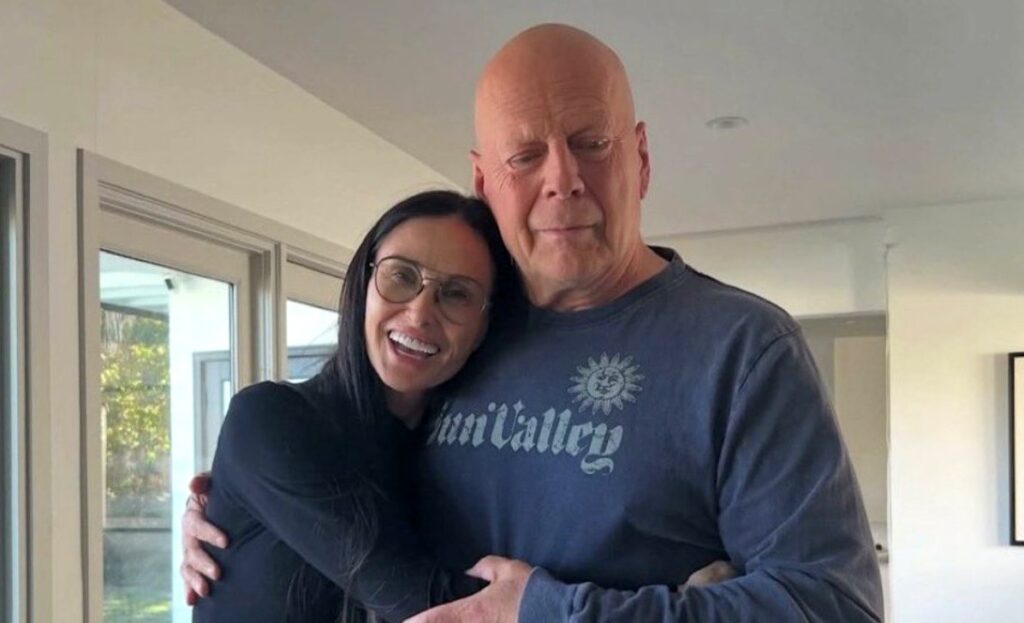
Bruce Willis ' family has announced that they are considering donating his brain to scientific research after his death . This initiative aims to support studies on frontotemporal dementia, a neurodegenerative disease from which the actor suffered and which ended his career in 2022 after an initial diagnosis of aphasia.
Support for research on frontotemporal dementia
In a statement accompanying the release of the book *The Unexpected Journey *, written by his wife Emma Heming-Willis, the family explained that the brain donation would offer researchers the opportunity to study the physical effects of frontotemporal dementia on brain tissue. This form of dementia primarily affects the frontal and temporal lobes of the brain, progressively impacting behavior, communication, and other essential cognitive functions.
Emma Heming-Willis described this decision as one of the most difficult choices the family has had to make, while emphasizing its importance for scientific research and for bringing hope to the millions of people facing similar neurodegenerative disorders.
A unique opportunity for science
Experts emphasize that post-mortem analysis of the brains of individuals with frontotemporal dementia can provide crucial information about protein abnormalities, potential genetic mutations, and other structural alterations that are difficult to detect during their lifetime. By consenting to this donation, the family hopes that Bruce Willis's gesture will contribute to advancing medical research, improving understanding of the disease, and ultimately helping to develop more effective treatments for patients worldwide.
Bruce Willis's family and friends are preparing for his end of life.
Bruce Willis, aged 70, continues to live surrounded by his family, while his loved ones gradually prepare those around him for the progression of the disease and the inevitable end of life, a process already addressed by Emma Heming-Willis in several recent interviews and writings.