
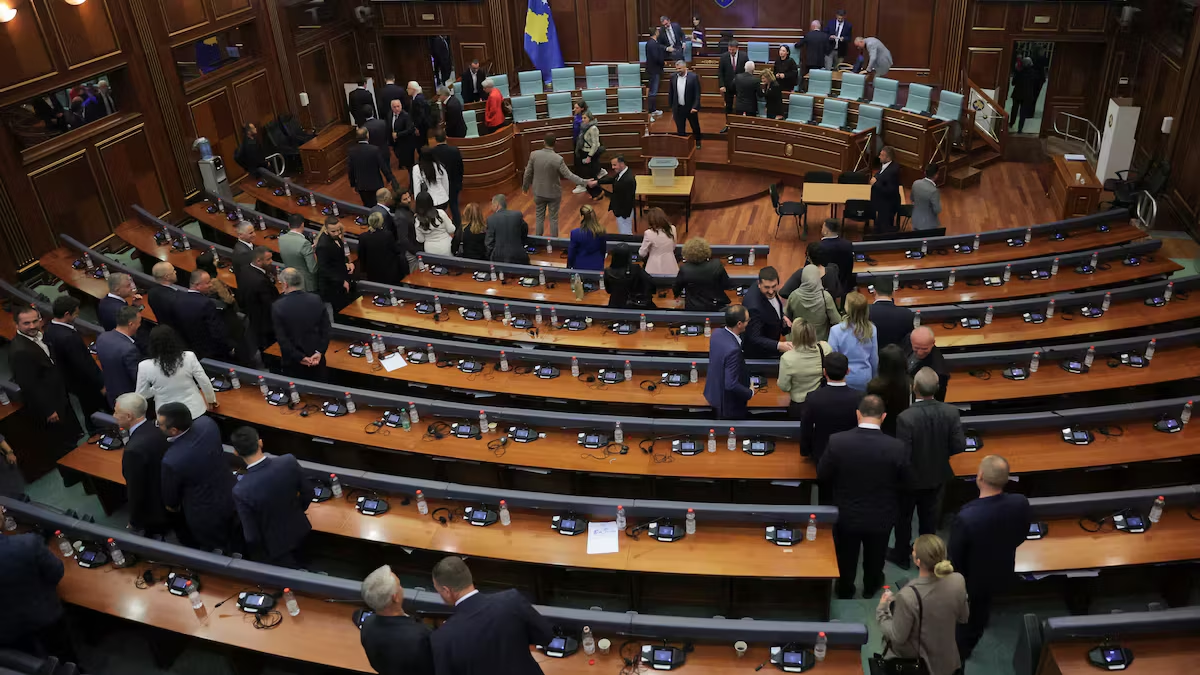
Kosovo is heading towards new snap elections after parliament failed to elect a president, plunging the country back into a major political crisis. Lawmakers were unable to reach an agreement before the midnight deadline set for Tuesday.
The term of outgoing President Vjosa Osmani ended in early April, requiring parliamentarians to appoint a successor within a strict constitutional timeframe. Lacking consensus, this process failed, automatically triggering a new electoral phase.
Prime Minister Albin Kurti failed to unite the opposition parties behind his candidate. Persistent political divisions prevented the formation of a sufficient majority to elect a new head of state.
This institutional deadlock underscores the deep tensions between the country's various political forces. It also highlights the fragility of the Kosovar political system, which has regularly faced similar gridlock since its independence.
Early elections now appear inevitable, in the hope of producing a more stable majority capable of governing and appointing a president. However, there is no guarantee that this new election will provide a lasting solution to the deadlock.
This new crisis comes at a sensitive regional time, where Kosovo's political stability remains a major concern. It could prolong institutional uncertainty and delay the reforms expected in this young European state.


Community
Comments
Comments are open, but protected against spam. Initial posts and comments containing links undergo manual review.
Be the first to comment on this article.