
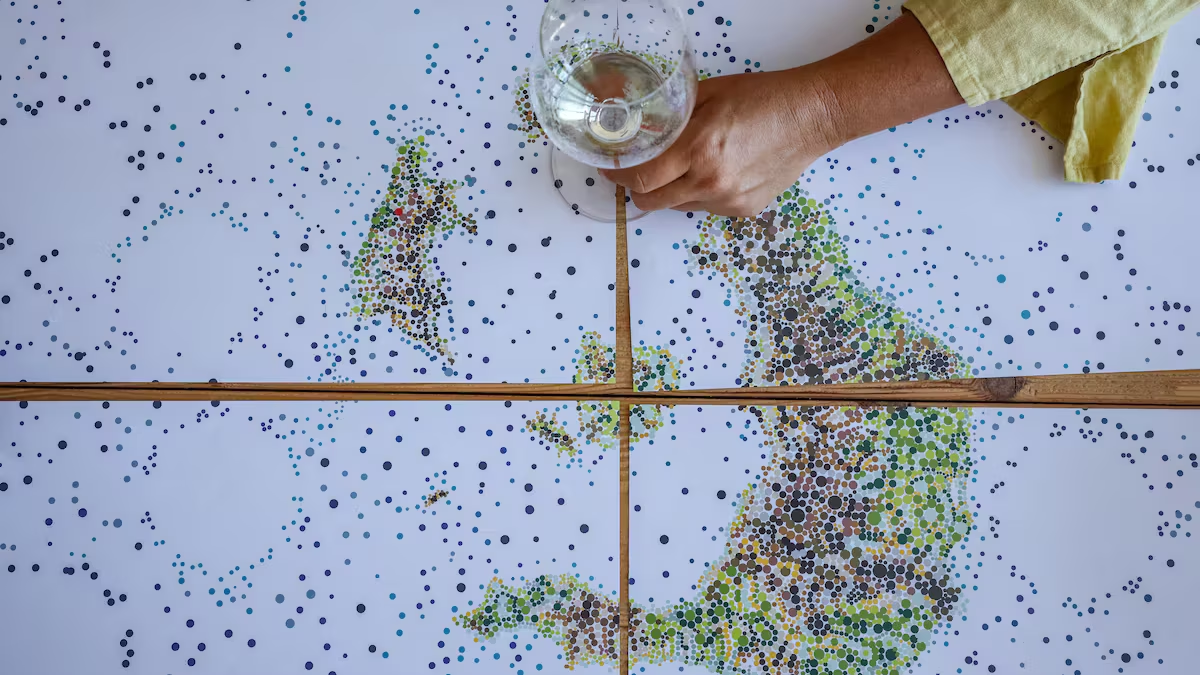
On the Greek island of Santorini, winegrowers are facing the growing effects of climate change. A succession of summers marked by extreme temperatures and very low rainfall between 2023 and 2025 is jeopardizing the island's famous vineyards, renowned in particular for their Assyrtiko grape variety.
In his vineyard, winemaker Yiannis Boutaris shows an old vine of koulouraThis is a traditional technique where the vine shoots are braided into a basket shape to protect the grapes from the wind and sun. Nearly 90 years old, this vine finally succumbed to the heat and lack of water.
“The lack of rain, combined with the absence of cultivation for the past two years, has led to the death of these old vineyards,” explains Boutaris. Despite these difficulties, he affirms his desire to preserve Santorini’s winemaking traditions while adapting cultivation methods to the new climatic conditions.
The consequences are already significant. Assyrtiko grape production has fallen by approximately 80% in three years, leading to a sharp rise in grape prices and a decrease in wine production. Water scarcity is also a major concern for the island's residents and producers.
To address this situation, several winegrowers are experimenting with new solutions. The Sigalas estate, now part of the Kir-Yianni family wine group, is participating in a pilot project conducted with local authorities and scientists aimed at using treated wastewater from homes and hotels to irrigate vineyards.
This initiative is part of a broader search for techniques to preserve Santorini's historic vineyards without abandoning the traditional methods that have made its wines famous. Producers hope to secure the future of this unique winemaking heritage while adapting to an increasingly challenging climate.




Community
Comments
Comments are open, but protected against spam. Initial posts and comments containing links undergo manual review.
Be the first to comment on this article.