The release of compromising videos has ignited a firestorm in the French media landscape. In these images, filmed with a hidden camera in July in a Parisian restaurant, two journalists from the public broadcaster, Thomas Legrand and Patrick Cohen, are seen in conversation with officials from the Socialist Party. The affair, revealed in early September by the satirical magazine L'Incorrect , immediately triggered a flood of reactions.
Faced with the scale of the controversy, Arcom has decided to act. Its board has announced the upcoming hearing, behind closed doors, of the two current presidents: Delphine Ernotte-Cunci for France Télévisions and Sibyle Veil for Radio France. The stated objective: to gather their explanations and observations on the handling of this affair, which directly calls into question the independence and impartiality of the public service.
The videos that caused the scandal
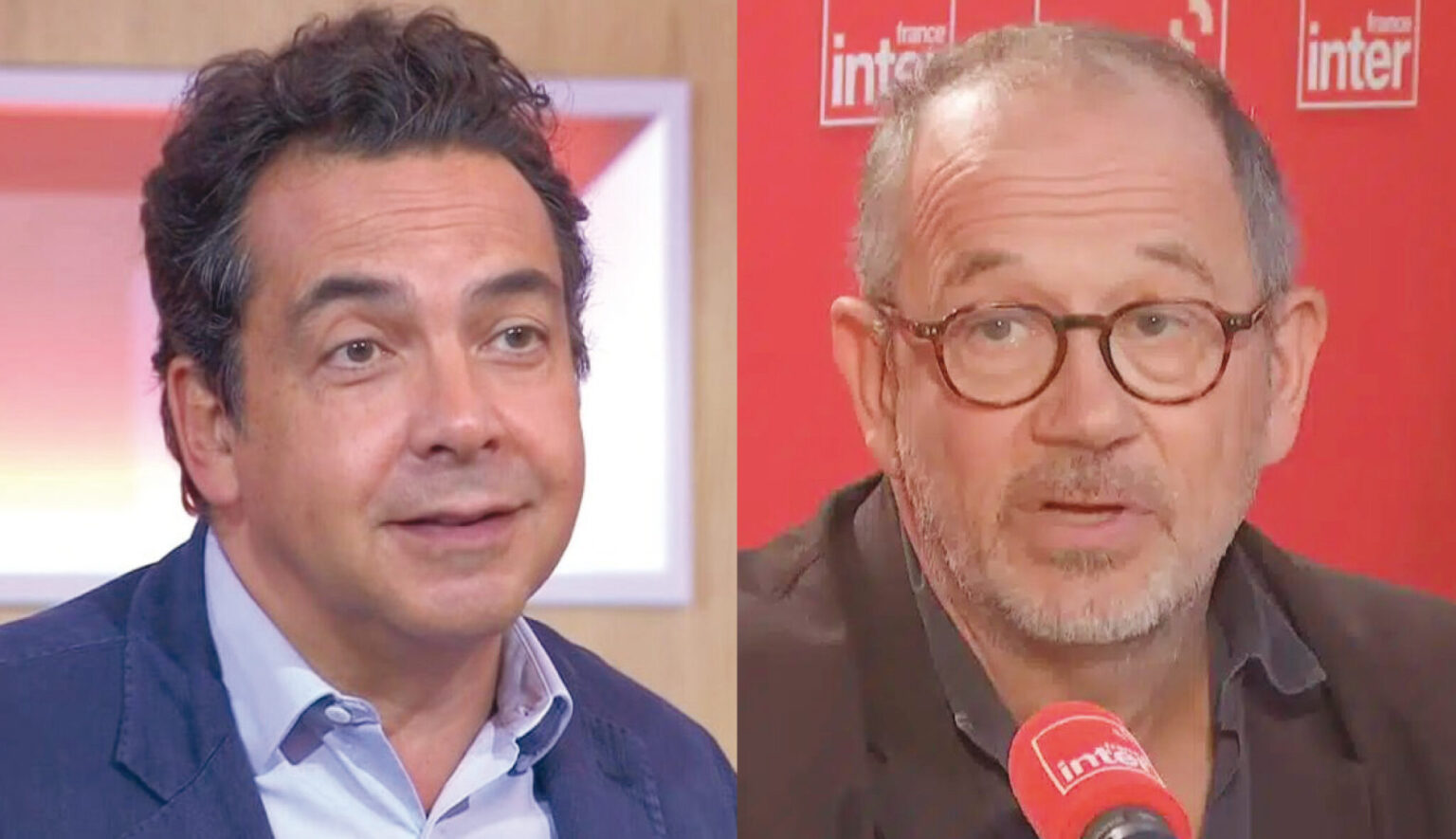
The broadcast segment shows Thomas Legrand, political commentator for France Inter and Libération , and Patrick Cohen, a regular voice on France Inter and a commentator on France 5, in conversation with Pierre Jouvet, Secretary General of the Socialist Party, and Luc Broussy, President of the Socialist Party's National Council. The four men are discussing political strategy in the lead-up to the 2027 presidential election.
In this context, Thomas Legrand uttered a phrase that went viral: "We are doing what is necessary for Rachida Dati, Patrick and me." This statement, interpreted as a hostile declaration towards the Minister of Culture and candidate for Mayor of Paris, immediately sparked outrage.
Political criticism from all directions
The controversy quickly escalated. Right-wing elected officials from the National Rally and La France Insoumise denounced unacceptable collusion between journalists supposed to embody the independence of public service and Socialist Party officials. Rachida Dati herself reacted publicly, demanding explanations. Social media, for its part, seized on the affair, fueling suspicions of partisan journalism.
The journalists' explanations
Patrick Cohen quickly spoke out to contest the interpretation of the images. According to him, it was a "stolen private conversation ," truncated and taken out of context. Far from an admission of collusion, his words had been twisted with malicious intent. Thomas Legrand, for his part, acknowledged the clumsiness of his remarks, while maintaining that they did not reflect a partisan stance. Nevertheless, the pressure became so intense that he gave up his weekly program on France Inter, although he will continue to make occasional appearances on the air.
Immediate sanctions
Radio France urgently decided to suspend Thomas Legrand, who therefore withdrew from his political broadcast. France Télévisions, for its part, reiterated its commitment to journalistic ethics, while indicating that it was awaiting the conclusions of the competent authorities. These measures were not enough to extinguish the fire: for many, they appeared as a bandage on a much deeper wound.
The involvement of the ethics committee
France Télévisions' ethics committee has decided to take up the matter. In a press release, it indicated that it would soon publish a detailed opinion. Its mission: to examine whether the alleged behavior violates the principles of independence and impartiality that public service journalists must respect. This internal approach complements the work of Arcom, which, as a regulator, has broader powers of oversight and sanction.
The position of the departments concerned
Delphine Ernotte and Sibyle Veil now find themselves on the front lines. They will have to answer questions from Arcom and demonstrate that their companies have grasped the scale of the problem. For the two executives, the stakes are crucial: preserving the credibility of France Télévisions and Radio France in a context of widespread suspicion, where every word and every gesture are closely scrutinized.
A crisis of confidence
Above all, this controversy reveals the vulnerability of public service in the face of accusations of bias. In an instant, two renowned journalists found themselves undermined, and with them, the image of neutrality of entire newsrooms. The affair also highlights the dangers of clandestine recordings and their out-of-context dissemination, in a media landscape already marked by polarization and the well-justified mistrust of the French.