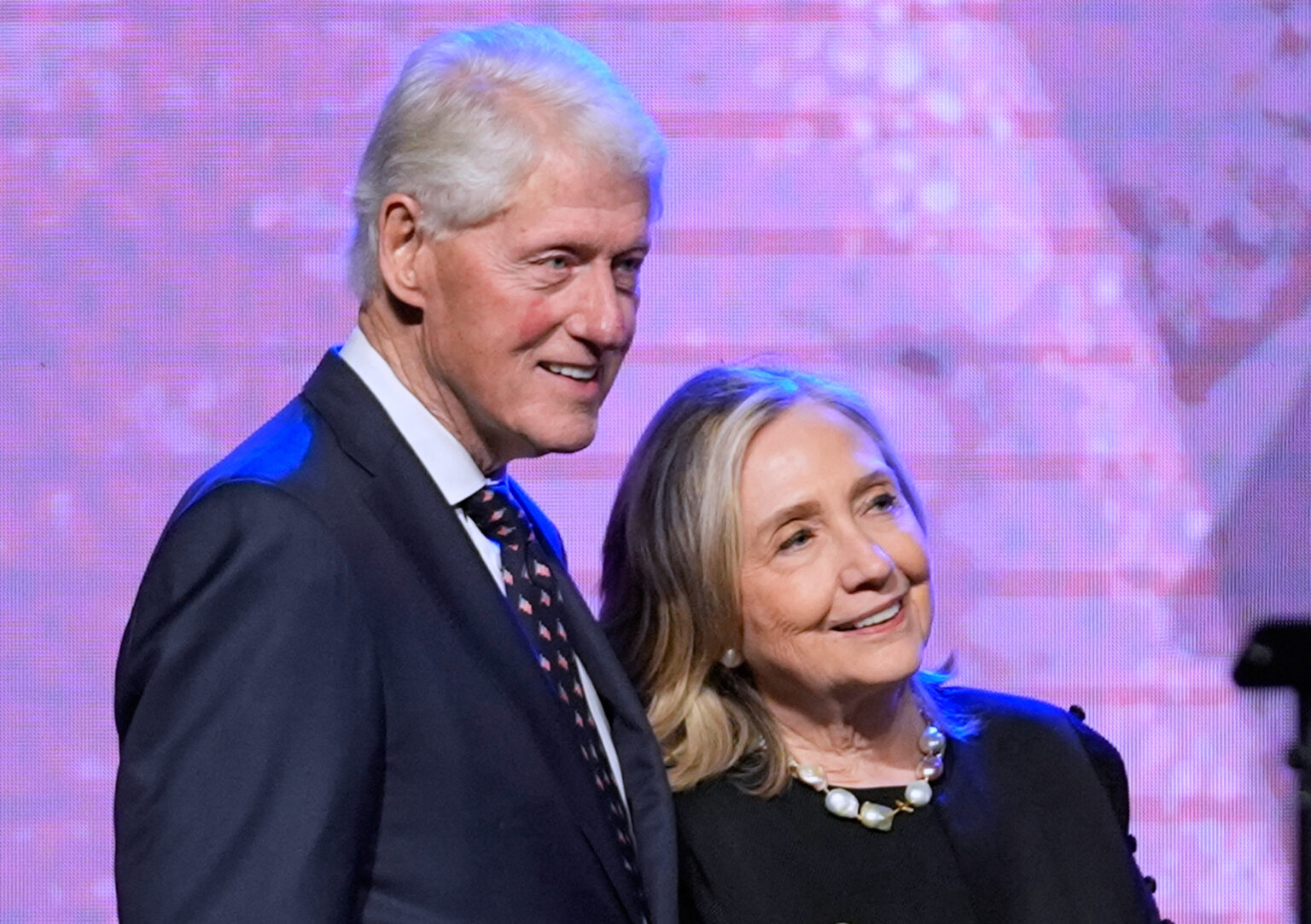
Former President Bill Clinton and former Secretary of State Hillary Clinton finalized an agreement Tuesday with House Republicans to testify this month in an investigation into Jeffrey Epstein, bowing to the threat of a vote finding them guilty of contempt of Congress.
Hillary Clinton will testify before the House Oversight Committee on February 26, and Bill Clinton will appear on February 27. This will be the first time that members of Congress have compelled a former president to testify.
This arrangement comes after months of negotiations between the two sides, with Republicans seeking to make the Clintons a central focus of the commission's investigation into Epstein, a convicted sex offender who committed suicide in a New York jail cell in 2019, and Ghislaine Maxwell, his former partner.
« We look forward to questioning the Clintons next«
"We look forward to now questioning the Clintons as part of our investigation into the horrific crimes of Epstein and Maxwell, in order to bring transparency and accountability to the American people and to the victims ," said Representative James Comer, chairman of the House Oversight Committee, in a statement.
For months, the Clintons resisted subpoenas from the committee, but House Republicans, with the support of a few Democrats, have advanced criminal charges for contempt of Congress toward a potential vote this week. This would expose the Clintons to hefty fines and even prison sentences if convicted.
House Speaker Mike Johnson said Tuesday that any efforts to convict them of contempt of Congress were "on hold".
Even though the Clintons yielded to pressure, negotiations between Republican lawmakers and their lawyers were marked by mistrust, with both sides arguing over the details of the depositions. They agreed that the depositions would be transcribed and videotaped, Comer said. The hostility is likely to intensify, as Republicans relish the opportunity to interrogate old political adversaries under oath.
Bill Clinton was very close to Epstein
Bill Clinton, like several other highly influential men, had a very close relationship with Epstein in the late 1990s and early 2000s. He was not accused of wrongdoing in connection with his interactions with the now-deceased financier.
The Clintons stated that they were unaware that Epstein was sexually abusing underage girls.
The Clintons argued that the subpoenas demanding their testimony were invalid and offered to submit sworn affidavits regarding their limited knowledge of Epstein's crimes. But as Comer threatened to pursue contempt of Congress charges, they began looking for a way out.
The Clintons have remained highly critical of Comer's handling of the Epstein investigation and claim he is more interested in getting them to testify than in holding the Trump administration accountable for its handling of the release of its Epstein files.
Nevertheless, the threat of a vote on the contempt charges raised the possibility that Congress might, for the first time, use one of its most severe sanctions against a former president. Historically, Congress has shown deference to former presidents. None has ever been compelled to testify before lawmakers, although some have done so voluntarily.