
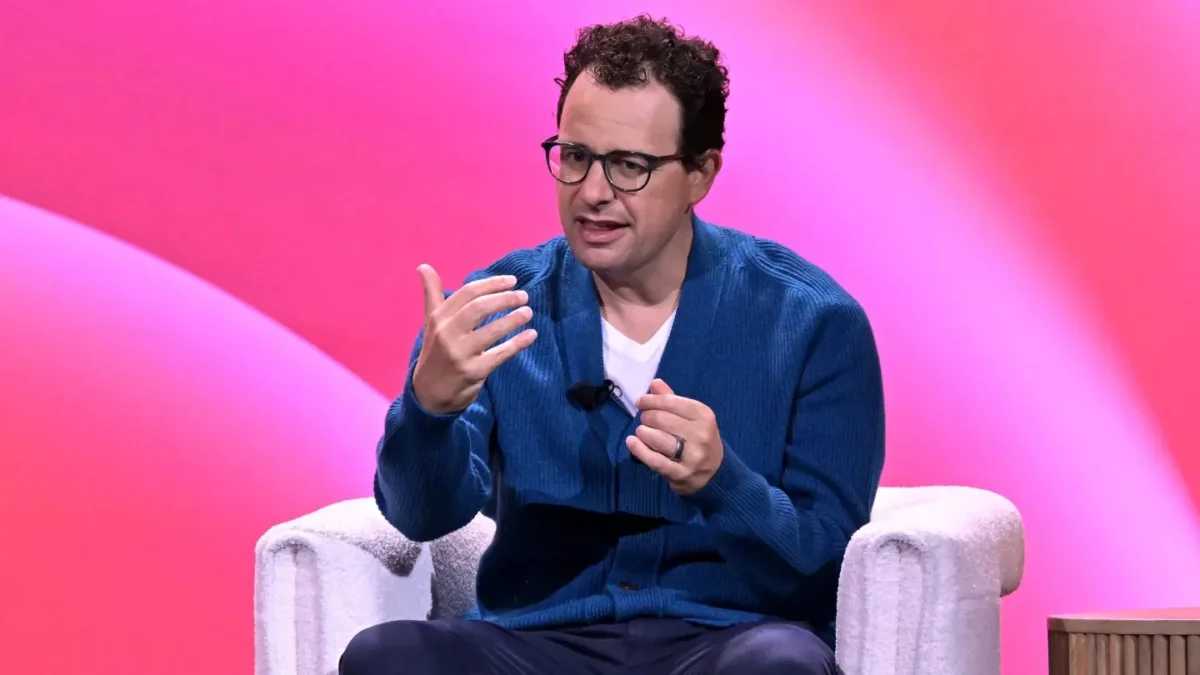
In Silicon Valley, they love both the visionary leaders and the worrisome ones. Dario Amodei, CEO of Anthropic, manages the unusual balancing act of doing both. A less flamboyant figure than some, he has nonetheless made his mark in the artificial intelligence debate, even seeing his name circulate after tensions arose in the United States surrounding the use of AI tools in a military context—a minefield where defense contracts boost the bottom line but can tarnish a reputation.
Often ranked among the most "alarmist" leaders, Amodei disputes the label without entirely rejecting it. In a lengthy article published in late January, he says he rejects "catastrophic" scenarios worthy of science fiction, while calling for a face-to-face confrontation with what he describes as extreme risks. And he slips in a sentence that rings out like a deadline: if the current pace continues, AI could surpass humans in most fields within a few years. Few words, many implications, including for the real economy and skilled employment.
Security as a selling point, power as a horizon
Anthropic, founded in 2021 by former OpenAI executives including Dario and Daniela Amodei, was built on a simple promise: to develop high-performing models without playing at being sorcerer's apprentices. The Claude family of models targets professional clients, with safeguards, risk assessments, and usage limits highlighted as a hallmark of the company. This very "belt and suspenders" approach has also led to it being described in the American press as a hotbed of "AI catastrophism," which is ironic for a company that has to convince industrial and government agencies to sign contracts.
Meanwhile, the battle is being fought with billions of dollars, chips, and data centers. Competition is intensifying between American and European players, with close partnerships with cloud giants and a shared obsession: acquiring the computing firepower that makes the difference between an enticing demo and a product that can handle the load. For businesses, the stakes are tangible: productivity, automation, new services, but also technological dependence, energy costs, and ultimately, digital sovereignty.
On the European side, the framework is becoming more restrictive and precise with the AI Act, which imposes transparency and security obligations on certain systems, including general-purpose models. Amodei is speaking at the very moment when the industry is accelerating and authorities are seeking a balance between innovation and protection, without turning regulation into a hindrance or a sieve. One reality remains, which the reader can already guess: those who promise the most useful AI will also have to prove that it remains controllable, because trust is not measured solely in teraflops.


Community
Comments
Comments are open, but protected against spam. Initial posts and comments containing links undergo manual review.
Be the first to comment on this article.