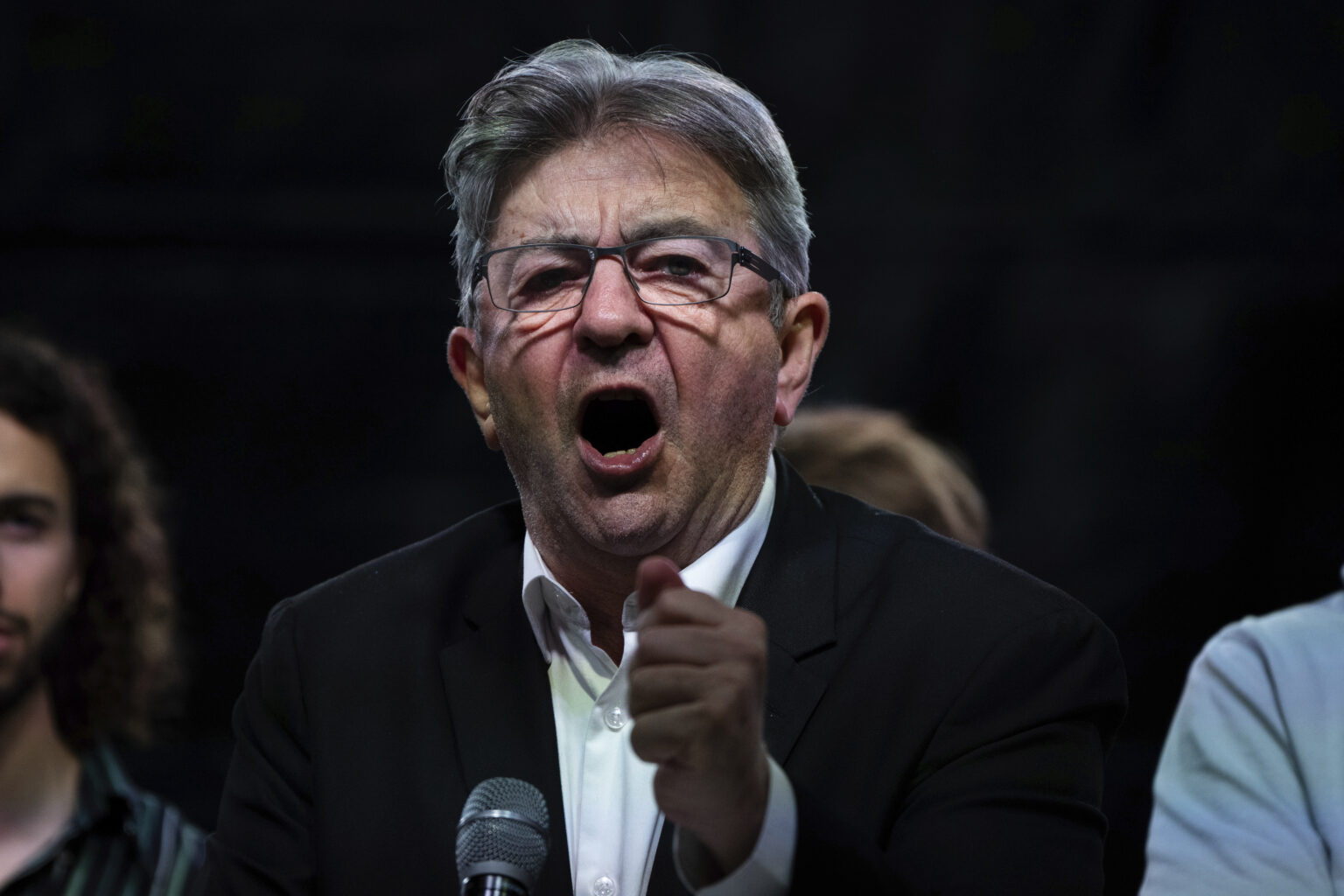
Huge controversy! During a rally organized in Lyon by Jean-Luc Mélenchon , leader of La France insoumise , he referred to the Jeffrey Epstein affair , the American pimp, making light of the way his name is pronounced: "The Epstein affair? Ah, I meant 'Epstine', sorry! It sounds more Russian, so now you'll say 'Einstine' instead of Einstein, 'Frankenstine' instead of Frankenstein. There you go, everyone understands how it should be done."
This statement, deemed anti-Semitic, was widely condemned on Friday by the political and media establishment. Discover the reactions to Jean-Luc Mélenchon's remarks:
Emmanuel Grégoire: “With his remarks about the pronunciation of Epstein, Jean-Luc Mélenchon has crossed a chilling new line. When one can no longer speak without invoking innuendo that reawakens nauseating antisemitic stereotypes, the excuse of clumsiness doesn't hold water: it's a deliberate strategy. We will never allow these calculated ambiguities, which wound, divide, and endanger our Jewish fellow citizens, to flourish. We will not let the shame that has befallen him sweep away the foundations of our Republic. Antisemitism is a poison. And in Paris, we will fight it relentlessly, always.”
Laurent Nunez: "These are despicable remarks. The masks must come off. This is reminiscent of the practices of Dieudonné or Alain Soral."
Jordan Bardella: "While Quentin's tragedy should have prompted him to exercise restraint and calm, Jean-Luc Mélenchon persists in his violence, with a brutal and chilling rally in Lyon, tinged with open anti-Semitic undertones. Banning LFI is a moral imperative for all political leaders committed to the Republic and civil peace."
Gabriel Attal: "Jean-Luc Mélenchon has crossed every line . Every single one. Anti-Semitism is monstrous. Using it is shameful. Disgusting."
Bernard Cazeneuve: "In the city of Jean Moulin and Robert Badinter, where collaborationist militias delivered so many Jews to the death camps, how can one sink into this filth without shame or dishonor? Mélenchon dreamed of being Mitterrand, he ends up like Soral."
Lucie Castets: "No, these allusions will not stand, Jean-Luc Mélenchon must address them. Fueling such confusion through this low-grade conspiracy theory with its anti-Semitic undertones is unacceptable. This kind of talk really has to stop."
Marine Tondelier: "No, but that's not right! Really, nothing about these remarks makes sense. Nothing. That's enough now."
Raphaël Glucksmann: “Making an audience laugh by playing on Epstein’s ‘Stein’ like Mélenchon, equating Jew=Zionist=genocidaire=Nazi like Hassan, targeting the ‘celestial dragons’ like Guiraud…: this is systematic. And this is called anti-Semitism. Let’s stop being surprised. And let’s fight them.”
Alexis Corbière: "Jean-Luc, if you're reading this. A leader of the left never makes light of the pronunciation of a foreign name, implying there's a political agenda behind it. That's not our tradition. You're reveling in making yourself hated to prevent unity against the far right. Irresponsible."
Alice Cordier: "He absolutely must be given his medication. He's been delirious for days."
Julien Dray: "Listen carefully to both speeches... and you'll understand that they both share the same hatred of Jews... What a sad end to life, what an absolute shipwreck!"
Valérie Pécresse: “This is not a slip-up, this is a strategy. When the words, the innuendo, and the references recall the obsessions of Soral and Dieudonné, it is no longer a matter of ambiguity but of a deliberate stance. The question is now more than ever before posed to the rest of the left: break with Jean-Luc Mélenchon. Break completely. Break definitively!”
Jérôme Guedj: “What’s most insane is that, to divert attention from the Young Guard and the violence, Mélenchon is ready to play the antisemitic card again. Convinced he’s winning on both counts: making people forget the Young Guard, playing the victim in the face of the establishment, rebranded as officialdom . (…) When Mélenchon speaks like Soral, the cautious outrage is worse: a country collapses because of the inertia of those who remain silent. Is it so difficult, @faureolivier @marinetondelier, to get a clear condemnation of Mélenchon’s antisemitism and finally draw the necessary conclusions?”
Jean-Michel Aphatie: “It’s a substitution on a historical scale. Thirty or forty years ago, Jean-Marie Le Pen shocked, frightened, and scandalized Republicans and Democrats. Today, it’s Jean-Luc Mélenchon, and his followers, who play that role. No doubt a devil is always needed in debates. But we still need to understand why someone, at a certain point, willingly or unwillingly, dons the villainous mantle of the bad guy.”
For Jean-Marie Le Pen, it was his original political identity. Born into far-right politics, he carried its flaws with him until the end of his career. The situation is different for Jean-Luc Mélenchon. A budding Trotskyist in his youth, he then immersed himself with relish in the world of social democracy. Senator, minister, weight gain—he took it all. It was nearing sixty, in the early 2010s, when he left the Socialist Party, which he could no longer tolerate—a feeling that was mutual—that everything changed. Roaring from the podium and hurling insults in his monologues, he crafted the persona of an unyielding tribune. Authoritarian, he built a top-down party where only his word counted, everyone in the organization being obliged to conform to it. By imposing his persona, he isolated himself. That was his happiness.
This stance, in fact, seemed to fulfill his expectations and satisfy his emotions. Lacking true power, that of the State, he gained influence over his followers and the sometimes fearful attention of his fellow citizens. A noteworthy fact. Apart from two or three older figures, it is young men and women, in their thirties and forties, who now accompany the man who is over three-quarters of a century old. This youthful support reinforces his patriarchal position and simultaneously rejuvenates him, drawing him back to his primal impulses, those of revolution and disorder.
What more can one expect from political life? Victory? Jean-Luc Mélenchon knows it will never come. This explains his inability to back down, to seek compromises, his propensity to humiliate those who are supposed to be his allies. The comfort of this closed, hermetic world, inaccessible to ordinary people, makes him indifferent to all the accusations against him. He reigns over his kingdom. He shares his power with no one. Those close to him admire him. Every five years, he enjoys the pleasure of participating in the Grand Tournament. Already, he is assured of a place in the long political history of wordsmiths.
Thus, over time, Jean-Luc Mélenchon has come to embody this role that no one initially imagined for him: the one who now inspires more fear than the heir of Jean-Marie Le Pen.
The whole affair Affaire Epstein : les révélations : la chronologie