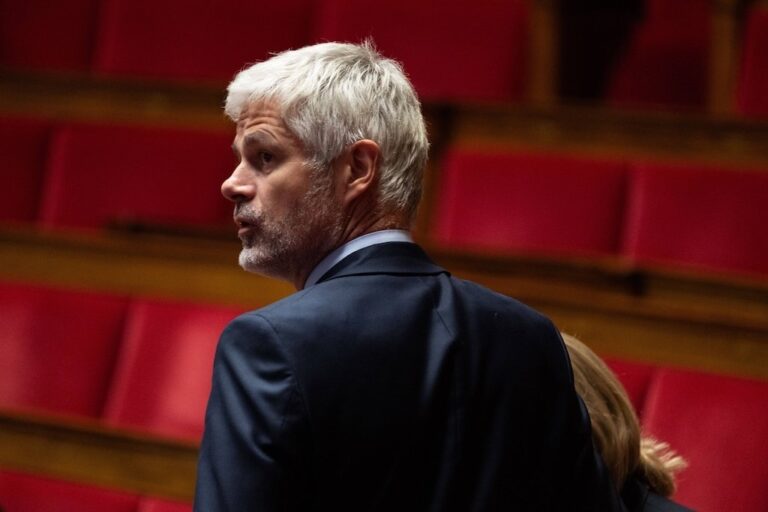
On January 22nd, the Republicans will have their annual day to set the agenda for the National Assembly. This parliamentary slot, which the group led by Laurent Wauquiez intends to use to clarify the coherence of a series of deliberately divisive bills, will be crucial. The Muslim Brotherhood, illegal immigration, headscarves for minors, and state authority: the chosen themes will force each group to vote openly on explosive issues.
Among the proposals is a resolution to add the Muslim Brotherhood movement to the European Union's list of terrorist organizations. A symbolic measure from a legal standpoint, but politically significant, it is supported by several official reports denouncing a strategy of ideological, social, and religious infiltration. Members of the Republicans (LR) party condemn an organization that, without directly advocating armed violence, contributes to structuring a counter-society based on Sharia law and communal segregation.
71% of French people support banning headscarves in public spaces for minors.
Championed by Laurent Wauquiez, the ban on headscarves for minors in public spaces will be the subject of a second, controversial proposal, presented as a measure to protect children and reject a symbol created by political Islam. While the issue is divisive, even within the Minister of the Interior, Laurent Nuñez, who has called the measure "too stigmatizing," the French are nevertheless overwhelmingly in favor of this ban (71% of French people support banning headscarves in public spaces for girls under 15, according to an Ifop-Fiducial poll from June 3, 2025).
Among our European neighbors, Austria has already taken this step. Parliament has approved a ban on the hijab in schools for girls under 14, justifying it by the need to protect young girls. What is presented as "unthinkable" in France already exists elsewhere in Europe.
Immigration: €1,2 billion for housing undocumented immigrants
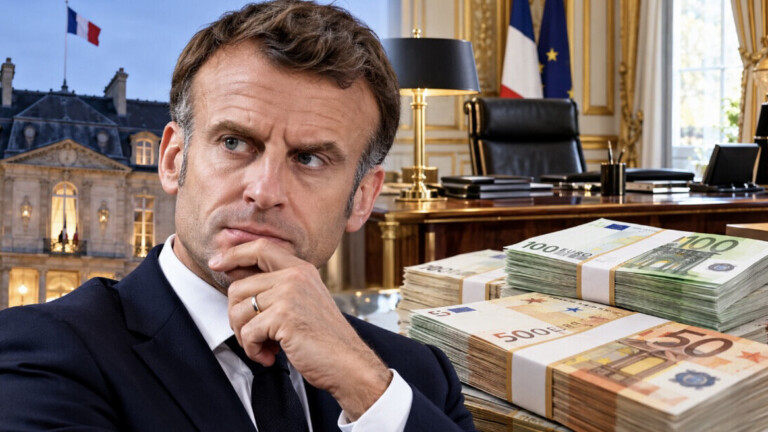
On the issue of migration, the Republicans want to restrict the use of emergency housing for undocumented immigrants. A national priority, a matter of budgetary constraints, the issue touches not only on immigration but also on public spending. While the state is already struggling to house the most vulnerable French citizens, and while retirees are sometimes forced to live in their cars, 30,000 hotel rooms are financed every night for undocumented individuals—the equivalent of the cities of Auxerre or Périgueux—at the taxpayer's expense. Indeed, according to the Court of Auditors, the state allocates more than €1,2 billion annually to emergency housing for migrants, and 40 to 60% of the places in requisitioned hotel rooms are given to undocumented immigrants. When French citizens sleep on the streets, this imbalance fuels a profound sense of injustice and reinforces the perception of a state that has lost sight of its priorities.
The LR (Les Républicains) initiative also includes proposals to suspend social benefits for perpetrators of violence during demonstrations, to establish a presumption of self-defense for law enforcement officers in the performance of their duties, and to combat the proliferation of administrative agencies. All of these measures reflect a desire to reaffirm the authority of the state in order to put an end to disorder and impunity.
The thorny question remains: the balance of power in the National Assembly. Will these bills pass, or will they merely serve as a media stunt? In a fragmented Assembly, a united left could block most of these initiatives, while the presidential majority remains divided on matters of national sovereignty. After recent votes where the absence of the right and center allowed the left to dictate the pace, the LR (Les Républicains) party's vote will be a test of credibility. If the right wants to have any real influence, it must first be present, united, at the time of the vote.