

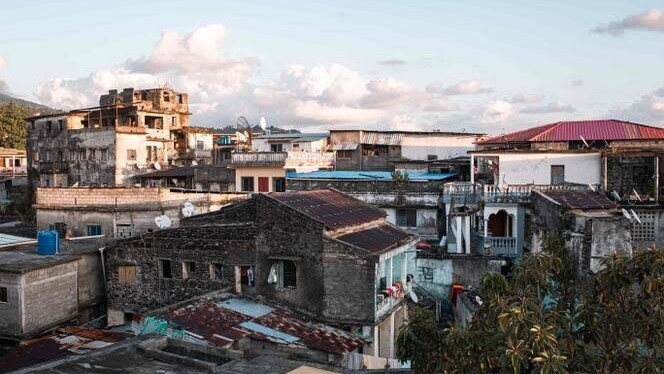
Six centuries-old medinas in the Comoros, witnesses to Swahili architecture and the ancient sultanates of the Indian Ocean archipelago, were inscribed on Saturday on the UNESCO World Heritage List, during the meeting of the World Heritage Committee in Busan, South Korea.
City-states built along trade routes
These cities, some built as early as the 12th century, include defensive walls, palaces, mosques, and public squares, all integrated into a network of narrow streets. According to the UNESCO World Heritage Committee, these sites showcase island urban forms and architectural expressions resulting from cultural exchanges linked to migrations and trade networks in the Indian Ocean.
In the medina of Moroni, the Comorian capital, stands the emblematic Friday Mosque, recognizable by its green minaret overlooking the dhow port, surrounded by paved alleyways and multi-story houses sometimes adorned with heavy sculpted doors.
A ranking conceived as a starting point
The Comorian Minister of Culture, Saïd Mohamed Ali Saïd, present as part of the government delegation in Busan, welcomed the designation, stating that it was not an end in itself but a starting point for the preservation of these sites. The Director General of the National Office for the Enhancement of Heritage, Ania Mohamed Issa, for her part, lamented that uncontrolled urbanization and modernization had already altered parts of these historic medinas.
This inscription, championed for several years by the Comorian authorities with the support of France and several specialized organizations, should now facilitate the mobilization of international funding for the restoration of this fragile architectural heritage.







Community
Comments
Write a comment
Be the first to comment on this article.