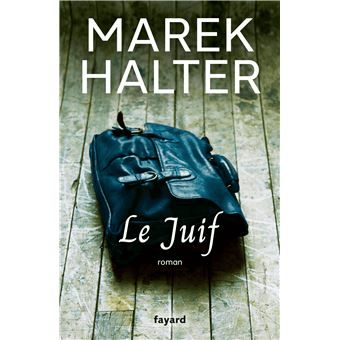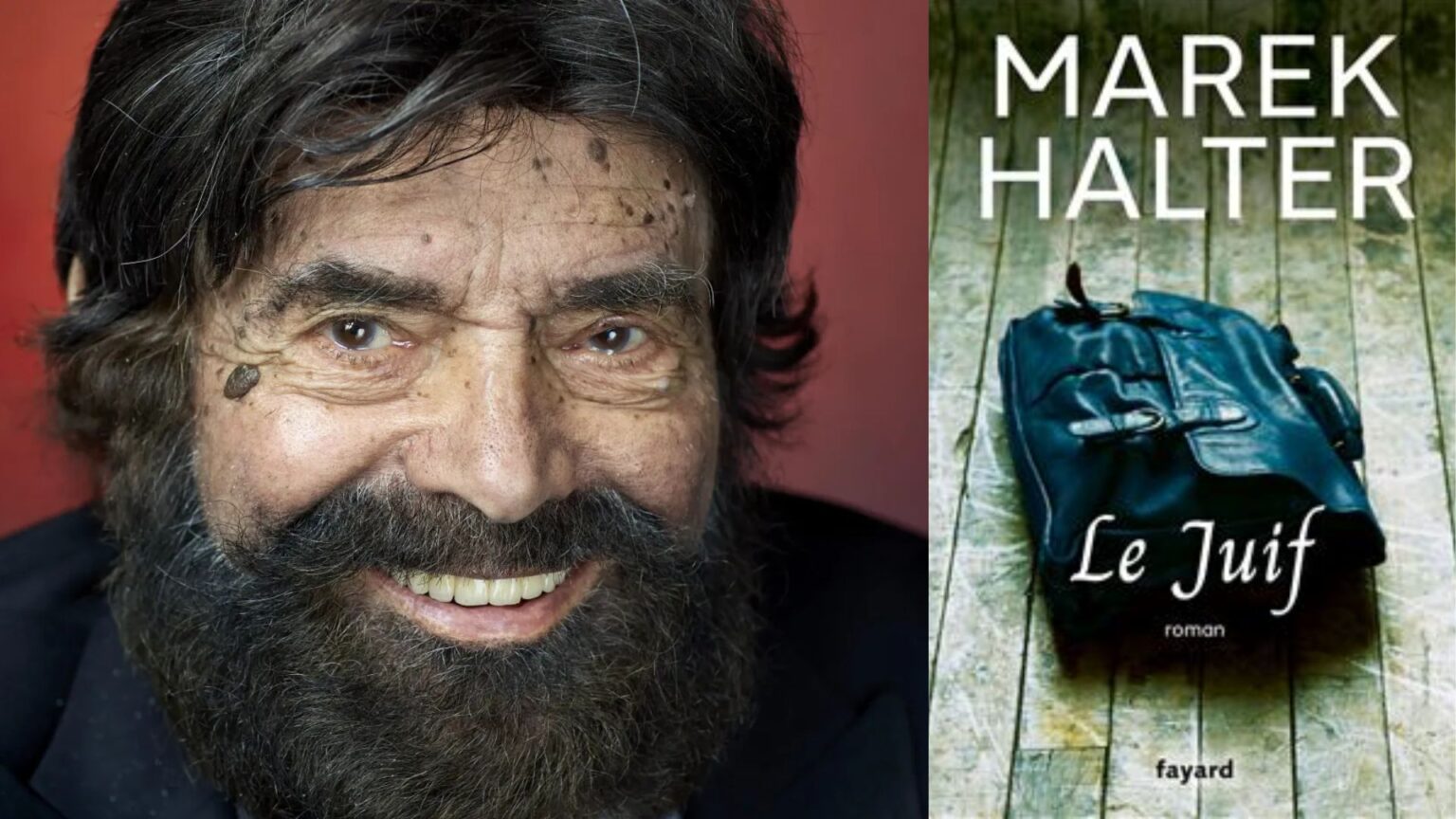
With "The Jew," Marek Halter has undoubtedly written one of his most personal, perhaps even his most accomplished, books. At 93, the internationally acclaimed writer returns with a dense and vibrant narrative, where identity, memory, and destiny intertwine in a whirlwind that encompasses both the intimate and the geopolitical. Marek Halter has not simply written a novel here: he offers a profound meditation on what it means to "be Jewish" in the eyes of others, and sometimes in spite of oneself.
Its protagonist, Jean-David Dupuis, has never claimed any particular religious or cultural affiliation. But a medical circumcision performed at his birth is enough to trigger a misunderstanding that marks his entire life. In the eyes of the world, he becomes Jewish without having chosen to be, and this identity confusion places him in a murky area where introspection and the quest for truth intertwine. When Jean-David discovers that one of his ancestors founded the first synagogue in Doullens, his trajectory takes a dramatic turn: genealogy transforms into an inner journey, and lineage becomes a calling.
This intimate journey is interwoven with a gripping plot. It all begins with a seemingly mundane event, the theft of a satchel on a nearly empty train, but very quickly, the story takes an unexpected turn. The stolen documents prove explosive, linked to major international tensions. Trafficking, secret services, clandestine diplomacy, regional crises: Marek Halter draws his protagonist into the heart of a global network where Ukraine, the Middle East, and Qatar intersect in a mosaic of conflicts, lies, and manipulations. This blend of coming-of-age story and spy novel gives the book a rare narrative power.
But beyond the action, it is above all the humanist who shines through. True to his lifelong commitment, Marek Halter explores the fragility of identities and the devastating effects of prejudice. Far from succumbing to trends or oversimplifications, he reveals the complexity of the contemporary world, while reminding us that memory, whether individual or collective, remains at the heart of all possible humanity. As in "The Memory of Abraham" or "Faith and Kings," the author puts his storytelling talent at the service of a universal reflection.
Through the story of a man unwittingly drawn into the history of Judaism, Halter explores the enduring nature of perceptions, labels, and legacies. He delivers a vibrant, insightful, and deeply empathetic novel, written in a clear and masterful style. "The Jew" is not merely a captivating narrative; it is a world unto itself, resonating with the author's personal history as well as with the fractures of our time.
Marek Halter, a survivor of 20th-century tragedies and an activist for peace and interreligious dialogue, proves once again that he is one of the last great witnesses of his time. And with this new book, he reminds us above all that he is also, and perhaps primarily, a great novelist.