

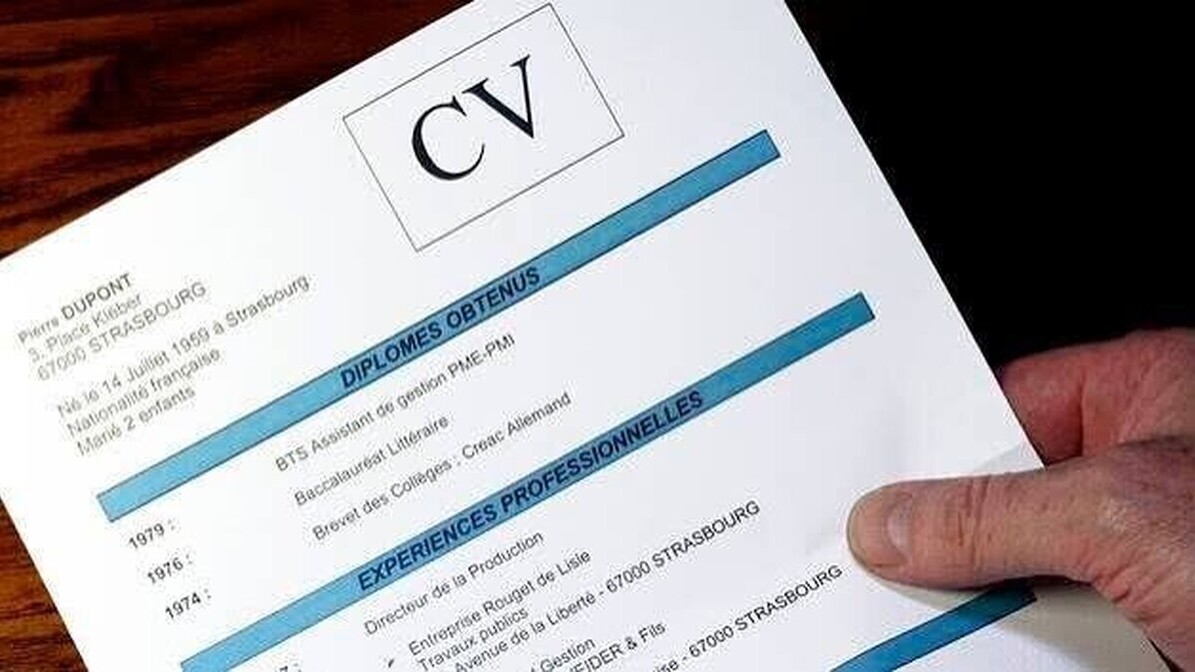
Fake degrees, exaggerated work experience, overstated language skills, or altered employment dates: falsified CVs remain a reality in the job market. While some candidates may seek to improve their chances of being hired, these manipulations of the truth can lead to dismissal and, in the most serious cases, criminal prosecution. Employers also have increasingly numerous ways to verify professional backgrounds.
In a job market where candidates sometimes have to respond to dozens of applications before landing an interview, the temptation to embellish one's resume can be strong. Some choose to artificially extend their professional experience, transform an internship into a salaried contract, or mention a degree they never earned. Others prefer to change the title of their former positions to give the impression that they held a position of responsibility. These practices, which may seem harmless to those who engage in them, nevertheless raise questions of trust and loyalty in professional relationships.
According to a Udemy survey reported by several specialized media outlets, approximately one in ten French people admit to having falsified their CV. Other studies, using different methodologies, suggest higher proportions when they include simple exaggerations or misleading presentations. These figures should therefore be interpreted with caution. Nevertheless, they illustrate a phenomenon well-known to recruiters: the line between legitimately highlighting one's experience and deliberately misrepresenting one's qualifications can sometimes become difficult to discern.
Fake degrees and exaggerated experiences: the most common lies
The falsifications primarily concern qualifications and professional experience. A candidate might claim to hold a master's degree when they only have a bachelor's degree, present an incomplete course of study as a completed degree, or fabricate a period of employment at a prestigious company. Other manipulations involve the duration of contracts, particularly to conceal periods of unemployment. Language skills are also a prime target for exaggeration: claiming fluency in English when one struggles with professional conversation can quickly become problematic during an interview or when starting a new job.
These practices can have direct consequences on how businesses operate. An employee hired based on skills they don't possess may encounter difficulties in fulfilling their duties. In certain sectors, particularly healthcare, engineering, and finance, a false qualification can also create risks for clients, patients, or colleagues. For recruiters, the issue is therefore not limited to the candidate's honesty: it also concerns safety, the quality of work, and the employer's responsibility.
Dismissal is possible, but not automatic.
In France , the Labor Code requires candidates to respond in good faith to requests for information directly and necessarily related to the job offered. According to the official website Service-Public, the presence of deliberately false information on a CV can justify dismissal for misconduct, potentially serious. However, the penalty depends on the circumstances. A simple inaccuracy in a job title or an awkward presentation of experience is not necessarily sufficient to establish fraud. Judges examine, in particular, the intentional nature of the lie and its significance in the hiring decision.
Case law provides several examples of upheld sanctions. In June 2025, the Paris Administrative Court of Appeal upheld the dismissal, during her probationary period, of a contract employee who had misrepresented the duration of her previous employment with the Prime Minister 's office . Her CV suggested continuous experience between 2019 and 2021, whereas she had only worked part of that period. The court considered that this information had caused a breach of trust, particularly significant for a position involving access to financial data.
Up to three years in prison for forgery and use of forged documents
The consequences can be even more serious when a candidate fabricates or uses false documents. Under French law, the offense of forgery and use of forged documents is, in its general form, punishable by three years' imprisonment and a fine of €45,000. This classification, however, requires that the legal conditions be met: not every exaggeration on a CV automatically constitutes a criminal offense. On the other hand, producing a fake diploma, falsifying a certificate, or altering an official document can expose the perpetrator to prosecution. The penalties can be increased depending on the nature of the document and the circumstances of the offense.
A decision handed down in May 2025 by the Bordeaux Administrative Court of Appeal illustrates these risks. A local government employee had claimed on his CV to have been a second-class seaman in the French Navy and had submitted a forged military certificate. He was criminally convicted and fined €2,000, and barred from holding public office for two years. The administrative court also upheld the proportionality of his permanent exclusion from service. According to the judges, the fabrication and use of these documents constituted a serious breach of the obligations of integrity and loyalty.
Companies are strengthening their candidate verification processes.
Faced with these practices, employers can verify diplomas, request supporting documents, and check certain professional experiences with previous employers, while respecting applicable recruitment and personal data protection regulations. The information gathered must be directly related to the position offered. The development of digital tools facilitates some checks, but does not exempt recruiters from respecting candidates' privacy. Companies must also avoid disproportionate or discriminatory checks.
French authorities now consider recruitment fraud an issue that goes beyond simple human resources management. In a report on CV fraud, the General Directorate for Internal Security (DGSI) highlights the risks associated with a recruit's access to strategic or confidential information. A fabricated career path can thus be used to obtain a sensitive position and facilitate certain forms of information gathering. For candidates, the best strategy remains to honestly present their skills, even when their career path includes gaps or career changes. A CV can be enhanced without being falsified, whereas a lie discovered several years after hiring can jeopardize an entire career.








Respond to the article
Be the first to comment on this article.