

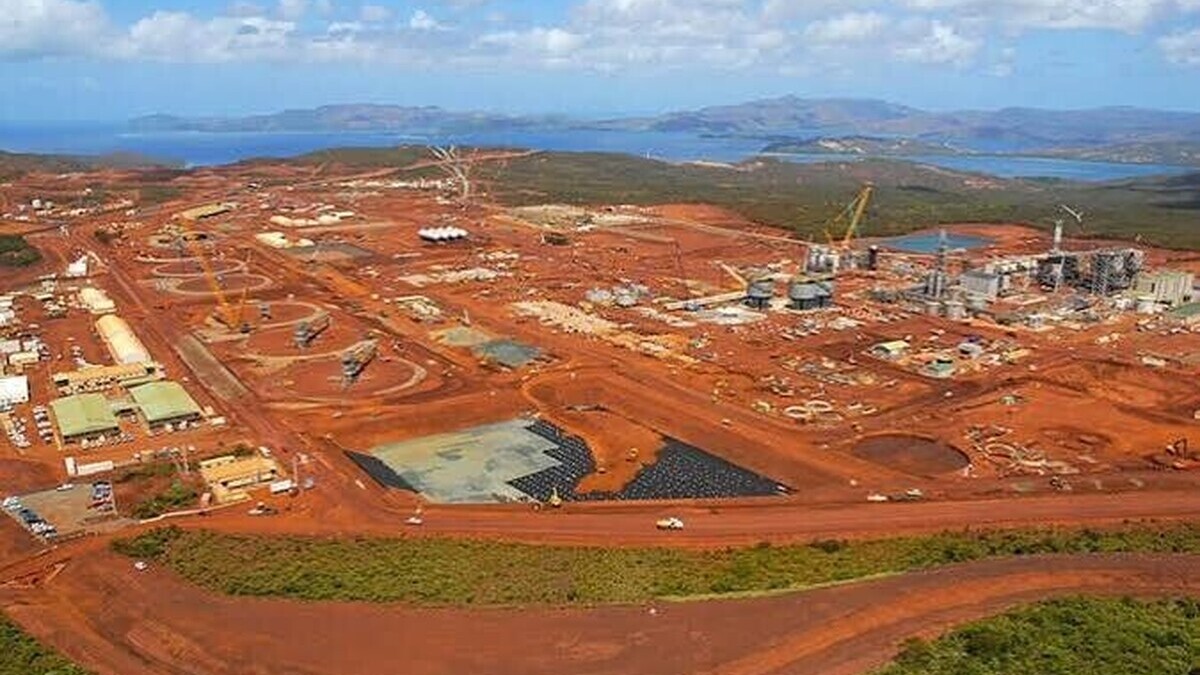
New Caledonia has significant nickel resources, a metal essential to many industries, notably in the manufacture of stainless steel and certain electric batteries. Long considered the driving force of the archipelago’s economy, this sector is facing major difficulties. Between international competition, high production costs, and environmental challenges, the future of Caledonian nickel raises many questions.
Nickel has held a central place in New Caledonia’s economic history since the second half of the 19th century. Discovered on the territory in 1864, this metal gradually transformed the archipelago into an important mining territory in the Pacific. Its exploitation fostered the development of infrastructure, the establishment of industries, and the creation of numerous direct and indirect jobs. Even today, nickel remains an essential activity for the Caledonian economy, although the sector is facing a deep crisis. Mines and metallurgical facilities play a significant role in the activity of several municipalities, where subcontracting companies and businesses largely depend on the sector.
Nickel is particularly sought after for its resistance to corrosion and high temperatures. It is mainly used in the composition of stainless steel, which is employed in construction, transportation, industrial equipment, and many everyday objects. Some battery technologies for electric vehicles also use this metal, giving it strategic importance in the energy transition. However, not all types of batteries require nickel. Technological developments, notably the rise of lithium iron phosphate batteries, contribute to making demand prospects more complex than a simple increase linked to automotive electrification.
An industry facing fierce global competition
The Caledonian sector must face particularly intense international competition, notably from Indonesia, which has become a major player in global production. Indonesian producers benefit from considerable industrial capacities and costs that can be lower than those of Caledonian facilities. In New Caledonia, energy expenses, investments needed to modernize factories, and logistical constraints weigh on competitiveness. The volatility of international prices also complicates the financial situation of companies, which must manage fluctuating revenues and significant expenses.
The difficulties encountered by major industrial players illustrate the fragility of the economic model. The shutdown of the Koniambo Nickel SAS plant in 2024 notably constituted a shock for employment and activity in the northern part of the archipelago. Profitability problems of metallurgical facilities have also fueled discussions about the sector’s future. Beyond the companies themselves, the consequences affect employees, transporters, suppliers, and local authorities. In a territory already facing economic and social difficulties, finding a sustainable industrial model is therefore a priority.
The environment, an unavoidable challenge for mining exploitation
Nickel mining also raises significant environmental questions. Open-pit mining activities can alter landscapes, weaken soils, and promote erosion when protective measures are insufficient. Runoff of particles from exploited grounds represents a risk for watercourses and lagoon ecosystems. New Caledonia has exceptional biodiversity, with many endemic species and coral reefs, some of which are listed as UNESCO World Heritage sites. Preserving these environments imposes obligations on operators for monitoring, rehabilitation, and impact control.
Metallurgical processes also require significant amounts of energy. This consumption represents an economic and climatic challenge, especially when electricity production relies on fossil fuels. To improve competitiveness and reduce environmental footprint, industrialists must consider investments in more efficient equipment and lower-carbon energy sources. However, these transformations require considerable funding, even as several companies face financial difficulties.
What future for Caledonian nickel?
The question of nickel’s future goes far beyond the industrial framework. It concerns land planning, employment, public finances, and economic balances between the different provinces. The sector also represents a strategic issue for France and Europe, which seek to secure their supply of essential raw materials. From this perspective, Caledonian resources can be an asset, provided their exploitation is economically viable and compatible with environmental requirements.
Several avenues are regularly discussed to restore prospects for the sector: modernization of production tools, control of energy costs, search for industrial partners, and diversification of outlets. But no solution can rely solely on the existence of significant mineral reserves. Maintaining sustainable activity will also depend on the global market situation, available investments, and the capacity of public and private actors to define a common strategy.
For New Caledonia, the challenge finally consists in reducing economic dependence on a single resource. The development of tourism, services, agriculture, and other activities could help diversify sources of jobs and income. This diversification does not necessarily mean abandoning nickel, which remains a major wealth of the archipelago, but seeking a better economic balance.
After more than 150 years of exploitation, nickel thus remains at the heart of New Caledonia’s future. Its industrial and strategic value remains important, but current difficulties show that natural resources alone do not guarantee the prosperity of a territory. Between industrial revival, environmental protection, and economic diversification, New Caledonia must now find the conditions to transform this mineral wealth into sustainable development.







Respond to the article
Be the first to comment on this article.