European air transport is experiencing a new period of turbulence. On Friday, November 27, 2026, the Norwegian low-cost carrier Norse Atlantic announced the bankruptcy of its main operating subsidiary, unable to cope with a critical financial situation. Specializing in long-haul, low-cost flights, the company is suffering in particular from the consequences of soaring kerosene prices caused by the war in the Middle East . All its flights have been canceled and ticket sales suspended, leaving many travelers in limbo. This bankruptcy follows that of several other European carriers weakened by rising operating costs.
The decision concerns Norse Atlantic Airways AS, the Norwegian operating subsidiary of the Norse Atlantic ASA group. Its board of directors announced on Friday that it had decided to file for bankruptcy protection with the Agder District Court in southern Norway . A court-appointed administrator will be assigned to oversee the proceedings and determine the fate of the company's assets. The airline explained that it had made numerous attempts to secure new financing but had been unable to raise the necessary funds to continue operating. As early as Wednesday, it had warned the financial markets that its situation had become critical. The following day, it suspended all of its flights, before confirming on Friday that no immediate financial solution had been found.
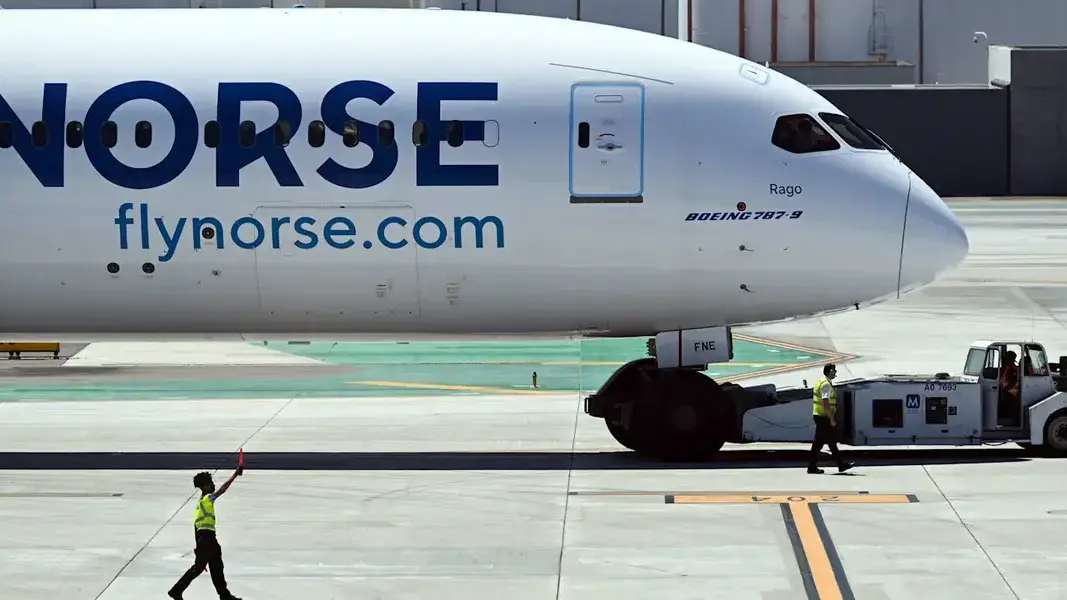
The situation worsened when the companies owning the aircraft operated by Norse Atlantic announced the termination of their lease agreements. This decision affects the entire fleet of twelve Boeing 787 Dreamliners, long-haul aircraft used primarily on transatlantic routes. The lessors demanded the return of the aircraft, a decision whose validity is being contested by the airline. Lacking sufficient financial resources and facing the threat of losing its entire fleet, Norse Atlantic found itself unable to continue its operations normally. The parent company, listed on the Oslo Stock Exchange , and the other companies in the group are not, however, directly affected by the bankruptcy filing. Management is still seeking to preserve certain activities, particularly those of its British subsidiary.
The surge in kerosene prices is accelerating the airline crisis
Norse Atlantic's difficulties stem largely from the sharp increase in jet fuel prices since the start of the Iran -Iraq War in late February 2026. Tensions in the Middle East disrupted international energy markets and led to a significant rise in operating costs for airlines. Jet fuel is one of the main expenses for airlines, particularly those specializing in long-haul flights. Unlike some competitors who use hedging contracts to temporarily protect themselves against price fluctuations, Norse Atlantic was heavily exposed to this increase. Its CEO, Eivind Roald, acknowledged that the company had been unable to absorb the increased fuel costs. This situation precipitated a financial crisis whose origins, however, predated the conflict.
Founded in 2021 and commencing operations in 2022, Norse Atlantic had developed a business model based on low-cost, long-haul flights, primarily between Europe and North America. The airline aimed to attract travelers looking to cross the Atlantic at fares lower than those offered by traditional carriers. However, this positioning implied limited profit margins and a high sensitivity to fluctuations in fuel costs, load factors, and demand. The company never managed to achieve sustained profitability. Since the beginning of 2026, its stock has lost more than 99% of its value on the Oslo Stock Exchange, reducing its market capitalization to a few million dollars. Employees are also directly affected by this crisis, with a pilots' union reporting that November salaries were not paid on time.
The bankruptcy of Norse Atlantic illustrates the broader difficulties facing the European airline sector. Latvian carrier airBaltic initiated financial restructuring proceedings in September, while Spanish airline Plus Ultra announced this week that it was ceasing operations. For Norse Atlantic passengers, the priority now concerns the fate of tickets already purchased and the possibilities for refunds. Applicable rights will depend in particular on the booking method, contractual guarantees, and the bankruptcy proceedings. In its statement, management apologized to passengers, employees, and partners affected by the cessation of operations. It is also pursuing discussions to try to maintain some of its operations outside Norway. However, the group's future remains highly uncertain, as the energy crisis continues to weaken carriers whose financial margins were already particularly thin.
Sources cited in the article Communiqué de Norse Atlantic