Long associated with strip clubs and striptease, pole dancing is now recognized as a sport in its own right, requiring strength, flexibility and creativity. While this practice is experiencing spectacular growth, an even more striking phenomenon is emerging: more and more men are getting into it, challenging preconceived ideas and paradoxically reconnecting with the historical origins of this discipline.
The history of pole dancing is fascinating and may date back to Mallakhamb, an Indian discipline practiced as early as the 12th century by yogi monks. Considered the ancestor of pole dancing, this practice combined aerial yoga postures with wrestling movements around a vertical wooden bar. Traditionally, Mallakhamb was exclusively reserved for men, who developed physical strength, agility and spiritual focus.
Although the evolution of pole dancing has taken it away from its roots to become a form of contemporary artistic and sporting expression, its masculine origins now offer a new perspective on this discipline.
In recent years, pole dancing has gradually been breaking away from the clichés that associate it with the world of the night. It is now established in dance studios, sports competitions and fitness rooms as a complete activity, using all muscle groups and strengthening self-confidence.
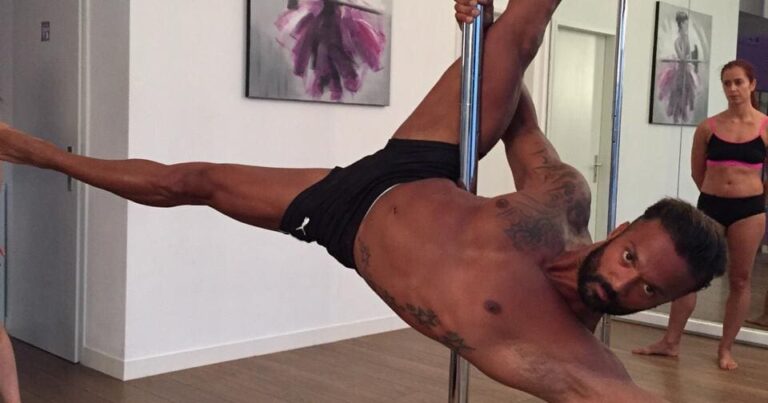
Far from being reserved for women, this discipline attracts a growing male audience, seduced by its physical challenges and its artistic aspect. Men who practice pole dancing find it a way to express their creativity while developing impressive strength and rare flexibility. The arrival of men in the world of pole dancing helps to break the gender stereotypes still associated with this discipline. On social networks as well as during competitions, male performances are gaining visibility and highlighting another facet of pole dancing: that of a universal sport, where everyone can find their place.
Iconic figures, such as certain professional athletes and renowned artists, play a key role in this evolution. By embodying this new trend, they encourage men to overcome their apprehensions and free themselves from the gender codes linked to dance. A good example is Benoit who publishes his exploits on TikTok.