

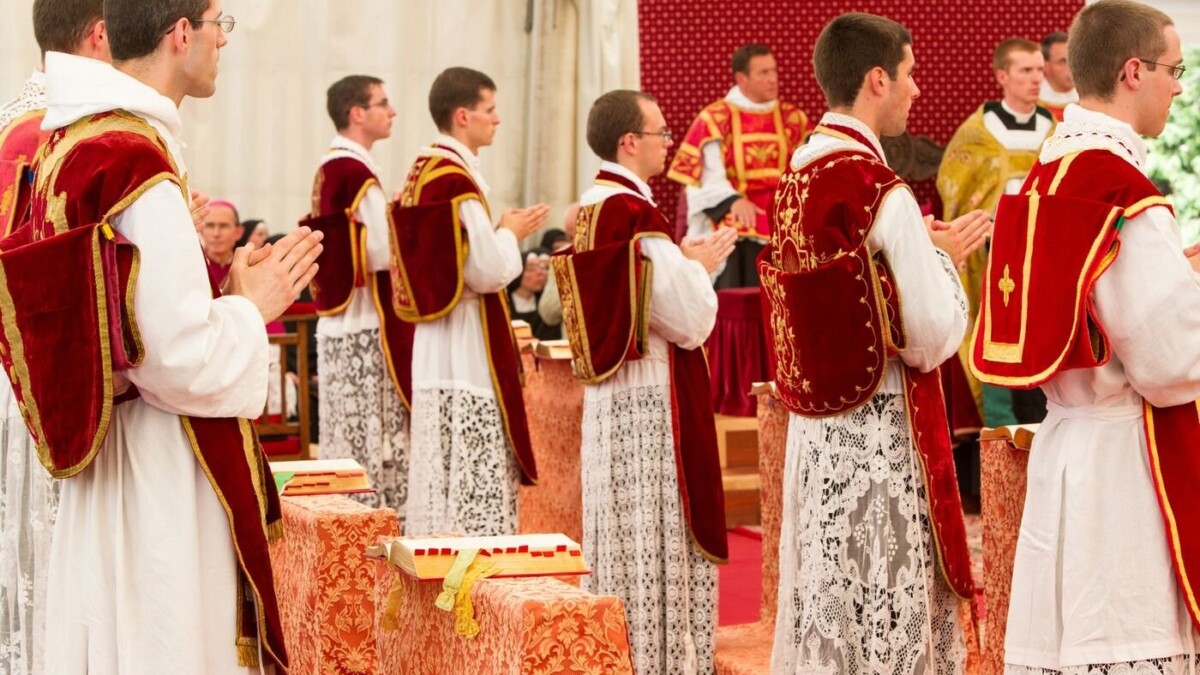
The Congregation for the Doctrine of the Faith on Thursday excommunicated six bishops of the Society of Saint Pius X after the group ordained four new bishops in defiance of Pope Leo XIV. Members of the Society who formally adhere to the organization are also subject to the same sanction.
The Vatican has imposed one of the most severe sanctions under Catholic canon law. The Congregation for the Doctrine of the Faith announced on Thursday the excommunication of the four bishops recently ordained by the Society of Saint Pius X (SSPX), as well as the two bishops who conducted the unauthorized ordination ceremony. All lose their ecclesiastical offices and honors.
The day before, the Society of Saint Pius X (SSPX) had carried out the ordination at a ceremony attended by some 15,500 people near its seminary in Écône, Switzerland, despite an express request from the Pope not to do so. According to the strict rules of the Catholic Church, only the Pope can authorize the consecration of new bishops. Any contrary act constitutes a "schismatic act."
The Roman decree goes further than simply excommunicating the six bishops: it declares that they, along with all the faithful who "formally" adhere to the Society, are in a state of schism with the Catholic Church. Schism designates a serious and formal break within the Catholic community, while excommunication deprives the individual of the sacraments, of marriage according to Catholic rites, and of all ecclesiastical functions.
These measures nullify concessions previously granted by Rome in an attempt to bring this group back into the official fold of the Church. Relations between the SSPX and the Holy See had already been strained for decades.
Founded in 1970 by the French archbishop Marcel Lefebvre, the Society of Saint Pius X brings together ultra-traditionalist Catholics opposed to the reforms introduced by the Second Vatican Council in the 1960s. These reforms included in particular the celebration of Mass in languages other than Latin and openness to ecumenism, that is to say to dialogue with other Christian denominations and other religions.





Community
Comments
Write a comment
Be the first to comment on this article.