
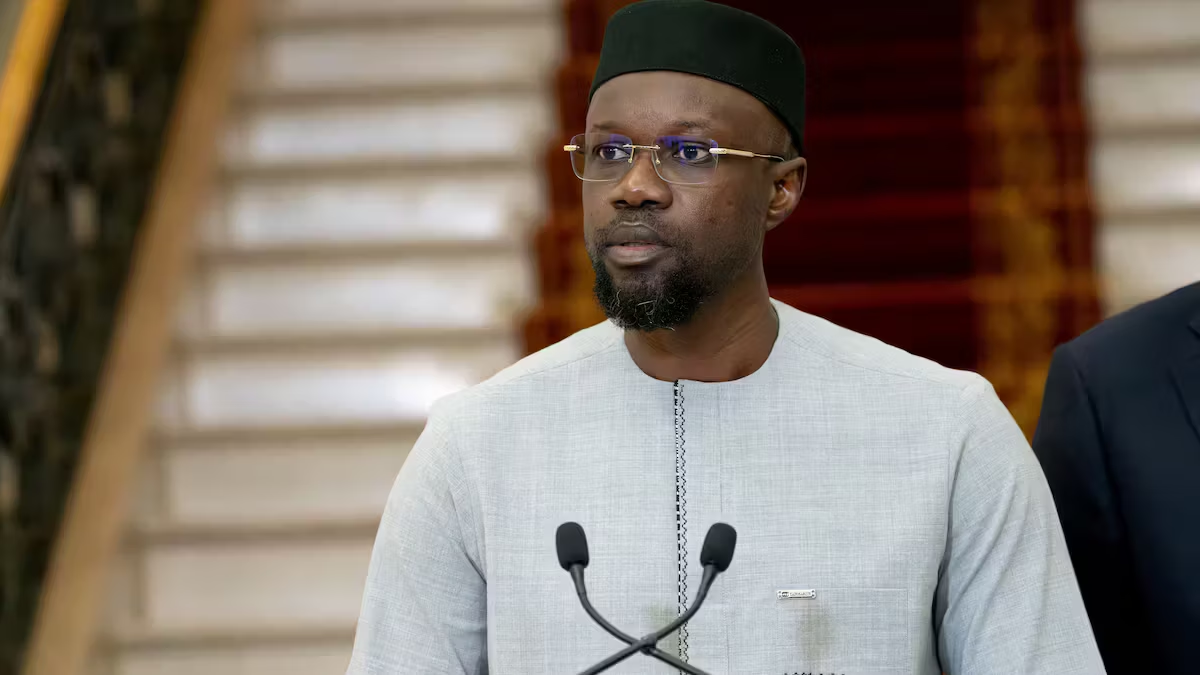
Senegalese President Ousmane Sonko has decided to withdraw members of his party from the new government, a decision that further weakens ongoing discussions with the International Monetary Fund (IMF) and increases political uncertainty in the country.
This announcement comes a few weeks after Sonko's dismissal as Prime Minister. The new head of government, Lo, presented a 30-member cabinet, retaining the Finance Minister in his post to ensure some continuity in the country's economic management.
The withdrawal of the president's party from the government risks complicating the implementation of economic reforms expected by international partners. Observers fear that this new political crisis will weaken the authorities' ability to conduct negotiations with the IMF.
Senegal is currently going through a difficult economic period. Financial tensions have been exacerbated by the discovery of public debts that had not been properly declared, raising questions about the true state of the state's finances.
In this context, discussions between Dakar and the International Monetary Fund are continuing with the aim of finalizing a new financing program. Senegalese authorities hope to obtain financial support to stabilize the economy and restore investor confidence.
The retention of the Finance Minister in the new cabinet is seen as a signal of continuity to international creditors. However, the absence of representatives from Sonko's party could complicate the search for a political consensus on upcoming economic measures.
As the country attempts to overcome its budgetary difficulties, this reshaping of the political landscape opens a new period of uncertainty. The evolution of relations between the government, the presidential party, and international financial institutions will be crucial for Senegal's economic future.
Community
Comments
Comments are open, but protected against spam. Initial posts and comments containing links undergo manual review.
Be the first to comment on this article.