
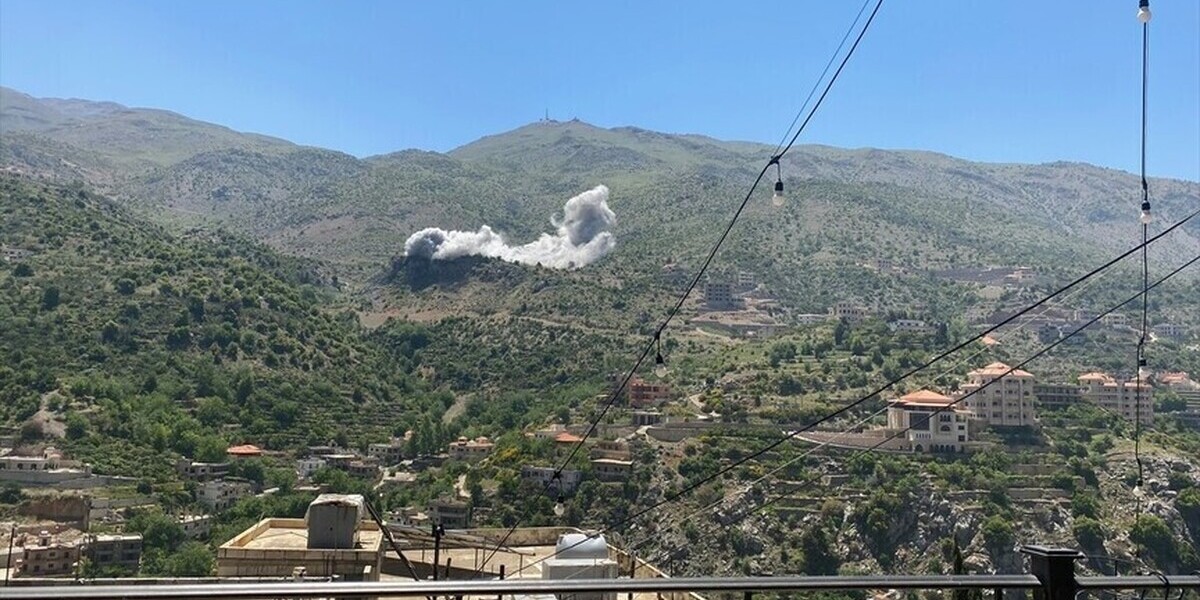
The Israeli army carried out new airstrikes and artillery fire against several areas of Lebanon on the first day of Eid al-Adha, despite the prolonged ceasefire between the two sides. The bombings targeted areas in the east and south of the country, escalating tensions in a region already weakened by months of fighting.
According to the official Lebanese news agency NNA, Israeli warplanes struck several towns in the Baalbek region of eastern Lebanon, as well as southern cities such as Sheba, Kalile, Barish, Dibbin, and other areas near Tyre, Nabatiyeh, and Sidon. Artillery fire also hit several villages in the south of the country. No overall casualty figures from the most recent strikes have yet been released.
The Lebanese Ministry of Health announced that Israeli attacks the previous day on several southern cities had left at least 31 people dead, including children and women, and dozens wounded. The strikes notably hit Burj Shamali, Kawthariyyat al-Ruz, Habbuş, Maareke, and Selaa.
The Lebanese army also reported that one of its soldiers was killed in an Israeli airstrike near the Qarun Dam in the western Bekaa Valley. According to Beirut, several medical personnel involved in a humanitarian evacuation mission also lost their lives in the attack.
Meanwhile, Israel issued new evacuation warnings targeting several towns in southern Lebanon. Israeli army spokesman Avichay Adraee urged residents of several localities in the Nabatiyeh region, as well as Tyre, to leave their homes ahead of possible strikes against suspected Hezbollah positions.
According to Israeli media, Benjamin Netanyahu's government acknowledged in a cabinet meeting that American pressure was currently preventing Israel from further expanding its strikes in Beirut. Israeli Defense Minister Yisrael Katz reportedly stated that Washington was opposing certain operations against the Lebanese capital despite drone attacks attributed to Hezbollah.
Several Israeli analysts now believe that Tel Aviv is struggling to respond effectively to Hezbollah operations while remaining subject to constraints imposed by the United States. Despite the ceasefire extended until early July, exchanges of airstrikes and military tensions continue to escalate between the two sides.



Community
Comments
Comments are open, but protected against spam. Initial posts and comments containing links undergo manual review.
Be the first to comment on this article.