
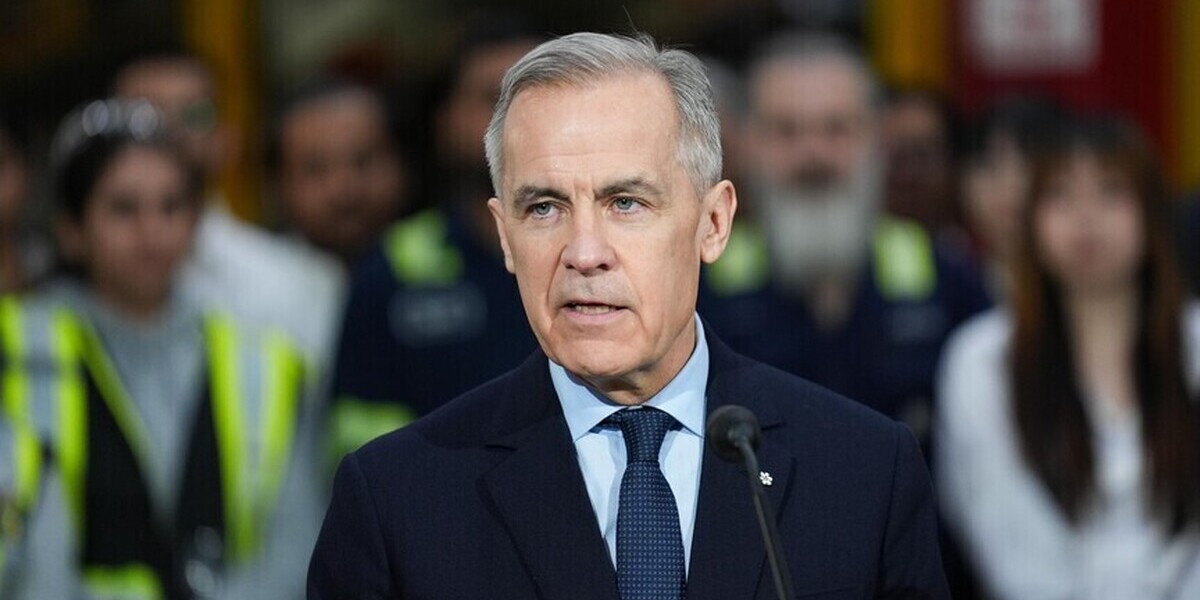
Canada announced Wednesday that it has opened negotiations with the Swedish group Saab for the acquisition of up to six GlobalEye aerial surveillance systems, in a contract that could reach 5 billion Canadian dollars, or about 3,6 billion US dollars.
Prime Minister Mark Carney presented this initiative as an important step in the strategy to reduce Canada's dependence on the United States, which nevertheless remains Ottawa's main trading partner and represents a major share of Canadian foreign trade.
At a conference on defence and security, Mark Carney stated that Canada had begun discussions to purchase the GlobalEye airborne early warning and control system developed by Saab. The government believes this program could enhance the country's strategic autonomy in the military domain.
According to Ottawa, the project would create more than 3 jobs in Canada. A significant portion of the fleet would be manufactured in Canada over the next 000 years. The government states that at least 40 aircraft, including potential orders from allied countries, could be built by Canadian workers.
The GlobalEye system relies on Global 6500 business jets from the Canadian manufacturer Bombardier, converted into high-tech aerial surveillance platforms. These aircraft are designed to detect and track air, land, and sea threats over long distances.
The Saab-Bombardier partnership has already been selected by the NATO Support and Procurement Agency to replace the fleet of Boeing E-3A Sentry aircraft used by the Atlantic Alliance. Several other countries have also reportedly expressed interest in this system.
Mark Carney emphasized the need to strengthen Canadian military capabilities in an international context marked by increasing geopolitical tensions. He also stated that Canada was moving towards NATO's target of allocating 5% of its gross domestic product to essential defence spending by 2035.
Community
Comments
Comments are open, but protected against spam. Initial posts and comments containing links undergo manual review.
Be the first to comment on this article.