
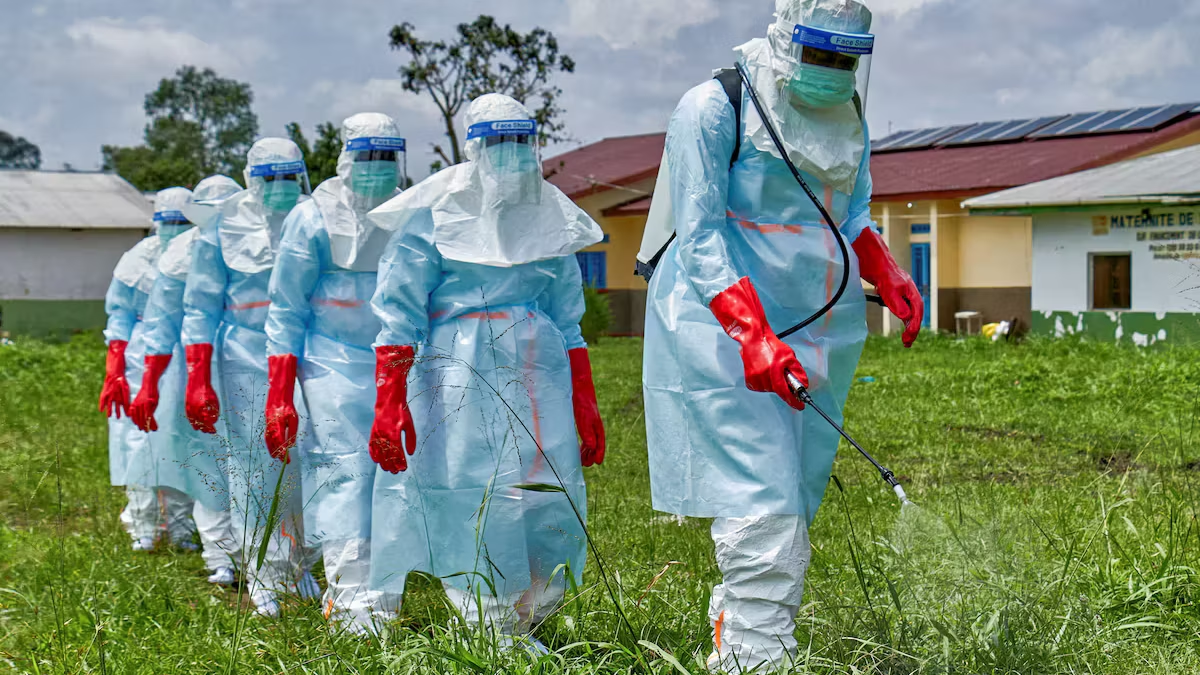
International health authorities are trying to accelerate the development of vaccines and treatments against a rare strain of the Ebola virus, responsible for a worrying epidemic in the east of the Democratic Republic of Congo.
The current outbreak is linked to the Bundibugyo strain of the Ebola virus, a less common variant for which there is currently no approved vaccine or treatment. According to the latest data, approximately 600 suspected cases and 139 presumed deaths have already been recorded.
The World Health Organization has warned that the death toll could rise further in the coming weeks. The Ebola Bundibugyo virus has a mortality rate of up to 40%, fueling concerns among public health experts.
In response to the emergency, several experimental vaccines and treatments are currently being studied. Researchers are also examining whether certain drugs or vaccines already used against other strains of Ebola could offer partial protection against this variant, although the available data remains limited.
Among the most advanced projects is a Bundibugyo-specific vaccine called rVSVΔG/BDBV-GP. This candidate uses a technology similar to that of the Ervebo vaccine developed by Merck & Co against the Zaire strain of Ebola.
The trials conducted so far have primarily involved animals, particularly non-human primates, with results considered encouraging in terms of survival. However, most of the candidate treatments and vaccines have not yet been tested in humans.
To be used quickly in the Democratic Republic of Congo, these products would need emergency authorizations or compassionate use exemptions. Health authorities hope to expedite these procedures to limit the spread of the epidemic in a region already weakened by conflict and limited access to healthcare.



Community
Comments
Comments are open, but protected against spam. Initial posts and comments containing links undergo manual review.
Be the first to comment on this article.