
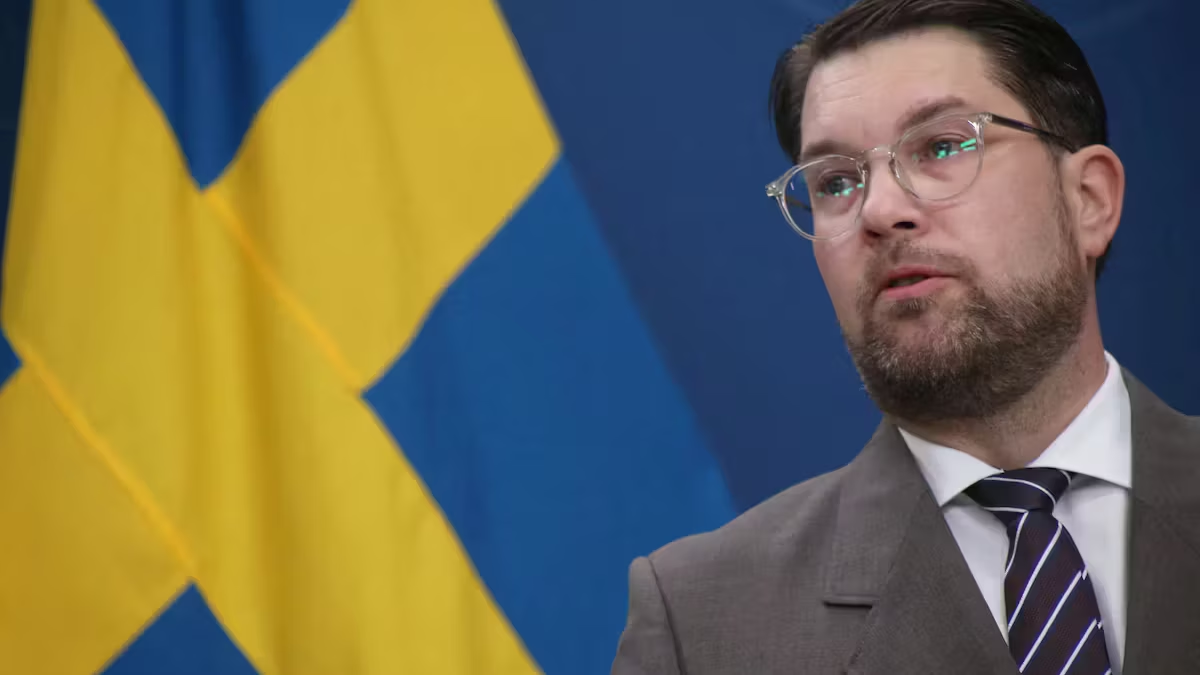
Sweden's restrictive immigration policy is beginning to raise serious concerns in the business world. As the center-right government considers further tightening of the rules if it wins the September elections, companies are warning of the consequences for growth and innovation.
According to several leaders, these measures could weaken an economic model that has been based for decades on openness to foreign talent. Sweden has established itself in Europe as a particularly successful country in terms of innovation, notably thanks to the emergence of large technology companies and startups that have become global players.
The government, influenced by the Sweden Democrats party, has already begun to tighten immigration policies. These policies focus primarily on reducing asylum applications, but also affect the labor market, with stricter conditions for obtaining visas and citizenship.
Controversial measures include the introduction of minimum wage thresholds for migrant workers and stricter criteria for obtaining citizenship. Officially, these decisions aim to combat fraud and wage dumping, according to the authorities.
But in innovative sectors, these restrictions complicate the recruitment of qualified professionals. Start-ups, in particular, rely heavily on foreign talent to grow, in a country that has given rise to companies like Spotify and Klarna, which have become major global players.
Recent data already shows a significant decline in the country's attractiveness: visa applications for entrepreneurs have fallen by 51% since 2022. A worrying sign for an ecosystem considered one of the drivers of Swedish growth over the past twenty-five years.




Community
Comments
Comments are open, but protected against spam. Initial posts and comments containing links undergo manual review.
Be the first to comment on this article.