
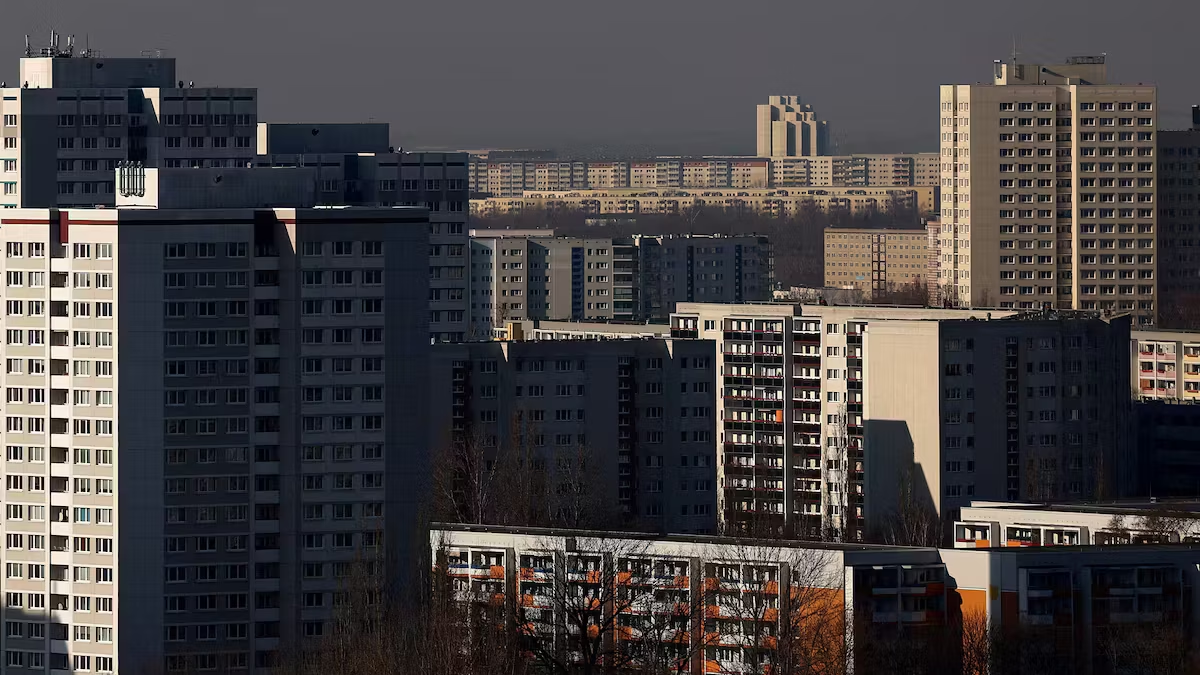
Residential construction in Germany reached its lowest level in over a decade in 2025, driven by rising construction costs and interest rates, exacerbating concerns about the country's housing crisis.
According to figures published by the Federal Statistical Office, the number of housing units completed last year fell by 18%, reaching approximately 206,600. This is the lowest level recorded since 2012, following two consecutive years of decline.
This decline affects both single-family homes and apartment buildings, as well as other residential projects. The slowdown in the sector is putting increasing pressure on the German government, which is being called upon to accelerate reforms and provide more support for construction.
For Ludwig Dorffmeister, an expert in the sector at the Ifo economic think tank, many obstacles remain: high costs, heavy regulations and significant administrative delays continue to hinder new real estate projects.
The Ifo Group also forecasts a further decline this year, with the number of completed housing units potentially falling to 185,000, a sign that the sector is still struggling to regain positive momentum.
German Housing Minister Verena Hubertz acknowledged that the results were "poor," while also highlighting some signs of improvement. She noted, in particular, that building permits had rebounded and that public subsidies for low-income housing construction had reached record levels.
In March 2026, building permits increased by 11,5% year-on-year, with approximately 21,800 units authorized during the month, an indicator considered encouraging by the authorities despite the persistent crisis in the German real estate sector.

Community
Comments
Comments are open, but protected against spam. Initial posts and comments containing links undergo manual review.
Be the first to comment on this article.