
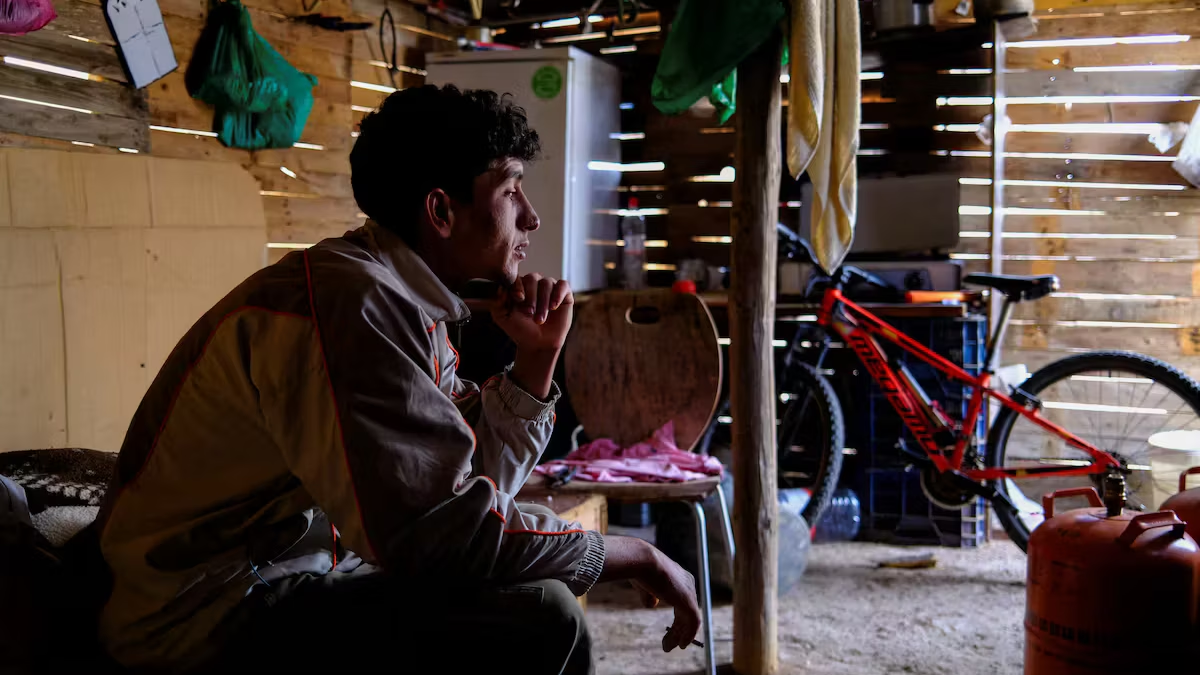
After years spent in precarious conditions, many migrants working on farms in southern Spain hope to see their situation finally improve thanks to the amnesty project launched by the Spanish government.
In Nijar, in the province of Almería, 27-year-old Moroccan Abdelmoujoud Erra recounts living for seven years without legal status, working a series of odd jobs and living in makeshift accommodations. His shelter was recently destroyed by fire, but he explains that the documents necessary for a possible regularization were saved because they were kept in a Red Cross center.
The left-wing government led by Pedro Sanchez wants to regularize some of the undocumented migrants in order to meet the needs of the Spanish economy, particularly in the agricultural sectors which are heavily dependent on foreign labor.
In the vast greenhouses of Almería, where fruits and vegetables are produced for export throughout Europe, many migrant workers live in very precarious conditions, often in informal camps lacking basic services.
Proponents of the plan argue that this amnesty could allow thousands of workers to leave the informal economy, access better housing, and benefit from more stable social rights. Authorities also hope to strengthen the integration of these workers into the formal economy.
Opponents of the project, however, believe that mass regularization could increase pressure on public services and encourage more irregular migration to Spain.
Despite these criticisms, many migrants see this measure as a rare opportunity to stabilize their lives after years of uncertainty. In the greenhouses of southern Spain, the hope of obtaining legal status has now become a central topic of daily life.



Community
Comments
Comments are open, but protected against spam. Initial posts and comments containing links undergo manual review.
Be the first to comment on this article.