

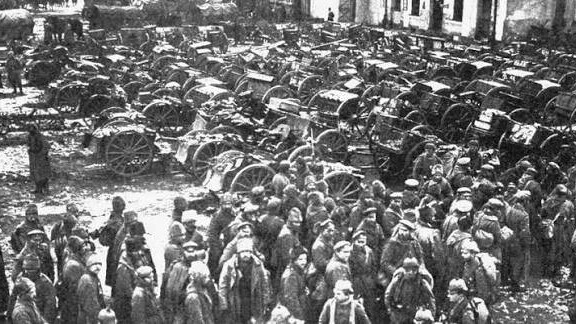
On August 30, 1914, just one month after the start of hostilities in the First World War, the German army crushed the Russian forces at the Battle of Tannenberg in East Prussia, a surprise victory that revealed to the most astute observers that the conflict would be long and merciless.
A trap set by Hindenburg and Ludendorff
At the request of their French allies, eager to force Germany to fight simultaneously on two fronts, the Russians had committed two armies to the German province of East Prussia as early as mid-August. After an initial victory at Gumbinnen on August 20, which led to celebrations in Paris and London of the virtues of the famous "Russian steamroller," General Paul von Hindenburg, brought out of retirement at the age of 67, hastily took command of the German Second Army, assisted by General Erich Ludendorff.
Exploiting the interception of Russian communications that revealed the separation of enemy forces, the two German generals attacked separately and then encircled General Alexander Samsonov's army, in what would remain the most complete encirclement victory since the Battle of Cannae, more than 2,100 years earlier.
A disaster that cost the Russian general his life.
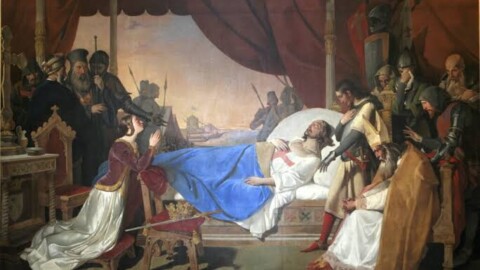
Realizing the magnitude of the disaster, General Samsonov retreated into the forests of East Prussia on the night of August 29-30 with a few officers from his staff, before taking his own life rather than being captured. His army corps surrendered one after another, leaving approximately 92,000 prisoners and 500 cannons in German hands.
Panicked by this defeat, the German Chief of the General Staff Helmuth von Moltke withdrew two army corps from the Western Front to reinforce the Eastern Front, a choice which ultimately proved a blessing for the French, who were then under attack from all sides and who took advantage of this unexpected respite to prepare the counter-offensive which would save their country from another invasion at the Battle of the Marne.



Community
Comments
Write a comment
Be the first to comment on this article.