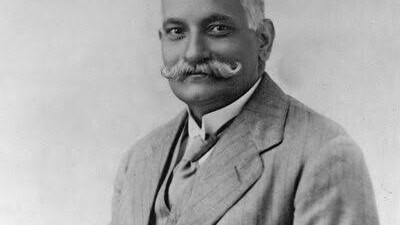
On August 28, 1928, the report prepared by the committee chaired by Motilal Nehru was officially presented and approved at the All-Party Conference held in Lucknow, India, marking a decisive step in the Indian claim to constitutional autonomy from British colonial power.
A challenge issued by the British Secretary of State
This report stemmed from a challenge issued by Lord Birkenhead, the British Secretary of State for India, who questioned the ability of Indian leaders to draft a constitution for their country. In response, the All-Party Conference established a committee chaired by Motilal Nehru, with his son Jawaharlal Nehru serving as secretary, alongside figures such as Subhas Chandra Bose, tasked with drafting a constitution that reflected the will of the Indian people.
The final text, prepared as early as August 15, proposes granting India dominion status within the British Commonwealth, with a federal system of government, an executive responsible to a bicameral parliament and nineteen fundamental rights inspired by the American Bill of Rights.
A split that divides the national movement
By rejecting the principle of separate electorates based on religion, inherited from the Lucknow Pact concluded in 1916 between the Indian National Congress and the Muslim League, this report broke with the protections previously granted to the Muslim minority, provoking the opposition of Muhammad Ali Jinnah, then leader of the Muslim League. A younger generation within the Congress, led by Jawaharlal Nehru and Subhas Chandra Bose, considered the text insufficiently ambitious, already advocating for full independence rather than mere dominion status.
Ultimately rejected by the British authorities in 1929, this report prompted the Indian National Congress to change its official objective, abandoning the demand for dominion status in favor of full sovereignty, Purna Swaraj, which was demanded by the end of the following year.