

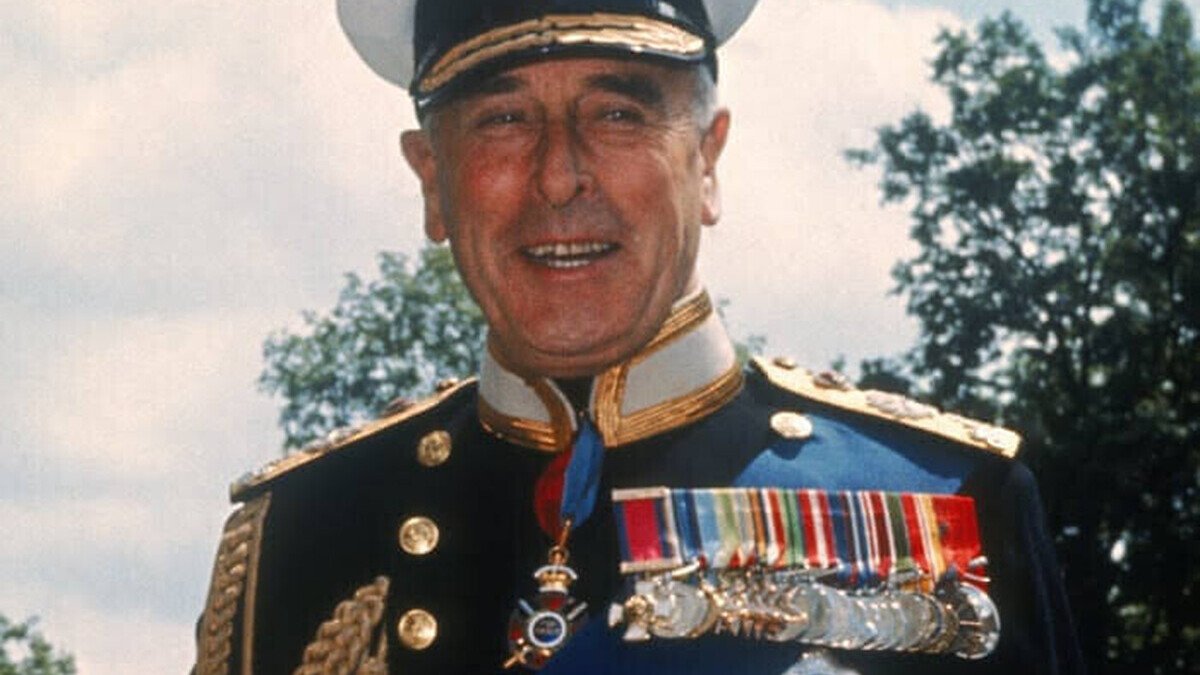
On August 27, 1979, Irish Republican Army terrorists blew up the fishing boat on which Lord Louis Mountbatten, former Viceroy of British India and close relative of Queen Elizabeth II, was spending his holidays off the Irish port of Mullaghmore.
A target chosen for its connection to the Crown
The great-grandson of Queen Victoria and maternal uncle of the Duke of Edinburgh, Lord Mountbatten embodied, in the eyes of the IRA, the grandeur of the British monarchy they opposed. Aged 79, he was killed instantly when the bomb planted on board his boat, the Shadow V, exploded that morning. Three other people also perished in the attack: his 14-year-old grandson Nicholas, 15-year-old Paul Maxwell, and Lady Brabourne, Nicholas's grandmother, while three other family members were seriously injured.
On the same day, the IRA struck a second time at Warrenpoint, Northern Ireland, killing eighteen British soldiers in a double ambush, making it one of the bloodiest days of the Northern Irish conflict.
A turning point in the fight against British terrorism
This assassination marked the first direct attack on the British royal family by the IRA during its long campaign to expel the United Kingdom from Northern Ireland. The shockwaves from this double attack helped harden Margaret Thatcher's government's stance towards the paramilitary organization.
Thomas McMahon, an experienced IRA member trained in the use of explosives, was arrested and convicted for planting the bomb that caused the attack. Sentenced to life imprisonment, he was eventually released in 1998 as part of the Good Friday Agreement, which ended the Northern Ireland conflict.



Community
Comments
Write a comment
Be the first to comment on this article.