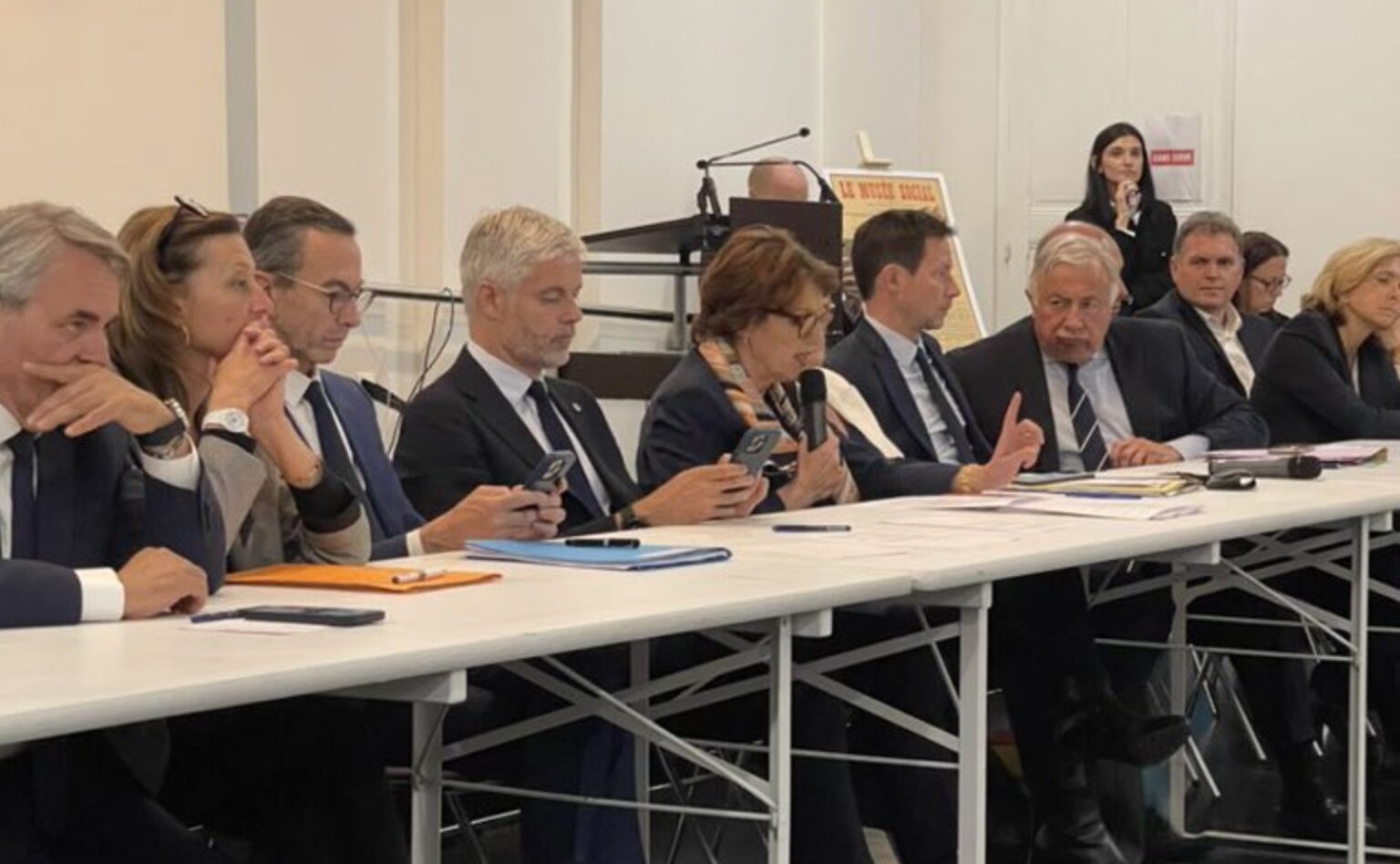
Saturday, October 11th will be remembered as a day of chaos for Les Républicains. While Sébastien Lecornu, newly reappointed to the Prime Minister's office, was striving to build his government, Bruno Retailleau's party was plunged into an internal war of rare intensity. Between accusations, insults, tense meetings, and divisions between deputies and senators, the Republican right was torn apart over the question of its participation (or not) in the new government.
It all started early in the morning when Vincent Jeanbrun, MP for Val-de-Marne, went to L'Haÿ-les-Roses in his constituency to welcome Prime Minister Sébastien Lecornu to his town. This courtesy gesture earned him a sharp rebuke from Bruno Retailleau. "What happened this morning is worthy of the USSR," he exclaimed that evening during a videoconference with his fellow LR MPs. The tone was set: mistrust and anger already reigned between the two camps—those who supported Lecornu loyally, led by Laurent Wauquiez , and those who categorically refused any compromise, behind Retailleau, who was still Minister of the Interior at the time.
“Fuck you” and threats of breaking up
Tensions peaked late in the afternoon. According to several parliamentary sources, the political bureau meeting ended in a poisonous atmosphere. Unusually brutal exchanges pitted the party's leading figures against each other. Julien Aubert, vice-president of LR, shouted a resounding "Fuck you" at a colleague, MP Jean-Pierre Taite, after a heated debate on participation in the government. "The MPs are fed up with having their positions imposed on them," confided a close participant in the meeting. Several elected officials left the videoconference even before the conclusion, denouncing "a party cut off from its base and the reality on the ground."
In fact, senators and MEPs followed Bruno Retailleau's line: support without participation. The deputies, for their part, mostly threatened by a possible dissolution, advocated a more conciliatory approach. "We must give France a budget, not plunge the country into chaos," insisted Laurent Wauquiez, leader of the LR deputies, in an attempt to calm things down. But the calm was short-lived.
A party fractured between two rights
The divide is now clear. On one side, the elected members of the Senate and the European Parliament, who have little political exposure, reject any rapprochement with Macronism. On the other, the deputies, anxious to avoid a dissolution that could benefit the National Rally, are calling for pragmatic support for the Lecornu government. "I don't give a damn about the line, I'm an MP, I vote what I want," one parliamentarian reportedly blurted out, exasperated by the leadership's rigidity.
In a letter to members, Bruno Retailleau attempted to regain control: "Your voice must be heard, and your choice must be respected. Not participating does not mean censorship," he wrote, insisting on the rejection of "a dying Macronism." He promised an internal consultation to validate the political bureau's decision, hoping to calm the revolt.
The Ghost of the Chieftains' War
Behind the scenes, the rivalry between Wauquiez and Retailleau is resurfacing. The former, leader of the Republican Right group of deputies, continues to advocate for a more open line. The latter, party president, defends ideological purity and the reconstruction of a "breakaway" right. "We're replaying Balladur versus Chirac," quipped one LR senator. Even Éric Ciotti, former LR president, now an ally of the RN, took advantage of the crisis to launch an appeal to dissidents: "You will be welcomed into the UDR with kindness."
The day ended without any real outcome, other than an apparent victory for Retailleau, who secured a vote of "text-by-text support" for the Lecornu government. But the grassroots are grumbling, the deputies refuse to feel bound by this line, and the Young Republicans, through their president, Théo Am'Saadi, demanded that the party "refuse any compromise."
The Republicans therefore emerge drained from a day meant to clarify their position. Neither in direct opposition nor in the majority, they are sinking into an ambiguity that could well cause them to implode. One thing is certain: on Saturday, October 11, the right never seemed so far from speaking with one voice.