
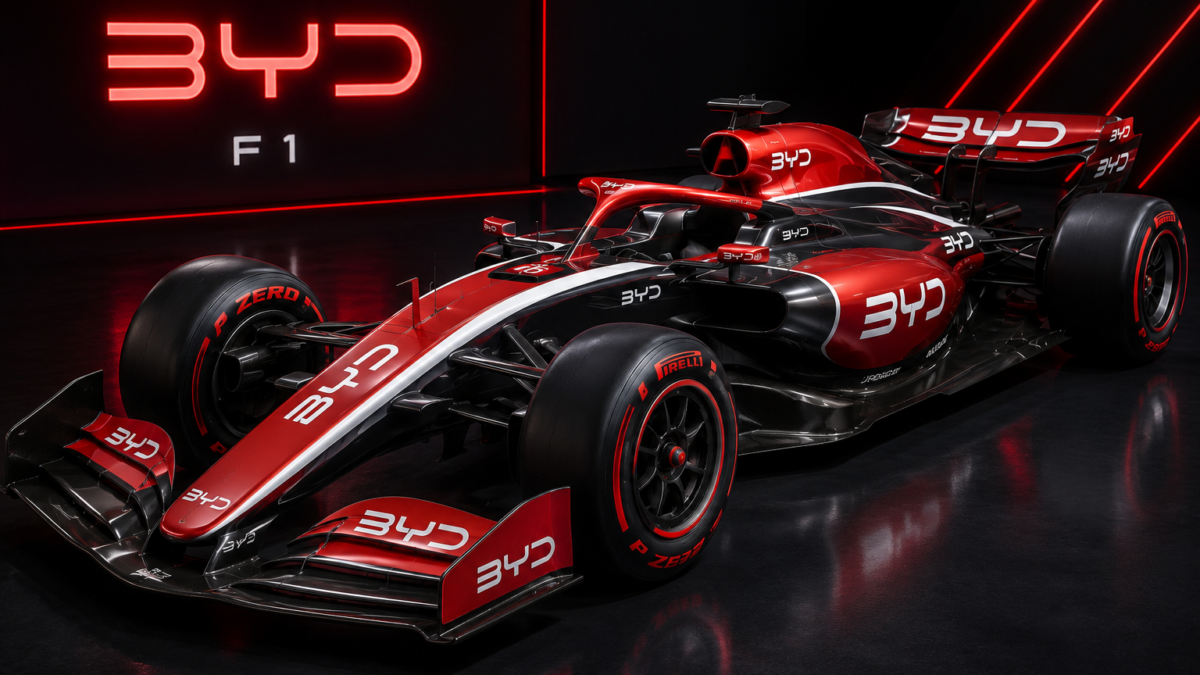
The possibility of Chinese electric vehicle giant BYD entering Formula 1 is generating increasing speculation in the paddock. While no official plans have yet been announced, several indicators suggest that the Chinese manufacturer is seriously considering entering motorsport's premier category. Such a decision would have far-reaching consequences beyond the circuits, impacting the global automotive industry and the economic balance of the championship.
The Chinese brand's interest in Formula 1 stems primarily from the tremendous visibility the sport offers. As the world leader in electric vehicles continues its expansion in European and North American markets, F1 represents a unique media platform capable of strengthening its brand image among Western consumers. For the Shenzhen-based manufacturer, the objective is both marketing and industrial, associating its name with technological excellence and performance.
Christian Horner, the key player in the project?
Among the factors fueling speculation is Christian Horner's recent public appearance alongside representatives of the group. The former iconic boss of Red Bull Racing remains one of the most experienced executives in the paddock. His sporting, commercial, and political expertise would make him a considerable asset for any newcomer looking to quickly establish themselves at the highest level.
According to several observers, Horner might be tempted by a new project provided he has real decision-making power and a stake in the team. For the Asian manufacturer, recruiting a figure of his stature would significantly accelerate its learning of the complex workings of Formula 1, while immediately gaining credibility with those involved in the championship.
Three scenarios considered for an entry into F1
Several options are available to the Chinese industrialist. The first would be to acquire a stake in an existing team in order to gradually learn the specifics of the sport. Another possibility would be the outright purchase of a team already competing, which would allow for much faster integration and avoid the lengthy admission procedures imposed on new entrants.
The third option, which seems to appeal more to the group's management, would be the creation of an entirely new team. This strategy would offer total control over the project, infrastructure, and intellectual property. However, it would require colossal investments, the recruitment of hundreds of specialized engineers, and obtaining the approval of the sporting authorities as well as the other teams in the league.
A challenge for Western manufacturers
The arrival of this electric vehicle specialist would also send a strong signal to the global automotive industry. In just a few years, the Chinese group has become one of the leading players in the electric vehicle market, now surpassing many established manufacturers in sales volume. A presence in Formula 1 would constitute a further step in its strategy to conquer international markets.
For Western manufacturers already present in or preparing to enter F1, such as Mercedes, Audi, Ford, Toyota, and Cadillac, the arrival of such a powerful competitor would significantly intensify competition. It could accelerate technological investments and shift the balance of power within the global automotive industry, as the transition to electrification continues to profoundly transform the sector.
Formula 1 is becoming increasingly global.
Beyond the industrial aspects, BYD's involvement could contribute to the development of Formula 1 in the Asian market. With over a billion inhabitants and a growing passion for motorsport, China represents immense commercial potential for the championship. The arrival of a domestic manufacturer could further boost local public interest and encourage the organization of new Grands Prix in the region.
It remains to be seen whether the Chinese leader in electric mobility will choose to take the plunge. Between political obstacles, regulatory challenges, and the necessary investments, the project remains complex. But one thing is certain: if the Shenzhen-based manufacturer decides to enter Formula 1, its arrival could mark one of the most significant turning points in the championship's recent history.




Community
Comments
Comments are open, but protected against spam. Initial posts and comments containing links undergo manual review.
Be the first to comment on this article.