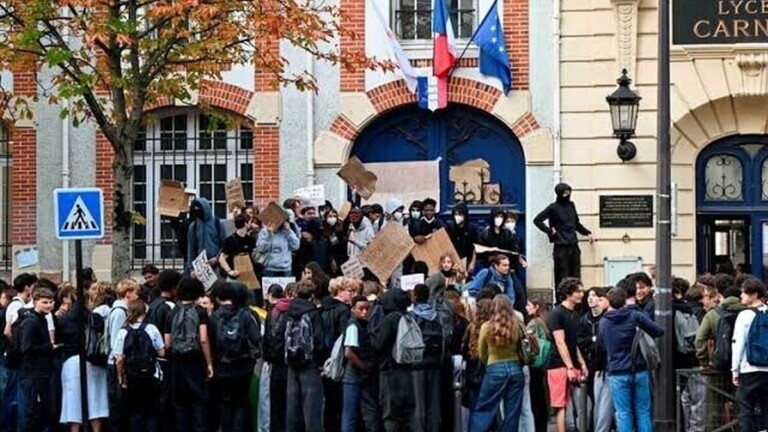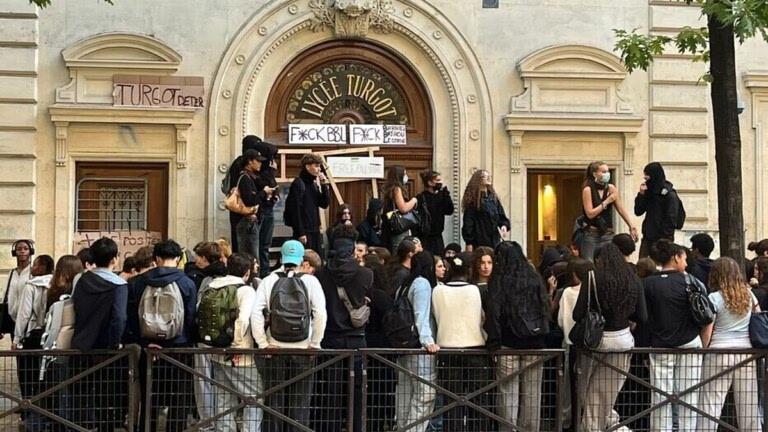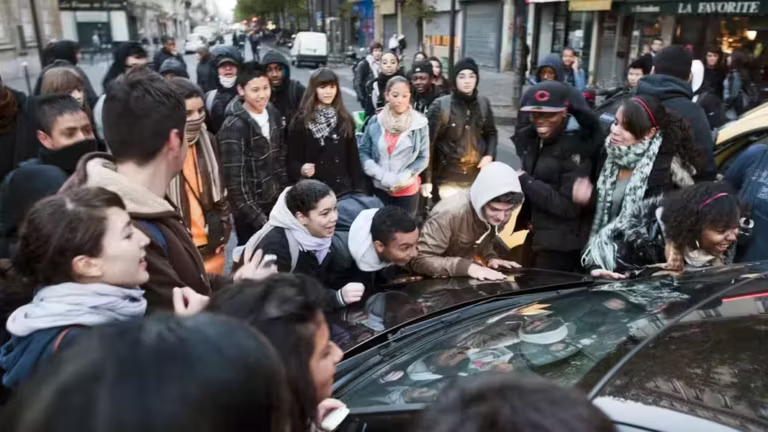
While tens of thousands of high school students have been demonstrating for several weeks against Parcoursup , let's look back at the reasons that led to the abolition of its predecessor, APB, and the persistent limitations of the current system.
Parcoursup came into effect in 2018 to replace Admission Post-Bac (APB), a platform that had itself replaced a system limited to selective programs. APB allowed applicants to submit up to 24 choices, ranked in order of preference and finalized. This ranking fed an algorithm that only issued one offer at a time: as soon as a program accepted a student, all their lower-ranked choices were automatically removed. The procedure involved only three rounds of responses per year, on fixed dates. For highly competitive programs, such as law, psychology, or sports science (STAPS), the system used a lottery system when demand exceeded capacity.
Studies have shown that students rejected in this way experience more disrupted academic paths, with some dropping out of higher education altogether. In 2017, after the last round of responses, 87,000 out of 864,000 high school graduates were still without a placement offer, representing 10% of applicants, an increase of 25,000 compared to the previous year. The National Commission for Information Technology and Civil Liberties (CNIL) then formally demanded that the Ministry cease basing decisions solely on algorithms. Furthermore, the failure rate in the first year of undergraduate studies was approaching 60%.
Parcoursup has eliminated random selection and fundamentally changed how the application process works: candidates can now receive multiple offers simultaneously, without having to irreversibly rank their choices, and the system is updated nightly, freeing up places as applications are rejected. The number of choices is limited to ten, to which can be added sub-choices and ten additional apprenticeship choices.
Results that are hard to convince
Despite these adjustments, the figures remain worrying. During its first year in 2018, Parcoursup still left nearly 80,000 young people without an offer by mid-July, representing 9% of the 888,000 applicants—a level comparable to that of APB. In 2026, more than 126,000 out of 872,000 applicants, or 14%, were still without a placement at the end of the main admissions phase. Success rates in bachelor's degrees also remain insufficient: fewer than half of first-year students progress to the second year, 17% leave university without a degree in their first year, and only 36% obtain their bachelor's degree in three years, according to a report by the Court of Auditors published in 2025.
The issue of transparency in selection criteria is fueling much of the student anger. While each program is required to publish the criteria used by its admissions committee, applicants can only learn the precise evaluation methods after receiving a rejection. Minimum grade requirements, the weight given to the applicant's high school, or their chosen academic track are not made public. Faced with the student mobilization, the Prime Minister mentioned the desire to make the platform "more transparent and understandable," while the Minister of Higher Education acknowledged the need to update the tool. Further student protests are planned for the coming days.