
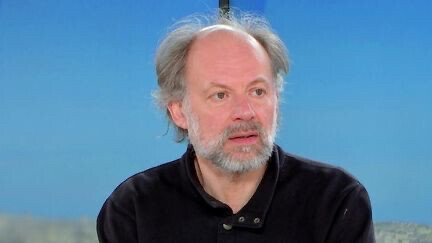
Actor Denis Podalydès has filed a criminal complaint against persons unknown after discovering a YouTube channel using a synthetic voice remarkably similar to his own. Around fifty philosophical videos had been published using this artificially generated recording, without his consent or involvement in their creation. The channel in question has since been shut down. Supported in his legal action by Adami, an organization dedicated to defending the rights of performing artists, the actor has chosen to take legal action for "extreme manipulation."
An artificial voice presented as that of the actor
The videos replicated Denis Podalydès's voice to such an extent that it was easy to believe the actor was actually the narrator. His timbre, intonations, and speech rhythm had been reproduced using a voice generation system based on artificial intelligence. The content focused primarily on philosophical topics. However, there was no indication that Denis Podalydès had recorded these texts, authorized the use of his voice, or endorsed the opinions expressed under this artificial voice. The reproduction of a voice can create direct confusion among the public. An internet user watching these videos could reasonably assume that the actor had agreed to read the texts, that he was the author, or that he shared the ideas expressed.
Around fifty videos published without authorization
The channel had broadcast approximately 50 videos before its closure. The sheer volume of content shows that the use of voice was not limited to isolated clips or one-off imitations. It relied on the repeated exploitation of the actor's vocal identity. To produce this type of content, tools can analyze several existing recordings to reproduce a person's voice. Once the model is created, it becomes possible to have it recite entirely new texts, without needing to re-record the person being imitated. Denis Podalydès was therefore not simply dealing with a classic imitation. His voice appears to have been digitally reconstructed and then used as a storytelling tool to populate an entire channel.
A complaint against persons unknown for "hyper-rigging"
The actor has filed a complaint against persons unknown, a procedure that allows the justice system to investigate even if the perpetrator is not yet officially identified. The investigation will notably seek to determine who administered the channel, who produced the audio files, and under what conditions the videos were uploaded. The complaint targets "hypertrucage," a French term used to describe deepfakes. This type of content can take the form of images, videos, or audio recordings created or modified using artificial intelligence to make it appear as if a person has spoken words or performed actions that are not their own. In this case, the issue is not solely about the similarity of the voice. The justice system will also have to examine the use of Denis Podalydès's identity, the lack of consent, the potential deception of the public, and any profits derived from the distribution of the videos.
Adami supports Denis Podalydès' approach
Denis Podalydès is being represented by Adami in this legal action. This organization represents performing artists and defends their rights against the unauthorized use of their performances, image, or voice. The case directly raises the question of the control an artist retains over their vocal identity. A voice is not simply an interchangeable sound. It allows a person to be identified, statements to be attributed to them, and their fame to be exploited. For the actor, this lawsuit should provide answers about the origin of the videos, but also seek recognition of the harm caused by this digital appropriation.
A case study that could be useful to other artists
Denis Podalydès's approach is presented as a beacon of hope for artists facing voice cloning. Singers, actors, presenters, journalists, and voice actors can now have their vocal identity reproduced using content already available online. These tools allow for the rapid generation of advertisements, songs, narrations, or fictional statements. The person being imitated can then be associated with a product, a political opinion, a work, or a message they have never endorsed. The investigation will have to establish precise responsibility for the creation and distribution of the videos featuring Denis Podalydès. The closure of the channel put an end to their publication, but the criminal proceedings must now determine who was behind this exploitation and what legal action can be taken.