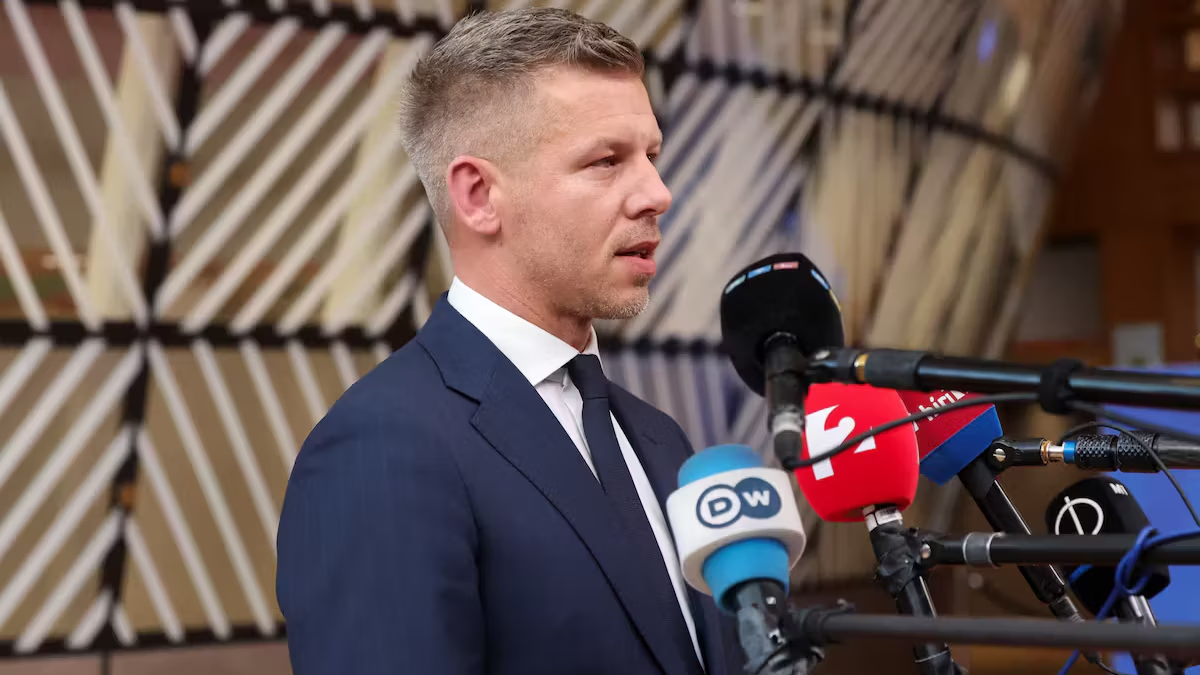
Hungarian Prime Minister Peter Magyar announced on Monday a series of major reforms aimed at fighting corruption and transforming the country’s institutions. Among the most striking measures is the initiation of a procedure to impeach the Hungarian president, as well as a large-scale constitutional revision project.
Speaking before Parliament, Peter Magyar stated that his government would propose a constitutional amendment to initiate the impeachment of President Tamas Sulyok. The head of government accuses him of supporting the political legacy of former leader Viktor Orbán. Tamas Sulyok, for his part, rejects these accusations and claims to be limited to his institutional role as a check on power.
At the same time, the government intends to launch a large program called “Operation Purgatory,” presented as an offensive against the misappropriation of public funds. According to Peter Magyar, corruption has cost between 8% and 10% of Hungary’s gross domestic product in recent years.
At the heart of this plan is the creation of a National Office for the Protection and Recovery of Assets. To enable its establishment, the government plans to amend 47 laws. This new institution will be responsible for investigating suspicions of misuse of public funds dating back up to twenty years.
The Prime Minister also announced a complete revision of the Constitution starting this autumn. The project will be subject to public consultations before being submitted to a referendum. Other reforms target the judicial system, notably the introduction of a 70-year age limit for judges of the Constitutional Court.
These changes could have significant consequences for several figures close to the former regime. Among them is Peter Polt, considered an ally of Viktor Orbán, who could be forced to leave his position if the reform is adopted.
Opposition to these projects quickly emerged. Gergely Gulyas, a member of the former ruling party Fidesz, described Peter Magyar’s speech as “defamatory and appalling.” The debate thus promises to be particularly tense as the government attempts to profoundly reshape Hungarian institutions.