

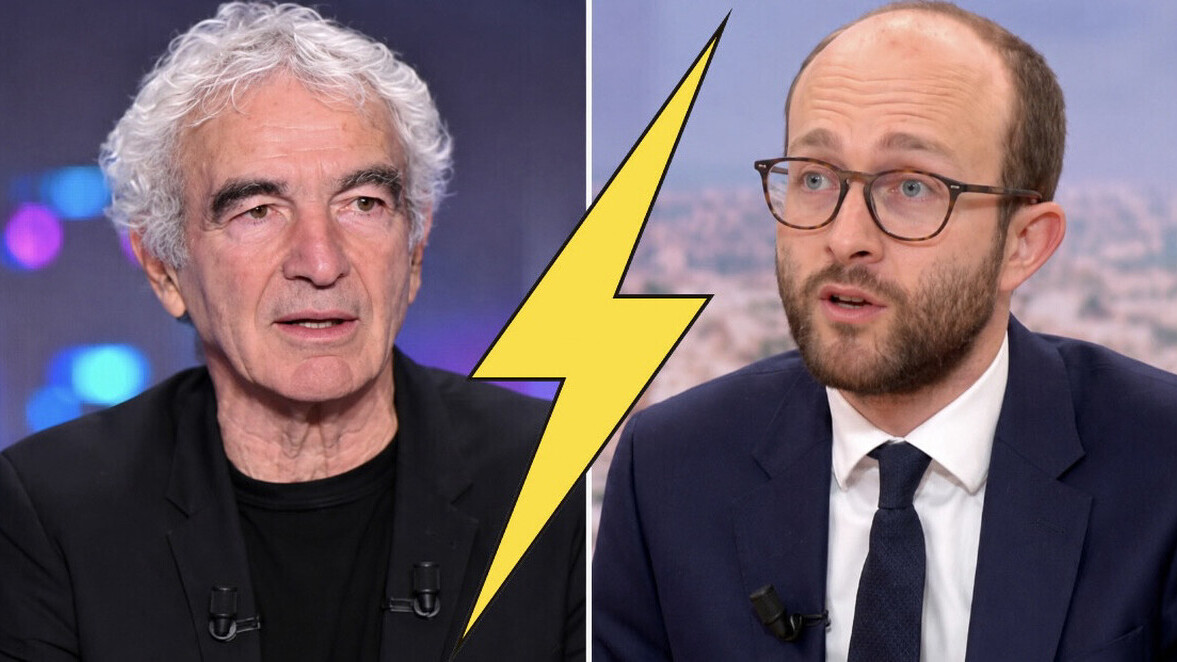
Former French national team coach Raymond Domenech reacted strongly on Tuesday to the rejection of the petition calling for the closure of CNews. Speaking on X, Domenech, who had a particularly contentious relationship with journalists during his time managing Les Bleus, denounced the decision as akin to a "dictatorship ." His outburst drew a scathing response from Horizons MP Jérémie Patrier-Leitus , a champion of press freedom.
Raymond Domenech demands the names of the 28 MPs
The petition calling for the closure of CNews was dismissed on Tuesday by the National Assembly 's Committee on Cultural Affairs and Education . Despite more than a million signatures, 28 members voted to dismiss it, while 25 voted to continue its examination.
A decision that provoked the anger of Raymond Domenech. The former coach of the French national team, now a sports commentator, posted a particularly virulent message on X: "We want the names of the 28 members of parliament who voted against the debate in the National Assembly on the possible removal of CNews from the airwaves. It was just a debate, despite the million French people who signed the petition… this is dictatorship."
This accusation is ludicrous, given that the members of parliament exercised their parliamentary prerogatives by voting on the fate of this petition. Furthermore, the classification of the text does not preclude the possibility of a broader debate on the media in the National Assembly.
"Dictatorship is when political leaders shut down media outlets": the MP's scathing response
The reaction from Horizons MP Jérémie Patrier-Leitus was swift. Directly addressing Raymond Domenech on X, the parliamentarian began with a blunt response: “Dear @RaymondDomenech, I am one of them. Dictatorship is when political leaders shut down media outlets. In a democracy, it is not up to those in power to decide whether to close a media outlet. That is the responsibility of the regulator, Arcom.”
In a democracy, we fight for freedom of the press and the media, for their independence. And we fight against impunity so that laws and rules are respected and that sanctions are imposed when these rules are violated.
When fighting the far right and the far left, you don't fight with their weapons. Boycotts, censorship, suppression—I'll leave that to them.
He finally called for "a major debate in the National Assembly on information" , which he considers "essential and urgent".
Domenech and the journalists: a long history of conflict
Raymond Domenech's stance is certainly striking when one remembers his relationship with the press during his six years at the helm of the French national team , between 2004 and 2010.
The former national team coach had made a real trademark of his confrontational style with journalists. Tense press conferences, evasive answers, acerbic remarks, and refusals to comment on certain information: Domenech made little secret of his distrust of the sports media.
In September 2009, when questioned about revelations concerning his relationship with Thierry Henry, he notably declared : "I repeat to you, since 2004, that I do not comment on lies in the press."
A year earlier, he had even joked to journalists about their criticism of him: "It's a good thing that exceptional laws and the guillotine no longer exist, otherwise some of you would take great pleasure in sending me to the scaffold..."
His relationship with the media had ended up annoying even Jean-Pierre Escalettes, then president of the French Football Federation , who had publicly asked him to improve his communication.
The contrast is terrible: the man who long treated journalists as adversaries is now denouncing an alleged attack on democracy because some members of parliament refused to continue examining a petition aimed at shutting down a television channel.
CNews: the petition rejected, but the debate on the media remains open
Tuesday's vote does not concern the editorial content of CNews, but rather the parliamentary handling of a petition calling for its closure. The committee voted 28 to 25 to dismiss the petition.
However, LR MP Alexandre Portier proposed a broader debate on freedom of expression, media regulation, foreign interference and the influence of social networks.
The Conference of Presidents of the National Assembly will have to decide whether this discussion will be held in the plenary session. As for the potential closure of a channel, it cannot result from a simple parliamentary vote on a petition: audiovisual sanctions are subject to specific legal procedures, under the supervision of the competent courts.




Respond to the article
Be the first to comment on this article.