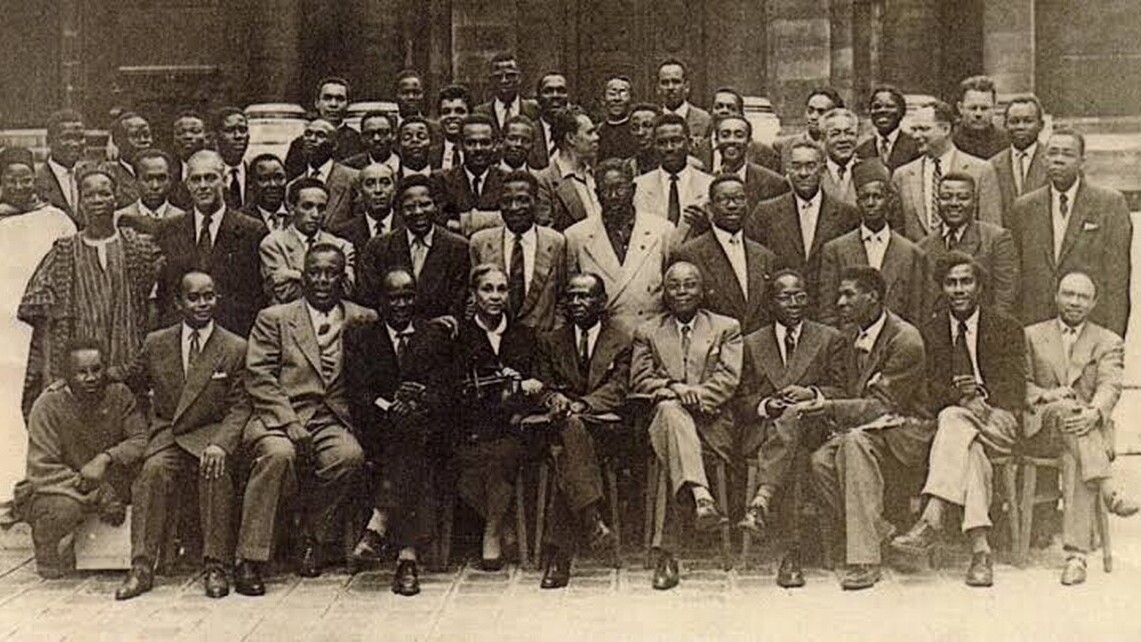
Seventy years after the first international congress of Black writers and artists, held in 1956 at the Sorbonne in Paris , the university revisits this major event in the intellectual and cultural history of the 20th century. Initiated by Alioune Diop, founder of the journal and publishing house Présence Africaine, the gathering brought together numerous Black writers, artists, and intellectuals, including Aimé Césaire and Frantz Fanon.
Held in the Descartes amphitheater, the congress addressed several major issues related to colonization, racism, Black cultures, and the place of colonized peoples in the world. Often described as a "cultural Bandung," in reference to the 1955 Bandung Conference which marked the decolonization movement, it helped to give international visibility to the reflections of Black intellectuals.
A tribute organized seven decades later
To mark the 70th anniversary of this meeting, the Sorbonne is organizing several events dedicated to its history and legacy. A symposium, a photographic exhibition, and a commemorative plaque have been planned, focusing on the 1956 congress and the role played by Présence Africaine. The commemorative plaque was unveiled on September 18th in the presence of members of Alioune Diop's family. It is to be permanently installed on the university walls to commemorate the first international congress of Black writers and artists held there.
The exhibition brings together photographs taken at the 1956 congress as well as works by contemporary artists. The various events organized at the Sorbonne also connect the history of this event with issues that concern writers and artists from African cultures and their diasporas today. The 1956 congress thus remains associated with a period of profound political and cultural transformations, marked by decolonization movements and the emergence of new intellectual expressions. Seven decades later, the Sorbonne seeks to preserve the memory of this gathering and highlight its influence on literary, artistic, and political thought related to Black cultures.