

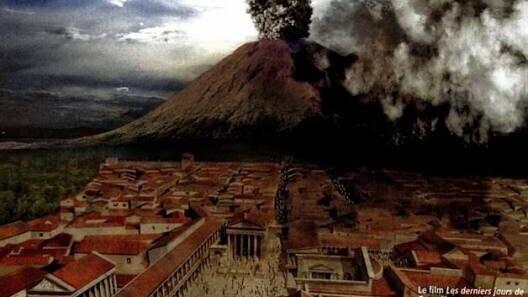
According to the tradition passed down by Pliny the Younger, Vesuvius erupted on August 24 of the year 79 AD, burying the Roman city of Pompeii and the neighboring towns of Herculaneum, Oplontis and Stabiae in Campania under a rain of volcanic ash.
The testimony of a teenager who stayed on the opposite bank
At Misenum, on the other side of the Gulf of Naples, a 17-year-old boy named Pliny the Younger witnessed the eruption from a distance, which he would describe thirty years later in two letters to the historian Tacitus. His uncle, Admiral Pliny the Elder, then attempted to rescue the threatened inhabitants aboard his fleet, before dying at Stabiae, suffocated by the volcano's sulfurous fumes.
In the space of nearly twenty-four hours, the eruption claimed several thousand victims in the surrounding towns and countryside, with the inhabitants of Pompeii being progressively covered under several meters of ash, lapilli and volcanic rocks.
A date now disputed by archaeologists.
While August 24th remains the most widely accepted date, numerous archaeological clues, including the 2018 discovery of graffiti dated October 17, 79 AD in a house in Pompeii, have led several researchers to place the eruption at the end of October of the same year. A medieval transcription error in the letters of Pliny the Younger could explain this confusion, with some copies mentioning the Kalends of November rather than those of September.
Rediscovered in the 18th century after nearly seventeen centuries of oblivion, Pompeii and Herculaneum remain today among the most valuable archaeological sites for understanding Roman civilization at its height.






Community
Comments
Write a comment
Be the first to comment on this article.