
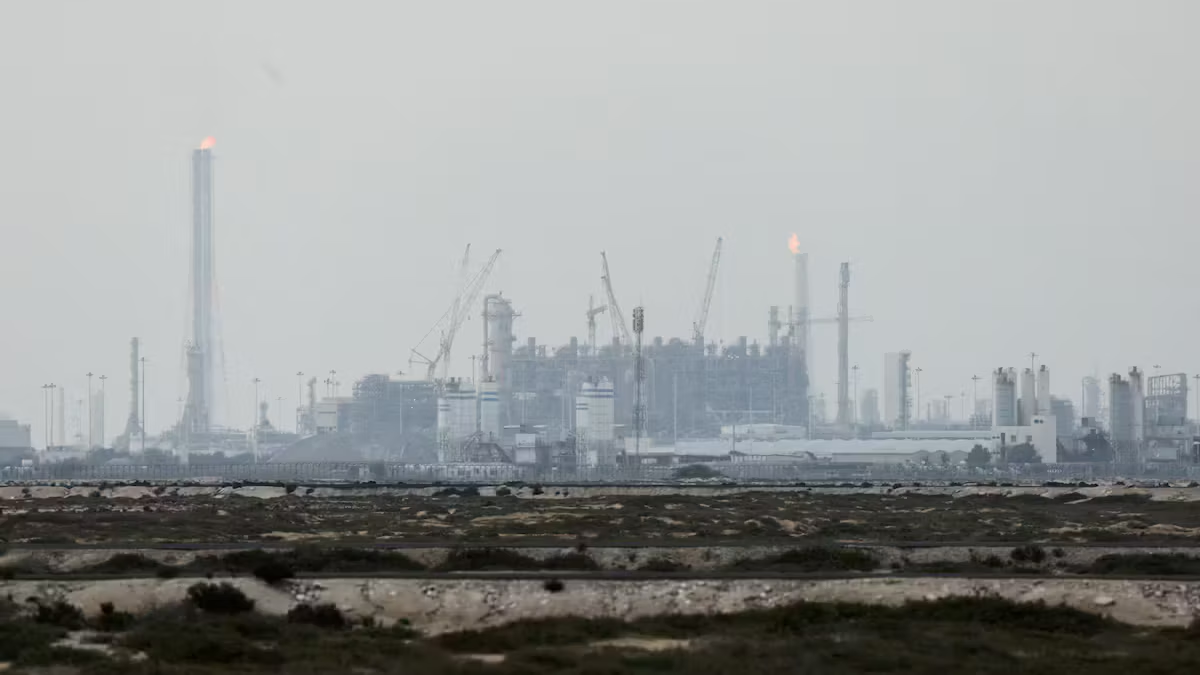
South Korea acknowledged on Friday uncertainties related to the damage sustained by liquefied natural gas (LNG) facilities in Qatar, while seeking to reassure the public about the potential impact on its energy supply. Seoul stated that it has alternative solutions in place to mitigate disruptions.
These concerns follow Iranian attacks on Qatari energy infrastructure, which have forced the national company QatarEnergy to consider invoking force majeure on some long-term contracts. According to the company, these strikes have taken approximately 17% of its LNG export capacity offline.
This situation could affect several countries dependent on Qatari gas, including Italy, Belgium, South Korea, and China. However, South Korean authorities have insisted that the impact will remain limited, thanks to the diversification of their supply sources.
As the world's third-largest importer of LNG after China and Japan, South Korea is heavily reliant on this fuel for electricity generation, industrial power, and home heating. In 2025, it imported nearly 47,77 million tons of LNG, including 7,16 million tons from Qatar, according to data from the consulting firm Kpler.
Despite these figures, Seoul believes it can compensate for any potential supply reductions by turning to other suppliers. This strategy aims to guarantee the country's energy continuity in an international context marked by significant tensions.
This episode nevertheless illustrates the fragility of global energy markets in the face of geopolitical conflicts. Attacks against key infrastructure, such as those in Qatar, fuel fears of broader disruptions that could affect all gas-dependent economies.
Community
Comments
Comments are open, but protected against spam. Initial posts and comments containing links undergo manual review.
Be the first to comment on this article.