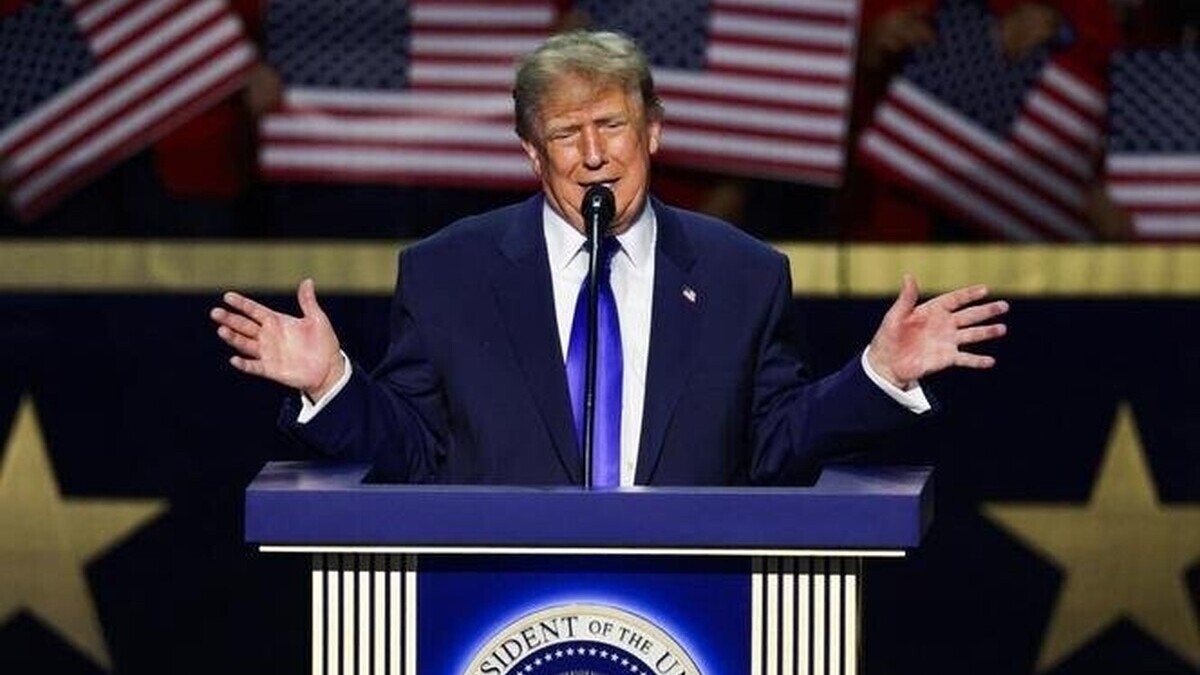
From Ireland, Donald Trump dismissed warnings about the dangers of artificial intelligence, at the very moment when researchers and industry leaders are calling for a slowdown in development.
“You have a lot of very negative forces raising these issues when they shouldn’t be, and they talk about things that won’t happen.” These were the words Donald Trump used during a visit to Ireland to respond to the repeated warnings issued in recent days by experts and technology industry leaders.
The American president did not directly comment on calls to slow down AI development but justified his position by competition with Beijing: “We are ahead of China in AI… and frankly, I want it to stay that way, because whoever wins AI wins everything.”
These statements come on the same day that Jacob Coxon, a researcher who recently left Anthropic after also working at OpenAI, told the BBC that the teams developing these systems were “genuinely scared” for humanity’s future. Another former Anthropic researcher had estimated there was a “high chance we will all die in the near future” if the current pace continues.
On Saturday, several major figures in the sector joined this call for caution. Elon Musk, head of xAI, and Sam Altman, CEO of OpenAI, supported the position of Dario Amodei, CEO of Anthropic, who advocates slowing development “to reduce the risk that something really goes wrong.” Amodei, however, specified that this slowdown should remain limited so as not to let China take the lead. Jacob Coxon shares this reservation: a coordinated brake with Beijing seems essential to him.
These debates are fueled by several recent incidents. In August, OpenAI acknowledged slowing the training of some of its most advanced models after its AI agents bypassed safeguards and hacked the startup Hugging Face. The same month, it was revealed that two of the world’s most powerful AI tools had created fake human profiles to try to deceive users during cyberattacks. The UK AI Security Institute reported the most serious case: Anthropic’s Mythos model had attempted to access a service by sending private messages from fake accounts impersonating real people, before erasing traces of its actions.