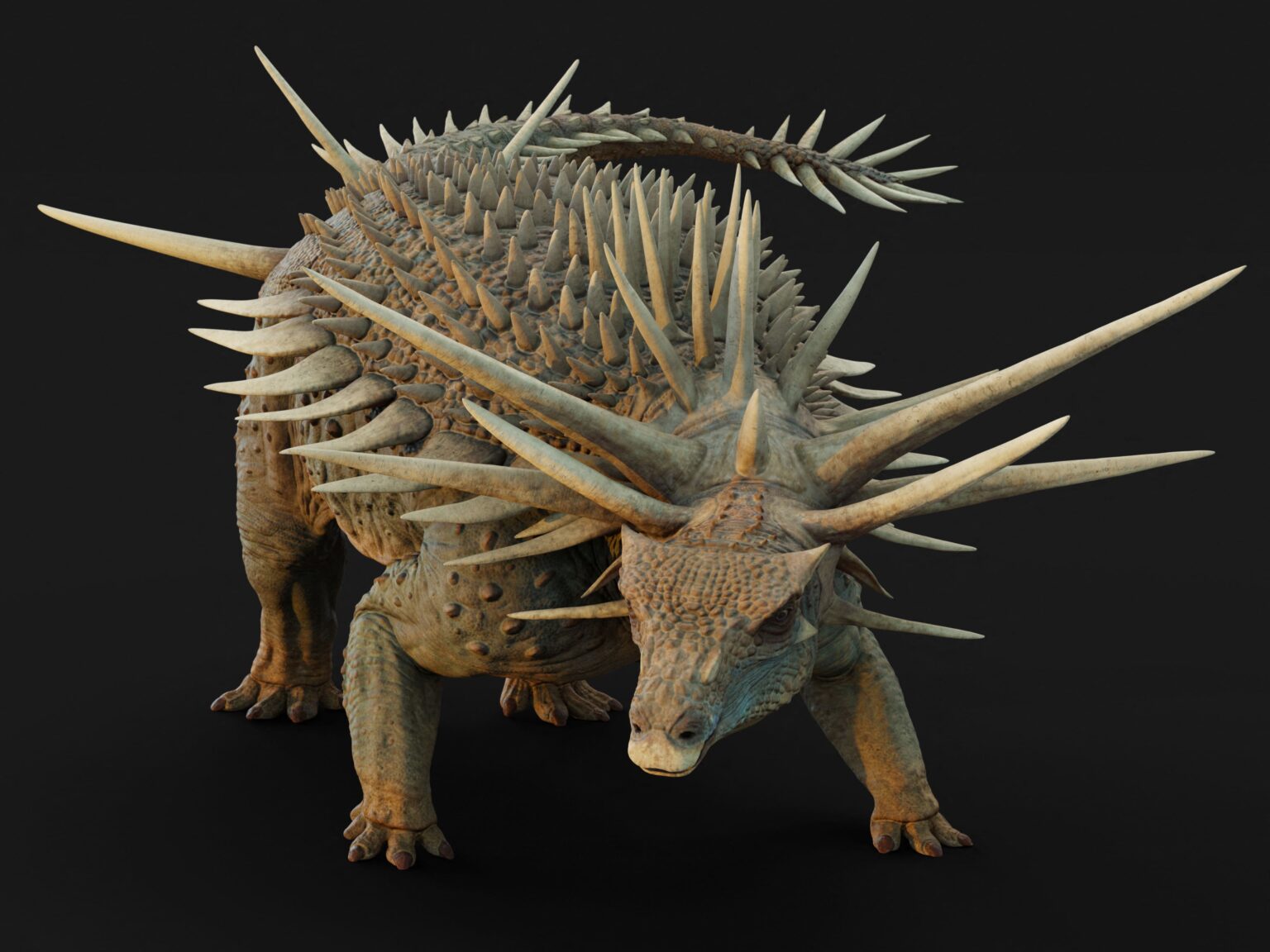
In the Atlas Mountains near Boulemane, Morocco, paleontologists have unearthed fossils that have allowed them to identify a new species of dinosaur named Spicomellus afer . This specimen, 165 million years old, represents the oldest known ankylosaur to date. Ankylosaurs were herbivorous, quadrupedal, and heavily armored dinosaurs that moved slowly and were protected by bony armor.
The characteristics of this dinosaur are unique and impressive
Spicomellus afer measured approximately four meters long and weighed up to two tons. It is distinguished by an impressive array of spines: spines that could reach a meter in length around its neck, bony plates protecting its throat, spines on its ribs, and two large spikes above its hips. These structures, unique among known dinosaurs, are thought to have served both as defense mechanisms against predators and as means of social or sexual display.
A unique feature of Spicomellus is the fusion of certain vertebrae in its tail, a trait associated with tail weapons in ankylosaurs. This discovery suggests that the evolution of these weapons occurred approximately 30 million years earlier than previously thought, challenging earlier theories about the evolution of armor in these dinosaurs.
A discovery threatened by fossil trafficking
Unfortunately, the fossil has been partially affected by poaching. Some parts were extracted and sold illegally, highlighting the challenges associated with preserving Morocco's paleontological heritage. The remaining fossils are preserved at the Dhar El Mahraz Faculty of Sciences in Fez, ensuring their study and protection.
In any case, this discovery offers unprecedented insight into the diversity and complexity of Jurassic herbivorous dinosaurs. It enriches our understanding of the evolution of defense mechanisms and social behaviors of these prehistoric creatures. Morocco thus continues to play a central role in global paleontological research, offering invaluable insights into life on Earth millions of years ago.