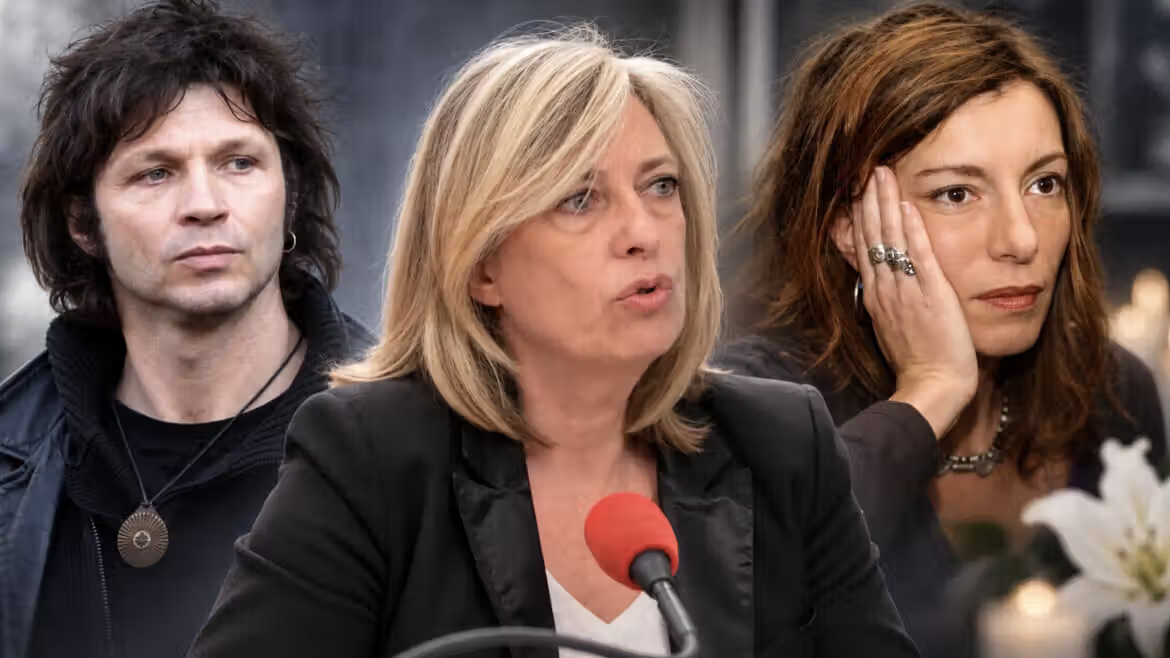
Sixteen years after Krisztina Rády's death, the circumstances of her suicide continue to be the subject of new investigations and testimonies. This Thursday, the day her book, Krisztina Rády, les silences qui tuent (Krisztina Rády, the Silences That Kill) , was published , journalist and documentary filmmaker Karine Dusfour discussed on RTL the possible responsibility of Bertrand Cantat in the distress preceding his ex-wife's death. She spoke of the singer's "indirect involvement ," while the justice system continues to investigate possible acts of violence committed before Krisztina Rády's death.
Karine Dusfour mentions an "indirect involvement" of Bertrand Cantat
Invited by Marc-Olivier Fogiel on RTL Matin , Karine Dusfour was questioned about the possible responsibility of the former Noir Désir frontman in the death of Krisztina Rády. The journalist did not present Bertrand Cantat as the direct perpetrator of her death, but examined the role that alleged violence and manipulative behavior might have played in his ex-wife's actions.
She thus refers to "an indirect involvement ." This formulation takes on particular importance given that the Bordeaux prosecutor's office has reopened the investigation into the death of Krisztina Rády in July 2025. The investigations focus on possible intentional violence allegedly committed by Bertrand Cantat against his ex-wife before her death.
An investigation into alleged abuse and violence
Krisztina Rády, a translator and former director of the Hungarian Institute in Paris , was found hanged on January 10, 2010, in her family home in Bordeaux. She had two children with Bertrand Cantat. Her death was initially ruled a suicide.
Karine Dusfour, who also co-directed the documentary series From Rockstar to Killer: The Cantat Case , revisits the relationship between Krisztina Rády and Bertrand Cantat in her book, focusing on the testimonies gathered over the years. Her investigation examines, in particular, the concepts of coercive control, abuse of power, and alleged domestic violence, as well as Krisztina Rády's long silence regarding her private life.
The author seeks, in particular, to understand why she defended Bertrand Cantat after Marie Trintignant's death and why she allegedly continued to protect him despite testimonies, after her death, describing a climate of psychological and physical abuse. These accusations remain under investigation.
"Bruises" mentioned in the initial reports
The case took a new turn last May. Police reports drawn up on the day of Krisztina Rády's death repeatedly mention a "bruise" on her face. These documents have reignited questions about the initial findings at her home.
Jean-Marc André, the former police commissioner present during the initial investigation, explained that, in his opinion, the term had been used incorrectly. Confronted with the fact that he himself had used it in his official report, he admitted to a vocabulary error. The presence of this word in several documents is nevertheless one of the elements now being considered in the re-examination of the case.
Bertrand Cantat is not convicted in the Rády case
At this stage, no judicial decision has established that Bertrand Cantat was responsible for Krisztina Rády's suicide. Karine Dusfour's statements represent the conclusion of her journalistic work and should therefore not be confused with a judicial conclusion.
Bertrand Cantat, on the other hand, was sentenced in Lithuania to eight years in prison for the violence that led to the death of Marie Trintignant in 2003. He was released on parole in 2007.
The death of Krisztina Rády remains the subject of a separate investigation. More than 16 years after her suicide, investigators are now examining whether violence committed before her death may have contributed to her actions. The "indirect involvement" mentioned by Karine Dusfour lies precisely at the heart of this inquiry.