By Jérôme Goulon.
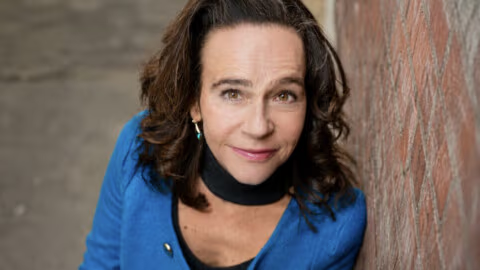
January 4th is celebrated as World Hypnosis Day. This day aims to dismantle misconceptions about hypnosis and demonstrate that it can be an effective tool to help people overcome various challenges. To mark the occasion, we interviewed Sabrina Rives , a French hypnotherapist, energy healer, and artist renowned for her work combining well-being, hypnosis, and stage performance. A current television star, she spoke to us about hypnosis and presented her show, " L'Hypnose Ensorcelée" (The Bewitched Hypnosis ), a creation blending humor, hypnosis, and theater , at the Apollo Theater in Paris (11th arrondissement) from January 16th , followed by a tour throughout France. This unique show immerses the audience in a captivating world inspired by legends and hypnotic stories, offering a mix of entertainment and reflection. A captivating interview…
"I interview people who have been burned in fires; it helps to ease their pain."
Jérôme Goulon: Hello Sabrina. To begin, what led you to hypnosis?
Sabrina Rives: I have Italian family on my mother's side. My great-grandmother was a renowned healer, a magnetizer, and so was my grandmother. We are fire healers and magnetizers: I often do interviews with people burned in fires, which helps alleviate their pain. Around 17 years ago, during my studies, medical hypnosis was a revelation; it wasn't very widespread then. Today, nurses are trained by specialized organizations, and hospitals now have their own trained staff.
Hypnosis in the operating room is not widely known to the general public. Can you explain it to us?
It has existed for 15 years, but it is not offered to all patients. It is mainly used in specific situations. For example, a person who needs to undergo a thyroid fine-needle aspiration biopsy: a needle is inserted to remove a nodule. If the patient is elderly, has heart problems, or high blood pressure, general anesthesia is avoided for such a short procedure. In these cases, local anesthesia is used, sometimes an anesthetic patch, and hypnosis is employed to manage pain and relax the patient.
Can hypnosis replace chemical products?
No, it complements local anesthesia, but it doesn't replace chemical anesthetics, although sometimes anesthetic isn't necessary, for example, for a colonoscopy. The person is hypnotized to distract them, to take them somewhere else mentally, and the procedure is performed painlessly.
And at what point does one decide to use hypnosis for a patient? ?
Either the patient is too old and poses a risk with general anesthesia, or there are medical constraints such as weight. In these cases, hypnosis is offered for non-invasive procedures, but never for major surgeries.
What types of operations benefit most from anesthetic hypnosis?
It's particularly useful in dental procedures, especially for patients with a fear of needles or opening their mouths. It's also used in dermatology and facial cosmetic surgery, such as thread lift removal or Botox injections. In gynecology, it's also employed, notably to help women undergoing in vitro fertilization (IVF), often those around 40 years old. Hypnosis can reduce pain during egg retrieval, complementing the gynecologist's procedure.
Do patients know in advance that they are going to be hypnotized?
Yes, we offer it beforehand. The patient can accept or refuse. If pain occurs despite hypnosis, the surgeon can intervene under general anesthesia.
You mentioned elderly people, but do you also use hypnosis on young children who are afraid of needles?
Yes. We numb the jaw locally and use hypnosis to relax the child, without general anesthesia. Even for wisdom tooth extractions, we can combine local anesthesia and hypnosis.
Do you have an unusual anecdote that happened to you during medical hypnosis?
Yes. Hypnosis uses the voice to create a hypnotic state. Once, a surgeon almost fell asleep hearing my voice during an operation—removing a cyst from an 87-year-old. He was very hypnotizable. It was funny, but thankfully rare.
Are some people more or less reactive, like during a hypnosis show?
Therapeutic hypnosis does not require a "hypnotic peak." In stage hypnosis, only 35% to 40% of the population can reach a state of bodily and mental control; this is known as stage hypnosis. A therapeutic hypnotist cannot replace a stage hypnotist, and vice versa. However, learning both allows a therapist to assess a patient's level of hypnotizability, which is useful for treating severe addictions.
"I treat all types of addictions: sugar, alcohol, tobacco, cocaine..."
Do you also treat phobias and addictions?
Yes, I treat all types of OCD, including addictions to sugar, alcohol, tobacco, cocaine, etc. For serious addictions or severe depression, I work with an addiction specialist, psychiatrist, or psychologist. We keep reports and work closely together. For milder fears, I can work alone, for example, to help someone overcome a fear of pigeons.
What is the nicest compliment a patient can give you?
Let him tell me it worked. I guide his brain, but he's the one doing the work.
Let's talk about your show. When does it start?
My show runs from January 16th to the end of March at the Apollo Theatre in the 11th arrondissement of Paris, every Friday and Saturday at 21:30 pm. I've also added a Sunday performance for families. It's a family show, convenient for children and for pre-dinner viewing.
"Many people think that hypnosis is witchcraft."
What should we expect from stage hypnosis?
In fact, many people think hypnosis is witchcraft. It's a shame, but that's why I wanted to pursue an artistic path. I didn't want to simply be seen as "Sabrina Rives who does hypnosis." I wanted to be an artist, to play a character. With Mesmer, you only see traditional hypnosis, and I wanted to offer something different.
What's different about your show?
I've always loved singing, dancing, and acting. I told myself, "On stage, do everything you've always dreamed of doing." In my show, I chose to talk about the Salem witches. Young girls love witches, and it resonates with me deeply because I'm a healer.
"At one time, faith healers were considered servants of Satan. They were burned or hanged."
Witches and faith healers don't necessarily have a good reputation…
That's true. Back then, in 1680, faith healers were considered servants of Satan. They were burned or hanged. The Salem witches were actually healers who helped slaves with poultices on their wounds. I wanted to tell this story to show that today, there is no more obscurantism and that women's place is different. In the show, I play Sabrina in 1681, a great healer who helps slaves. A villager denounces her to the reverends, who come to capture her and burn her at the tree. She then creates a curse: she will return with each new moon to haunt men. In the show, I return from the darkness and come to haunt the audience. At first, the witch is cold. But she softens as the show progresses, discovering that people today are kind. The show conveys many messages of kindness.
You talk about witches, but I believe there's also an important place for humor in your show?
Yes. In a hypnosis show, you have to make the audience laugh. Not just the viewers, but also those on stage. Everyone has to have fun. I mix hypnosis with theater and singing. I have a virtual character, a crow named Corvus. He talks to me, gives me my lines, and interacts with the audience. It's very funny and full of punchlines. I also sing between the hypnosis segments, I dance, I use props. It becomes an American-style show: theater, hypnosis, singing, dancing—it's all mixed together. Children can even come on stage.
How does the public react to this immersive and humorous experience?
The emotions are varied. They'll laugh, sometimes feel a little fear, but always in a good-natured way. Sometimes, I create an imaginary danger: I might, for example, make them believe a wolf is coming when it's just my little 1,8 kg Chihuahua. It makes them laugh and evokes strong emotions. There are also more touching moments. The show appeals to all ages, from 6-year-olds to 80-year-olds. After the performance, the audience is often amazed by what they've experienced. Some even want to come back to relive it.
Does ethics play an important role for you?
Yes, I've been practicing hypnosis in a therapeutic setting for 25 years. I would never do anything that could create phobias or psychological distress. My goal is to bring kindness and laughter. We already experience so many difficult things in our daily lives and on television. Entertainment allows us to relax, have fun, and reconnect with positive emotions.
"Messmer is one of my role models."
Are your hypnotic techniques unusual?
Yes. As a hypnotist, I use a mesmerizing gaze that induces a deeper sleep. It's different from traditional stage hypnosis. This allows me to create a more powerful hypnotic effect while remaining ethical.
Do you have any role models in this area?
Yes. Messmer is one of my role models. He inherited his gift from his great-grandfather, much like I inherited my gift from my great-grandmother. Charcot, Milton Erickson, and other great hypnotists also inspire me. I study their writings to understand how they used hypnosis in their lives and to help others.
Do you have any other projects after this show?
After the show, I'd like to write a saga based on this first show and a future second show. My dream would be to open a school for wizards, where we would teach hypnosis, magnetism, dowsing, clairvoyance, acupuncture, massage, and other alternative therapies. The idea is to create an intergenerational school for young people, adults, and those changing careers, with qualified teachers for each discipline.
In conclusion, where can we see you?
The show opens on January 16, 2026, at the Apollo Theatre, Apollo Comedy Hall. To see me at my office, I am located in the 16th arrondissement of Paris, at 120 Avenue Mozart, on Tuesdays from 8:00 AM to 9:00 PM and Thursdays from 8:00 AM to 1:30 PM. You can also find me on Créneau Libre. The office is shared with other therapists and has a lovely garden.