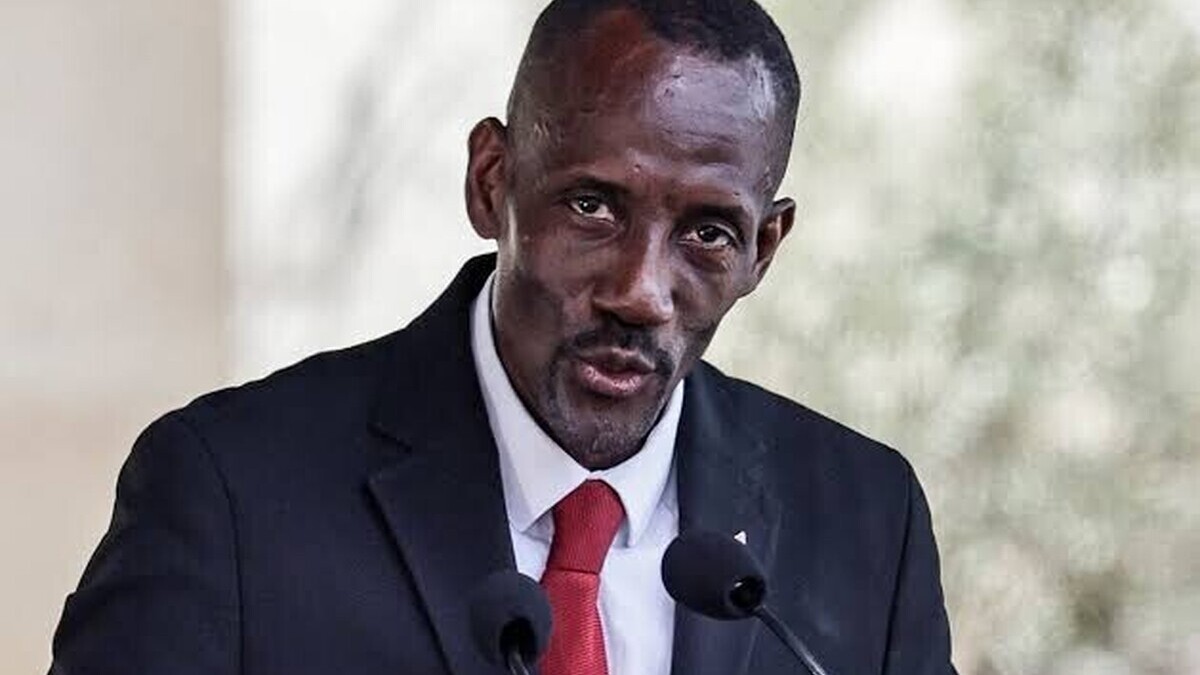
The mayor of Saint-Denis, Bally Bagayoko, reignites the controversy over the methods used by law enforcement against high school protests. In an interview granted to the Spanish daily El País, published this Saturday, October 10, 2026, the La France insoumise elected official asserts that police interventions against young protesters have a racist dimension. When directly questioned on this issue by journalist Daniel Verdú, he answers without hesitation: “Of course.” The political leader believes that law enforcement does not intervene in the same way depending on the social origin and neighborhood of the protesters. These statements come in a particularly tense context, as several police interventions are under investigation and clashes since the beginning of the high school movement continue to provoke numerous political reactions.
Bally Bagayoko, elected mayor of Saint-Denis last March in the first round with 50.77% of the vote, has become one of the most visible political figures of this mobilization. For several weeks, he has participated in gatherings organized by high school and university students, denouncing the lack of resources allocated to the National Education system. His involvement took on a particular dimension after footage showed him intervening between teenagers and police officers during a Parisian demonstration. The elected official himself was exposed to tear gas during this intervention. These videos, widely shared on social media, earned him the support of many young protesters but also sharp criticism from political leaders who reproach his closeness to a movement sometimes marked by violence and vandalism.
Accusations of Discrimination in Police Interventions
In his interview with El País, Bally Bagayoko develops a broader critique of law enforcement in France. According to him, police interventions differ significantly between affluent neighborhoods and working-class districts. He considers this differential treatment a form of discrimination that should be condemned. The elected official also mentions several situations in which teenagers were reportedly injured during interventions he deems disproportionate. He believes police do not sufficiently distinguish peaceful protesters from those responsible for violence. However, these accusations represent the personal assessment of the mayor of Saint-Denis: they do not alone prove that police interventions during the high school movement were motivated by racial considerations.
The mayor’s statements come as law enforcement methods are under increasing scrutiny. Several images showing interventions against teenagers have caused strong emotion, notably after serious injuries suffered by some protesters. Judicial and administrative investigations have been opened to establish the circumstances of these events. The Ministry of the Interior defends the necessity to protect schools, people, and property against violence observed on the margins of several gatherings. Authorities also recall that many police officers and gendarmes have been injured since the beginning of the movement. The multiplication of investigations highlights the need to distinguish legally justified interventions from possible disproportionate uses of force.
A Presence Among High School Students That Divides the Political Class
Bally Bagayoko fully assumes his participation in the demonstrations. In the interview with the Spanish daily, he explains that he believes a political leader must be able to intervene physically when he considers young people to be threatened. He states that he sought to prevent a confrontation between police and high school students while calling on protesters not to respond to provocations. Asked about his previous statements regarding the legitimacy of certain forms of violence, he clarifies that he never encouraged teenagers to attack law enforcement. He nevertheless acknowledges that situations of injustice can provoke reactions of anger. This position has earned him criticism, with some officials believing his remarks risk creating ambiguity about condemning violence committed during the protests.
The mayor of Saint-Denis also considers that the government’s response does not sufficiently take into account the initial demands of the high school students. Protesters notably call for more teachers, improved learning conditions, and solutions to difficulties encountered in schools. Bally Bagayoko particularly criticizes Emmanuel Macron, the Minister of National Education Édouard Geffray, and the president of the Île-de-France region, Valérie Pécresse. According to him, public authorities should have engaged in dialogue earlier rather than letting tensions worsen. He also reproaches the government for favoring a security response to a movement whose demands are essentially educational. Authorities have nevertheless announced several measures intended to address school difficulties while maintaining their security arrangements.
A French Controversy Now Followed Internationally
The publication of this interview in El País reflects the growing interest of foreign press in the French high school mobilization. Several international media outlets have focused on the protests, injuries recorded during clashes, and the role played by certain political figures. Bally Bagayoko’s background attracts particular attention. Aged 53 and from a family of Malian origin, he became in March 2026 the first Black and Muslim mayor of a French city with more than 100,000 inhabitants, according to the Spanish daily. His election had already generated significant media coverage, notably due to racist attacks he had faced. His repeated presence alongside high school students now gives him new visibility well beyond Seine-Saint-Denis.
This new stance is expected to fuel debates on relations between police and residents of working-class neighborhoods. By accusing law enforcement of discriminatory behavior, Bally Bagayoko makes a particularly serious critique that calls for objective elements and precise investigations. The question of racism in police practices cannot be settled solely on political declarations, nor can accusations of disproportionate use of force be dismissed without examination. The debate takes place at a time when trust between institutions and part of the youth appears weakened. For the mayor of Saint-Denis, the priority remains opening discussions with high school students and improving their study conditions. His statements to the Spanish press add an additional dimension to a crisis that now far exceeds the initial school demands.