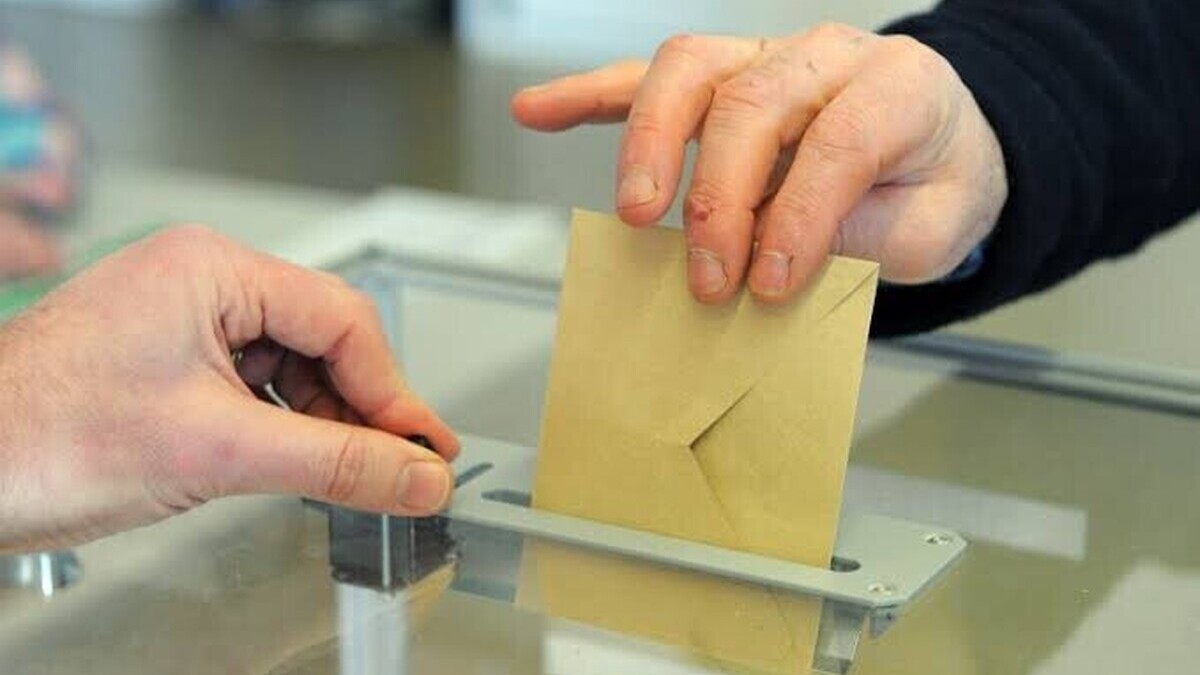
The Social Democratic Left primary seems to be regaining momentum after a particularly difficult start. On Saturday, October 10, 2026, organizers announced that 71,250 voters had participated in the ballot by 8:00 a.m., already more than half of the approximately 140,000 registered voters. This is an encouraging figure for this election, which aims to select the Social Democratic Left's candidate for the 2027 presidential election. This increase comes after a first day marred by a cyberattack that severely disrupted access to the electronic voting platform. By 7:00 p.m. on Friday, only 20,000 voters had been able to cast their ballots. In the space of thirteen hours, more than 51,000 additional votes were recorded, a sign of a marked improvement in the system's operation.
The election had nevertheless begun under particularly difficult circumstances. From its opening at 8:00 a.m. on Friday, the e-votez.net platform was the target of a cyberattack designed to overwhelm its connection capacity. Automated programs triggered a massive influx of access requests, significantly slowing down operations without completely interrupting the service. Faced with these difficulties, the organizing committee, chaired by Patrick Mennucci, decided, in agreement with the five candidates, to extend voting until 6:00 p.m. on Sunday, October 11, whereas it was initially scheduled to close at 8:00 p.m. on Saturday. The organizers maintain that the recorded votes have not been altered and that the integrity of the election remains intact. The cybercrime unit of the Paris prosecutor's office has opened an investigation, while the National Cybersecurity Agency of France (ANSSI) has also been notified.
Five candidates for the presidential nomination
This primary pits five figures against each other, each advocating for a significantly different vision for the future of the left. Raphaël Glucksmann, MEP and prominent figure in the Place Publique movement, is notably facing off against Olivier Faure, First Secretary of the Socialist Party. Ségolène Royal, a former candidate in the 2007 presidential election, is also in the running, alongside MPs Jérôme Guedj and Emmanuel Maurel, a member of the Republican and Socialist Left. The televised debates held before the vote revealed several points of disagreement, particularly regarding alliances with La France Insoumise and on economic and international policy. Despite these differences, the five candidates are participating in a consultation aimed at selecting a joint candidate for 2027.
Turnout is already one of the key takeaways from this primary. The number of registered voters exceeded initial expectations, with a significant proportion of supporters not directly affiliated with the organizing parties. According to Le Monde , nearly 80,000 voters thus present a political profile difficult to identify before the count. This peculiarity makes the outcome of the election less predictable, as the internal power dynamics within the parties do not necessarily allow for anticipating the preferences of the entire electorate. Opinion polls published before the vote provide indications of the candidates' popularity, but they do not constitute a direct measure of the intentions of those registered for this primary. The result could therefore differ from the balance observed within the political establishment.
A cyberattack that raises questions about electronic voting
Beyond the competition between candidates, the IT incidents have placed the organizers in a position of credibility. The choice of an exclusively digital election was intended to facilitate participation and avoid the logistical constraints associated with opening physical polling stations. But the attack suffered on Friday revealed the limitations of this system when a platform becomes temporarily difficult to access. The main risk lies not only in the potential alteration of votes, which the organizers claim to have ruled out, but also in the impact of the disruptions on voter turnout. Voters may indeed decide not to vote when they encounter repeated connection problems. The extension decided on Friday aims precisely to give them more time to exercise their right to vote.
The progress recorded on Saturday morning is therefore a reassuring first indicator for those in charge of the election. Having surpassed 71,000 votes, the ballot has crossed the symbolic threshold of half of registered voters, with more than a day still remaining before its close. Organizers will nevertheless need to remain vigilant until Sunday evening to ensure the platform functions properly and the operations run smoothly. At this stage, no official information has identified the perpetrators of the cyberattack or determined their motives. The judicial investigation will notably have to clarify the technical means used and establish any potential liability. For the five candidates, the challenge now is to allow political debate to resume after a period largely dominated by technical difficulties.
Results are expected Sunday evening before a possible second round
The results of the first round are expected to be announced on Sunday, October 11, after the polls close at 6:00 p.m. If no candidate meets the requirements to be nominated in this first round, a second round will be held on October 16 and 17. Voters will then have to choose between the remaining candidates. This second phase could lead to further debates on political direction and potential alliances for the presidential election. The leadership of the Socialist Party and the other parties participating in the election want to quickly select a candidate in order to prepare for the 2027 campaign, in a context of shifting power dynamics on the left.
For the organizers, this primary represents both a political and organizational test. The relatively high turnout observed from Saturday morning onward shows that the consultation is generating genuine interest among activists and supporters. However, it is not enough on its own to gauge the future candidate's ability to unite the entire left or to predict their performance in the presidential election. The selection of a common figure will not be sufficient to erase the disagreements that emerged during the campaign, particularly regarding alliances and policy. After the technical difficulties of the initial hours, those in charge of the primary will therefore have to meet a new challenge: transforming this electoral mobilization into a lasting political momentum. Sunday evening's meeting will be a first step in this direction.