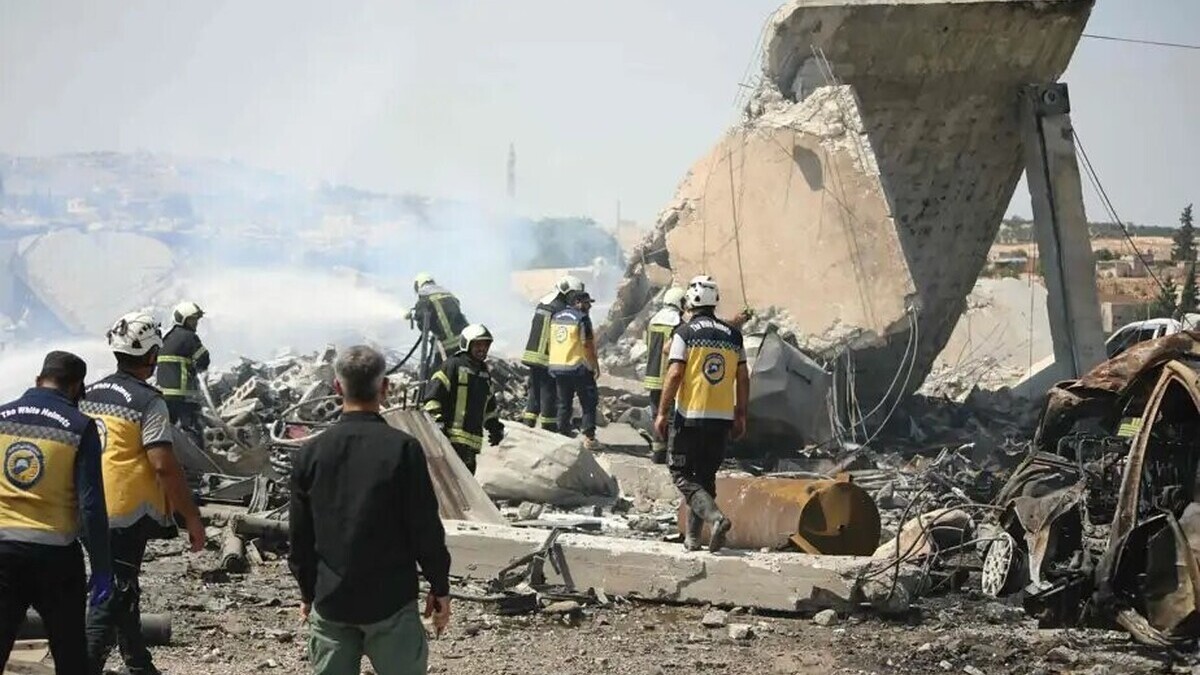
A temporary storage site for munitions and war weapons exploded Wednesday near Sarmada, in northwestern Syria, killing at least fourteen people and injuring eleven others, according to the Syrian Ministry of Health.
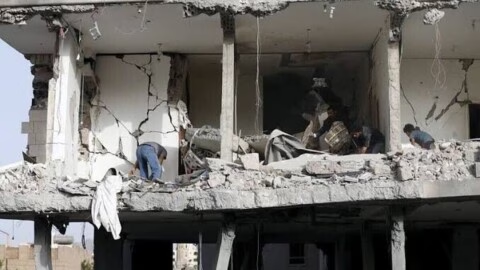
The explosion occurred in the Burj al-Nimra area, on the road to Sarmada, about 45 kilometers from Idlib. The depot was used to collect weapons and munitions left over from the civil war that ravaged the country from 2011 to 2024. Security forces quickly sealed off the roads leading to the area, while teams from the Civil Defense and the Syrian Red Crescent continued searching for survivors under the rubble.
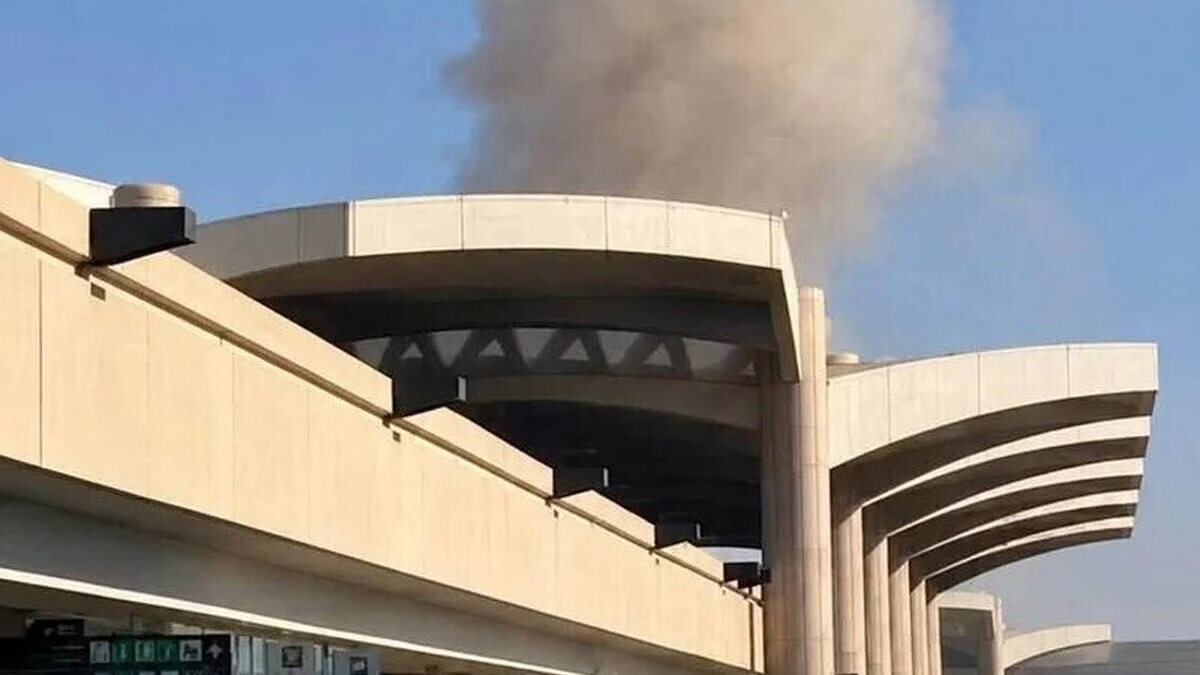
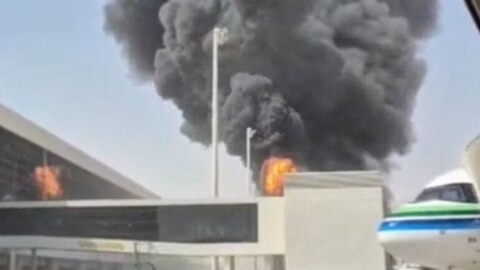
The exact cause of the blast remains undetermined. Walid Aslan, head of emergency operations at the Idlib Disaster Management Directorate, indicated that initial assessments pointed to munitions. Videos released after the explosion showed a thick plume of black smoke accompanied by small successive detonations.
Ahmad Faour, a mechanic whose garage adjoins the warehouse, recounted hearing a first small explosion before fleeing, just before the main blast. “An arms depot should not be installed in a public place, in a village where there are residents and businesses,” he said while inspecting his damaged cars. “These poor people who died had done nothing wrong.”
This is the second deadly explosion in Idlib in September. Earlier this month, a car carrying munitions exploded in the town of Binnish, killing five people. A government source then mentioned an arms trafficker, without authorities providing further details on the origin of the incident.
The Idlib province, a former frontline where multiple armed factions stored weapons throughout the conflict, is among the most contaminated areas in the country. In November 2025, an explosion at a munitions depot in Kafr Takharim killed five workers and injured nine others; in August 2025, another blast on the outskirts of Idlib caused four deaths and five injuries.
Syria is among the countries most heavily affected worldwide by unexploded war remnants. The British demining NGO HALO Trust estimates that in 2026, these unexploded munitions kill or injure on average one person every six hours in the country. In August, some 700 victims of explosive-related accidents were recorded, one third fatal and one third involving children, according to Simon Jackson, head of the Syria program within the organization. He attributes the rise in accidents to the influx of populations returning to their communities after al-Assad’s fall in December 2024.
Humanitarian organizations called Wednesday to intensify demining efforts, both internationally and locally, to reduce the number of victims in the province.