Rodolphe Saadé has established himself as one of the key figures in Lebanon's economic recovery. The Franco-Lebanese CEO of CMA CGM has just committed an additional $100 million to the container terminal at the port of Beirut, already operated by his group. This largest expansion project ever undertaken in this part of the port is expected to double its capacity and restore Beirut to its position at the forefront of maritime trade in the Mediterranean . In a Lebanon reeling from economic and financial collapse, Saadé continues to invest where capital has long been scarce.
His commitment is not new. In May 2023, when the country was still mired in crisis, Rodolphe Saadé summed up in a few words why he continued to invest in his country of origin: "No, I'm not betting on Lebanon . I am Lebanese." Three years later, investments continued, acquisitions multiplied, and CMA CGM became one of the country's leading private employers.
Conversely, Emmanuel Macron 's omnipresence in Lebanon since the port explosion has primarily left behind a legacy of broken political promises, an accommodating diplomacy with Hezbollah, and a particularly active defense of CMA CGM's interests. The French president has made numerous trips and declarations of support for Lebanon, but he has also acted as a salesman for Rodolphe Saadé's group, even advancing the Beirut port project. And when faced with a choice between the radical break he promised in 2020 and the power dynamics of the old Lebanese system, Macron opted to compromise with Hezbollah, and then to promote its candidate, Sleiman Frangieh, to the presidency.
$100 million: Saadé puts the port of Beirut back in the spotlight
On September 10, Rodolphe Saadé participated in the launch of the new expansion of the container terminal at the Port of Beirut, alongside Prime Minister Nawaf Salam. CMA CGM will invest $100 million to increase the terminal's capacity and strengthen its position in regional traffic. Nawaf Salam welcomed the project: "We are opening a new window to the world for Lebanon."
The operation extends the work begun since the terminal's takeover. In February 2022, CMA CGM secured a 10-year contract for its management, operation, and maintenance, with an initial $33 million investment program dedicated to the rehabilitation and modernization of equipment. The group already accounted for nearly 55% of the terminal's volume.
For Lebanon, the expansion should allow Beirut to capture more transshipments and regain a central position in the Eastern Mediterranean. Saadé is directly financing the increased capacity of an infrastructure vital to the Lebanese economy.
An establishment that has become essential for the economy
For several years, Rodolphe Saadé has considerably expanded his activities in Lebanon. CMA CGM took control of the Tripoli container terminal, the country's second largest commercial port, and then strengthened its logistics and service activities.
In August 2026, the group finalized the acquisition of Fattal, a long-established name in Lebanese distribution. This transaction brought CMA CGM's workforce in the country to nearly 4,000 employees, making the group one of Lebanon's largest private employers. Fattal operates in the distribution of consumer goods, electronics, pharmaceuticals, healthcare products, perfumes, and cosmetics.
The whole is now considerable: ports, maritime transport, logistics, distribution, services, digital. Rodolphe Saadé continued to invest money, take over companies and develop infrastructure while Lebanon was going through one of the most serious crises in its modern history.
Macron arrives after the explosion, with CMA CGM's interests in tow.
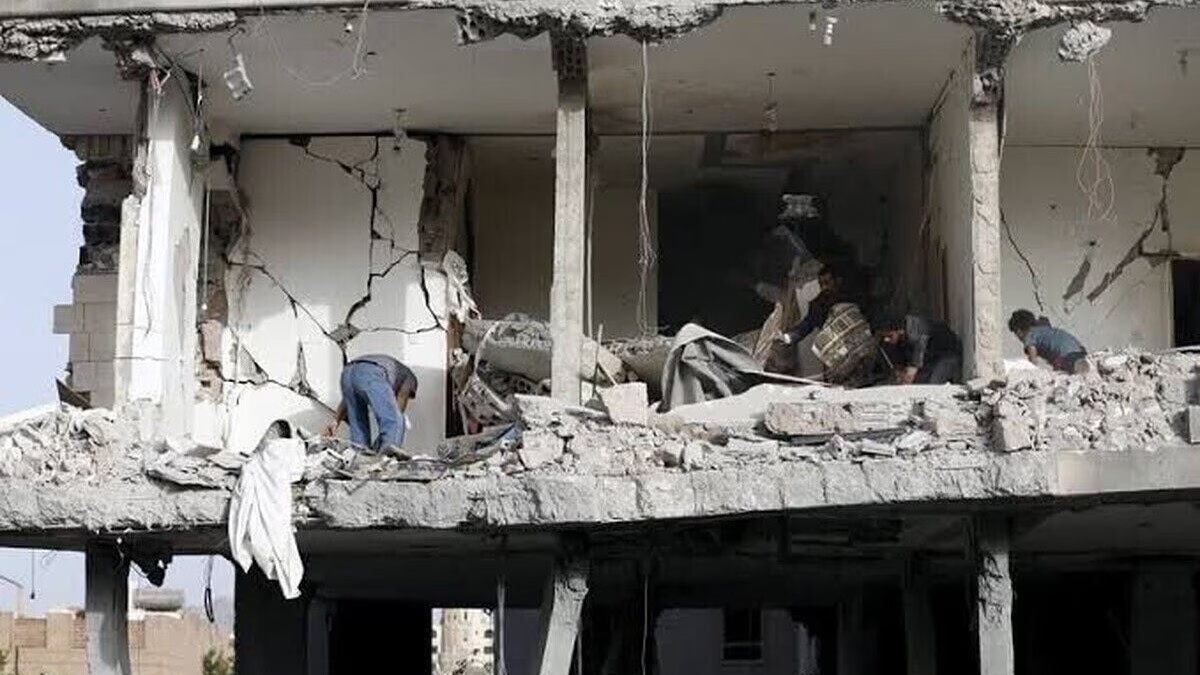
Emmanuel Macron began his Lebanese offensive immediately after the port explosion of August 4, 2020. Two days after the disaster, he was in Beirut. The French president promised reforms, lectured the political class, and presented himself as the one who would shake up a completely paralyzed system.
Less than a month later, on September 1st, Macron returned. Rodolphe Saadé accompanied him. During this presidential visit, the head of CMA CGM presented the Lebanese authorities with a project worth between 400 and 600 million dollars to transform the port of Beirut into a "smart port".
French diplomacy then moved forward with CMA CGM's interests at the forefront. Macron was putting pressure on Lebanese officials in the name of the country's reconstruction, while Saadé presented his group's project for one of Lebanon's most important infrastructure projects.
This rapprochement between French diplomacy and economic interests had already been detailed in our investigation on Emmanuel Macron, Rodolphe Saadé and Hezbollah around the port of Beirut.
France pushes for the tender, CMA CGM wins the port
Subsequent events confirmed Macron's role as a salesman for CMA CGM. Following the formation of Najib Mikati's government in September 2021, France requested the swift launch of a new tender for the container terminal . The process began in November. Three months later, CMA CGM won the 10-year concession.
Macron traveled to Beirut with Saadé, CMA CGM presented its ambitions for the port, Paris pushed for the launch of the tender, and the French group ultimately secured the terminal. Macron thus leveraged France's full diplomatic weight to support CMA CGM's interests in Lebanon. Behind the presidential rhetoric about Franco-Lebanese friendship, there was also clearly an economic agenda and a French champion seeking to strengthen its position in the Eastern Mediterranean.
With Hezbollah, Macron chose accommodation as early as 2020.
On the political front, the break promised by Emmanuel Macron quickly gave way to arrangements with the existing power structures. After the port explosion, the French president had promised to hold the Lebanese political class accountable. But Hezbollah was immediately integrated into the French political system. Macron chose to deal with the movement and take its influence into account in an attempt to implement his roadmap.
On September 27, 2020, after the failure of his initiative, Macron nevertheless launched a fierce attack: “Hezbollah cannot simultaneously be an army at war with Israel , a militia unleashed against civilians in Syria, and a respectable party in Lebanon.” But this outburst was not followed by a political break. France continued to deal with Hezbollah and incorporate its demands into the search for a Lebanese compromise. Macron had promised to change the rules. He ultimately accepted those imposed by Hezbollah’s balance of power.
The port of Beirut at the heart of relations between Macron and Hezbollah
The terminal issue has further fueled criticism of French policy. Our investigation into the awarding of the Beirut port contract detailed the information published regarding the relationship between Paris and political figures close to Hezbollah.
Georges Malbrunot and Christian Chesnot, in their book *Le Déclassement français* , reported the existence of an agreement between Emmanuel Macron and Hezbollah : the French president was not to make the issue of the movement's weapons a central topic during his visits to Lebanon. Meanwhile, and on a separate matter, CMA CGM was pursuing its interests related to the port of Beirut , whose concession Paris wanted to see expedited. Former Minister of Public Works and Transport Ali Hamieh, a Hezbollah ally directly involved in the port project due to his position, also found himself at the center of the revelations concerning the awarding of the contract.
Just a few months earlier, Macron had promised the Lebanese people he would tackle the workings of the political system. His policies ultimately led him to negotiate directly with Hezbollah. At the same time, but without an agreement being reached between the Shiite movement and CMA CGM, the French group obtained the concession for the container terminal at the port of Beirut , an infrastructure that Paris was pushing to quickly put out to tender.
2023: Macron backs Sleiman Frangieh, the Hezbollah candidate
Three years after the explosion, the Lebanese presidential election made Macron's policies even more blatant. Following the end of Michel Aoun's term, France pushed for a coalition government that paired Sleiman Frangieh as president and Nawaf Salam as prime minister. Frangieh was not an outsider to the old political system: he was the candidate of Hezbollah and Amal, a longtime ally of Bashar al-Assad. Just a few months earlier, Macron had called for replacing those in power who were blocking reforms. Yet he decided to support the man chosen by Hezbollah and Amal to lead the country.
Three years after claiming to liberate Lebanon from its political gridlock, Macron attempted to get Hezbollah's candidate elected president. This maneuver sparked anger among some Lebanese officials. Samir Geagea accused France of defending "common interests with Hezbollah, particularly concerning the ports of Beirut and Tripoli and other matters . "
Macron wanted Frangieh elected by Parliament, not by the Lebanese people.
The Lebanese presidential election is not decided by universal suffrage. The head of state is elected by the 128 members of Parliament. The French strategy was therefore to gain the support of the various blocs for Frangié in order to secure the necessary votes for his election. But the operation failed. In June 2023, Jihad Azour obtained 59 votes against 51 for Sleiman Frangié in the first round. Frangié's supporters then walked out of the chamber, causing a lack of quorum. Paris ultimately abandoned its strategy.
Macron tried to get his candidate elected to the Lebanese presidency, but failed. Joseph Aoun was ultimately elected in January 2025.
"France has never played into Hezbollah's hands": Macron caught out by his own policy
After Joseph Aoun's election, Emmanuel Macron attempted to rewrite the record of his Lebanese policy. In January 2025, he stated: "I believe I can say that France has never played into Hezbollah's hands." Yet, the accumulated facts since 2020 tell a very different story. Macron included Hezbollah in his agenda after the port explosion, Paris continued to negotiate with the organization, and France subsequently promoted Sleiman Frangieh, its candidate, for the presidency. Macron himself had to address criticism of his past support for Frangieh.
In March 2026, Bahaa Hariri further escalated his accusations by directly accusing Macron of having strengthened Hezbollah since the Beirut port explosion . He criticized him for contributing to the maintenance of a political system dominated by the same forces, despite the promises of a break with the past made to the Lebanese people in 2020.
Saadé invests in Lebanon, Macron leaves behind a legacy of political failures
Six years after the port explosion, Rodolphe Saadé continues to invest heavily in the country. CMA CGM manages the Beirut container terminal, controls the Tripoli terminal, has strengthened its logistics operations, acquired Fattal, and now employs nearly 4,000 people in Lebanon. The additional $100 million announced for the port of Beirut further solidifies its central role in the country's economic recovery.
Emmanuel Macron's record is far more mixed. He promised to transform the Lebanese system, but failed to do so. He acted as a salesman for CMA CGM when the group sought to take control of the Beirut terminal. He negotiated with Hezbollah after the port explosion. Then he tried to get Sleiman Frangieh, the Hezbollah and Amal candidate, elected president.
Rodolphe Saadé is now seen as one of the key private architects of Lebanon's economic recovery. Macron, on the other hand, leaves behind his numerous visits the image of a diplomacy that served the interests of CMA CGM while simultaneously making numerous political concessions to Hezbollah, even going so far as to support its candidate to lead Lebanon.