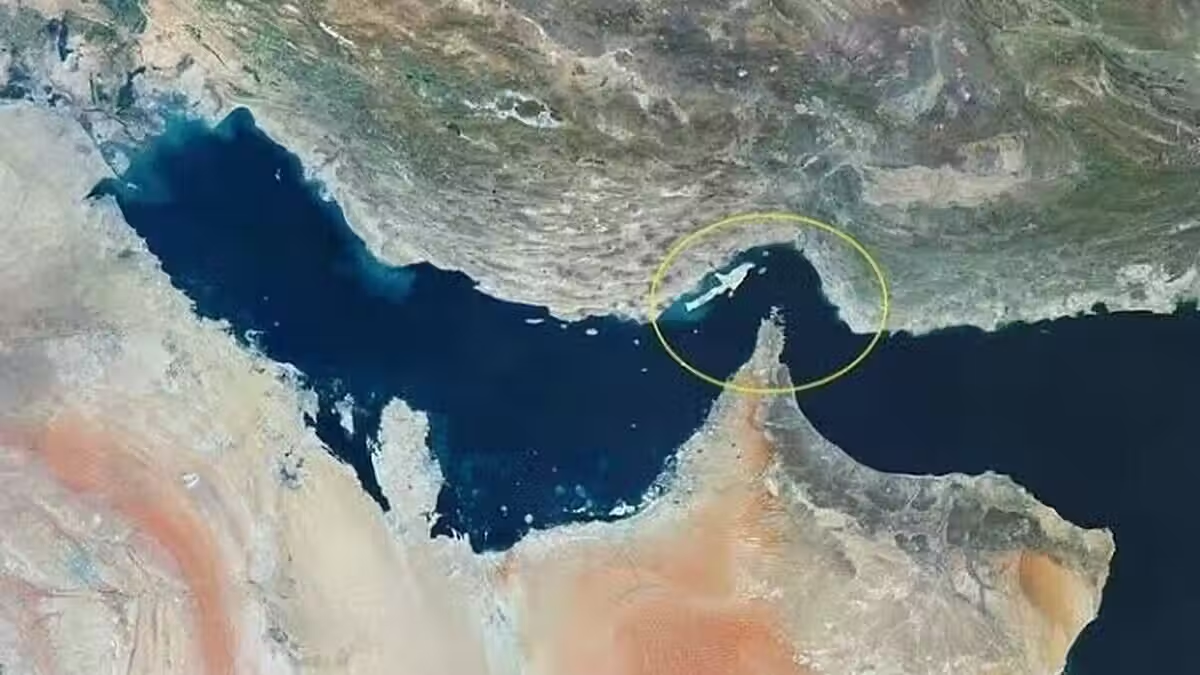
The United States launched a third wave of strikes against Iran this weekend after a commercial vessel was hit in the Strait of Hormuz. Tehran declared the passage closed, a claim Washington categorically rejects.
Donald Trump stated on Sunday that the Strait of Hormuz was « open » during an interview with NBC News. In a separate interview with CNN, the U.S. president said Iran had been « hit very hard » the previous night, adding that the two countries were close to an agreement on Saturday before an Iranian attack on a ship derailed everything. « They were giving in on everything, and then two hours later, they hit a ship with a drone. There’s something wrong with these people, » he said.
The U.S. Central Command (CENTCOM) confirmed this position in a statement posted on X: « The Strait of Hormuz is open to all vessels seeking to legally transit this international waterway. » The U.S. military specified that its forces were « positioned and ready » to ensure freedom of navigation, concluding: « Iran does not control the strait. Traffic is flowing. »
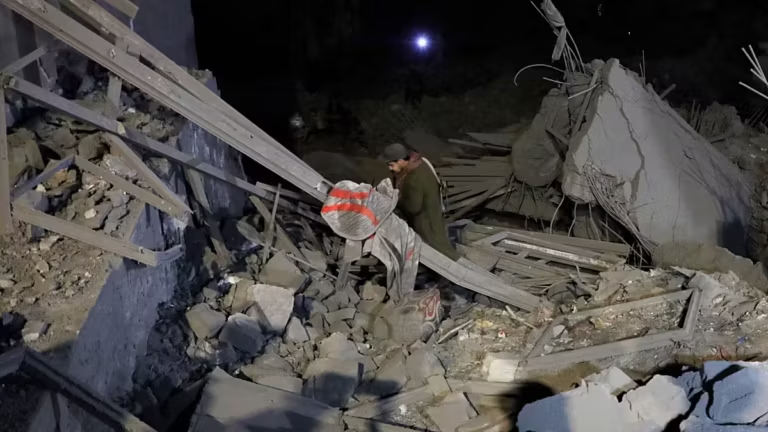
This third series of U.S. strikes in one week targeted « approximately 140 Iranian military targets, » according to CENTCOM, including missile and drone sites, ammunition depots, and coastal surveillance positions. In total, since the beginning of the week, more than 300 targets have reportedly been struck on Trump’s orders, with the declared objective of « degrading Iran’s ability to attack civilian sailors and commercial vessels. »
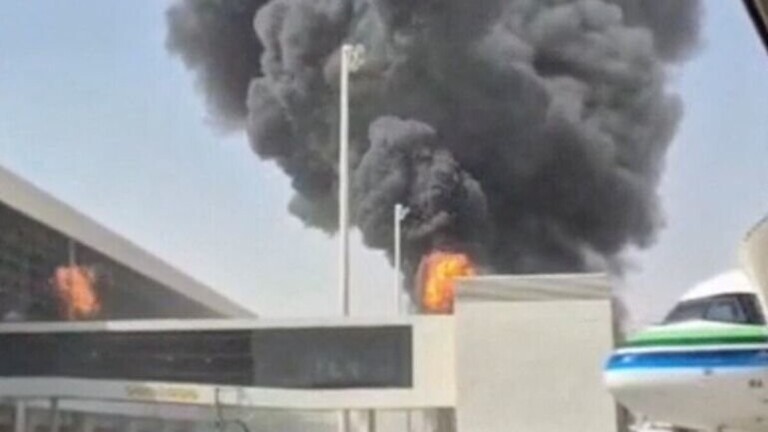
The struck vessel, the Cyprus-flagged GFS Galaxy, caught fire after being hit nine nautical miles off the coast of Oman. The crew had to abandon the ship. Among the eleven Indian nationals on board, ten were rescued; one remains missing, according to the Indian Ministry of External Affairs, which states that its embassy in Muscat is closely monitoring the situation.
Iran claimed retaliatory strikes against U.S. bases in Jordan, Kuwait, Bahrain, and Qatar. The Islamic Revolutionary Guard Corps (IRGC) stated they destroyed a fighter jet maintenance center and a command center at the Al-Udeid Air Base in Qatar, as well as refueling platforms for U.S. aircraft carriers in the Omani port of Duqm. The United Arab Emirates’ air defense systems were activated, and Bahrain’s Ministry of Interior called for calm among the population.
Qatar, for its part, issued a maritime alert requesting the temporary suspension of all navigation, including pleasure boats, fishing vessels, and jet skis, « for public safety reasons. »
Diplomatically, the Sultanate of Oman summoned Iranian Ambassador Mousa Farhang to deliver a protest note following Iranian drone attacks on the Omani regions of Al-Batinah and Musandam. This gesture is particularly notable from Oman, which traditionally maintains a neutral position and often acts as a mediator between Washington and Tehran.
The Iranian Parliament Speaker, Mohammad Bagher Qalibaf, accused the United States of violating the memorandum of understanding signed in June between the two countries. In a message posted on X, he wrote: « The era of one-sided agreements is OVER. We told you: keep your word or pay the price. Reality is knocking at the door. » He attached a screenshot of the memorandum text stating that Iran « will make arrangements » to ensure the « safe passage of commercial vessels » through the Strait of Hormuz.
Iranian state media also announced the death of an Iranian army officer, Lieutenant Hamidreza Dehghan, during the U.S. nighttime strikes on the port of Jask in the south of the country. Pakistani Foreign Minister Ishaq Dar called on all parties to « exercise restraint, » emphasizing that « dialogue and diplomacy remain the only viable path » to resolve the conflict.