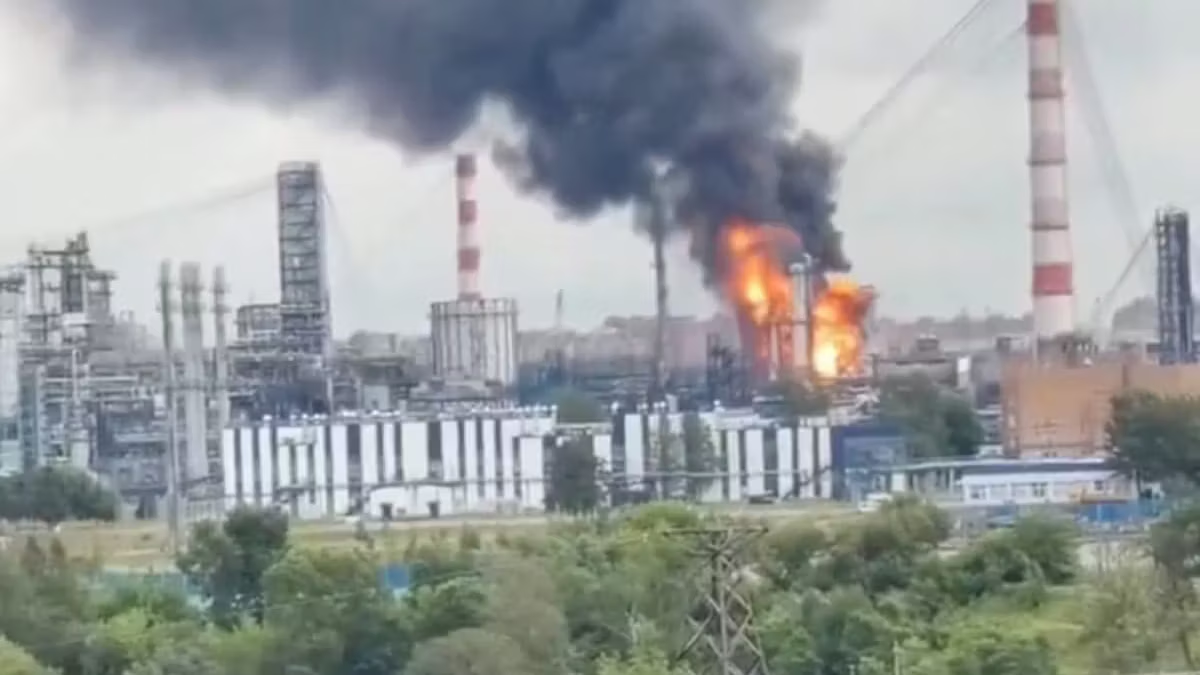
A Ukrainian drone attack caused a fire at one of the largest oil refineries in the Moscow region, illustrating the intensification of Kiev’s campaign against Russian energy infrastructure. The incident occurs as several regions of the country are already experiencing fuel supply difficulties.
According to local authorities, the drone damaged a facility at the refinery operated by Gazprom Neft. A fire broke out on site before being quickly controlled by emergency services. They indicated that production was not interrupted despite the damage to the infrastructure.
Moscow Mayor Sergey Sobyanin confirmed that a refinery facility was hit, without providing further details. The plant, already targeted several times since the beginning of the conflict, is considered the largest refinery in the Moscow region.
Ukrainian President Volodymyr Zelensky stated that the target was about 500 kilometers from Ukrainian territory, asserting that this strike demonstrated the long-range capabilities of the Ukrainian army. On the social network X, he presented the attack as a response to Russian bombings and the continuation of the war.
Since the beginning of 2026, Ukrainian strikes against Russian refineries have multiplied. According to official data and analyses relayed by Reuters, the number of attacks has doubled compared to the previous period, causing partial or complete shutdowns of some facilities and a decrease in the production of gasoline, diesel, and kerosene.
The targeted refinery processed 11.6 million tons of oil in 2024, producing notably 2.9 million tons of gasoline and 3.2 million tons of diesel. At the same time, the oil group Tatneft announced the implementation of nationwide fuel purchase caps, a sign of growing tensions affecting the Russian market.
While Russian authorities continue to describe the disruptions observed in several regions as mere local difficulties, the accumulation of attacks against energy infrastructure appears to increasingly weigh on fuel supply and on a sector essential to financing Moscow’s war effort.