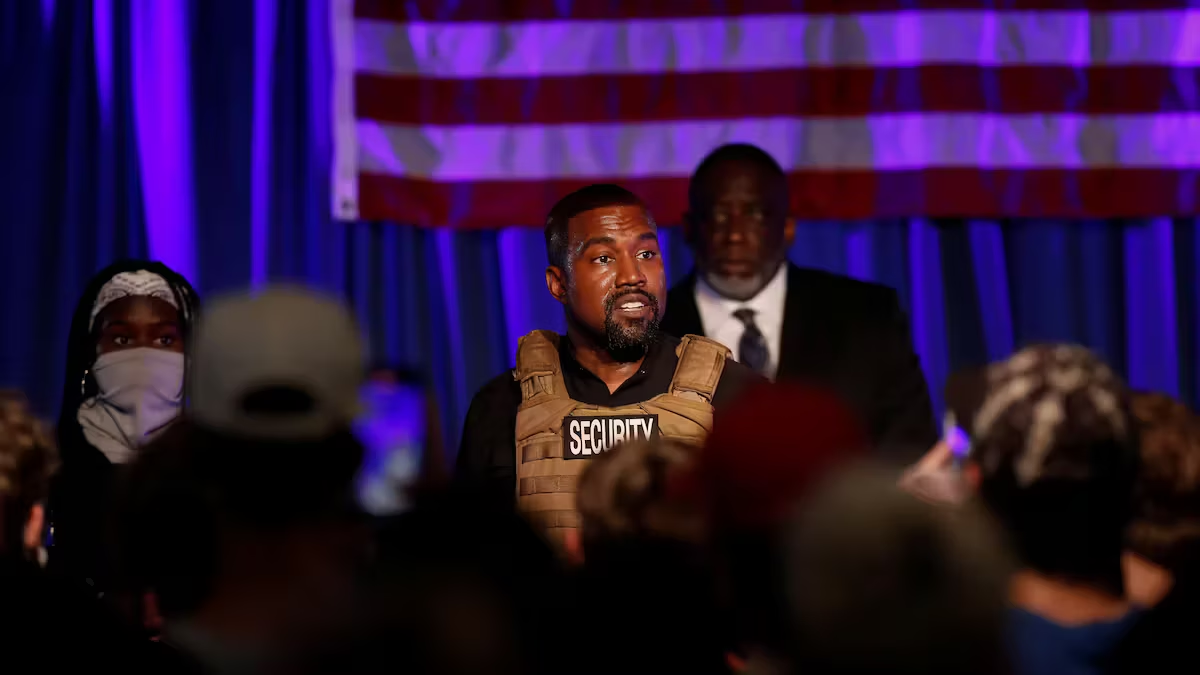
The British government is facing increasing pressure to ban rapper Kanye West from entering the country, following his headline booking at the Wireless Festival scheduled for July. This decision has sparked intense political and media controversy.
The artist, now known as Ye, has been heavily criticized in recent years for antisemitic remarks and controversial statements, which have already led to suspensions of his social media accounts, notably on the X platform. His announced presence at the festival has triggered a wave of outrage.
Several political figures, including Prime Minister Keir Starmer and the Mayor of London, have publicly criticized the organizers’ decision. The Conservative Party has also written to the Home Secretary requesting a ban on Kanye West entering British soil.
The controversy has had immediate economic repercussions, with several major sponsors withdrawing from this three-day music event. This increased pressure is destabilizing the festival’s organization and reigniting the debate on organizers’ responsibility regarding controversies surrounding certain artists.
According to a source from the Home Office, authorities are currently reviewing the rapper’s entry authorization. Minister Shabana Mahmood has the power to refuse access to British territory for public interest reasons, although the government generally does not comment on individual cases.
This case highlights tensions between artistic freedom, public responsibility, and political considerations, in a context where artists’ positions can have direct consequences on their ability to perform internationally.