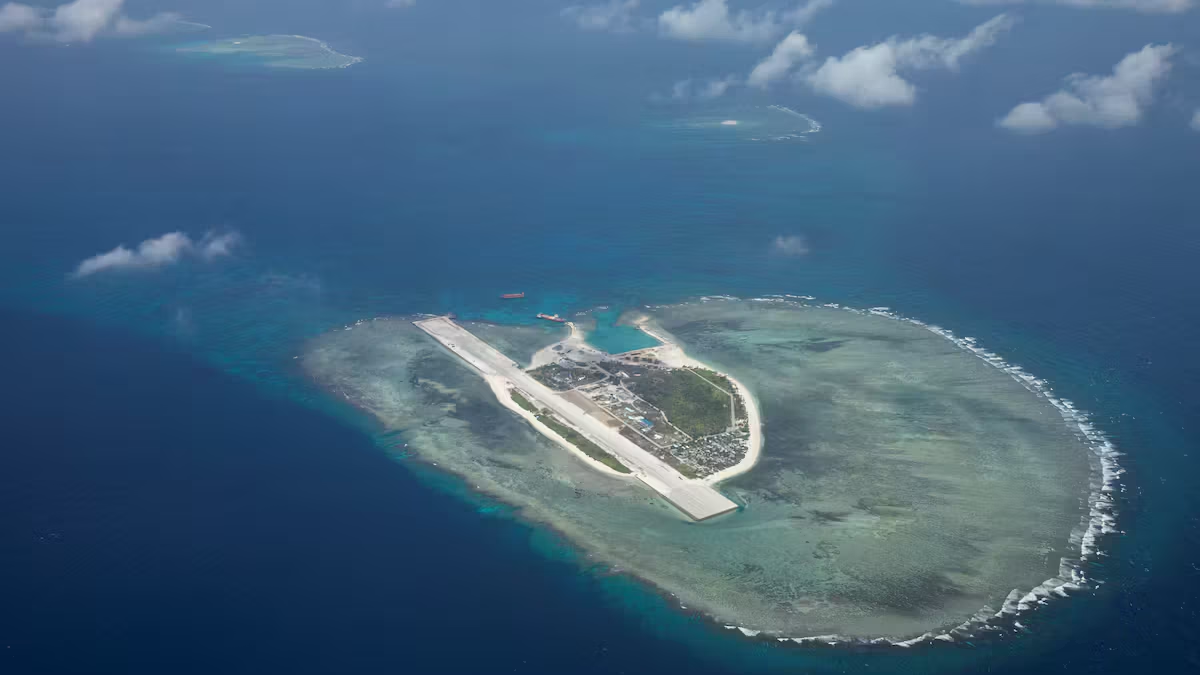
The United States, Australia, and the Philippines conducted their second joint military exercises of the year in the South China Sea, a strategic area marked by increasing tensions with China.
These maneuvers, held from April 9 to 12, involved warships, fighter jets, and surveillance aircraft as part of coordinated operations aimed at strengthening the maritime defense capabilities of the three countries. The Philippine military emphasized the importance of these exercises to improve interoperability among allied forces.
The Philippines notably deployed their FA-50 fighter jets, while Australia contributed with P-8A Poseidon maritime patrol aircraft. The United States, for its part, deployed the USS Ashland, a landing ship, illustrating the scale of the resources mobilized.
According to an official statement, these exercises demonstrate the « deepening of defense cooperation » among the three nations and their shared commitment to regional security. They are part of a strategy aimed at deterring any escalation in this disputed area.
The South China Sea remains a major point of friction, with several countries in the region claiming maritime territories rich in resources. These military exercises thus take place in a context of heightened rivalry, where every show of force carries significant geopolitical weight.