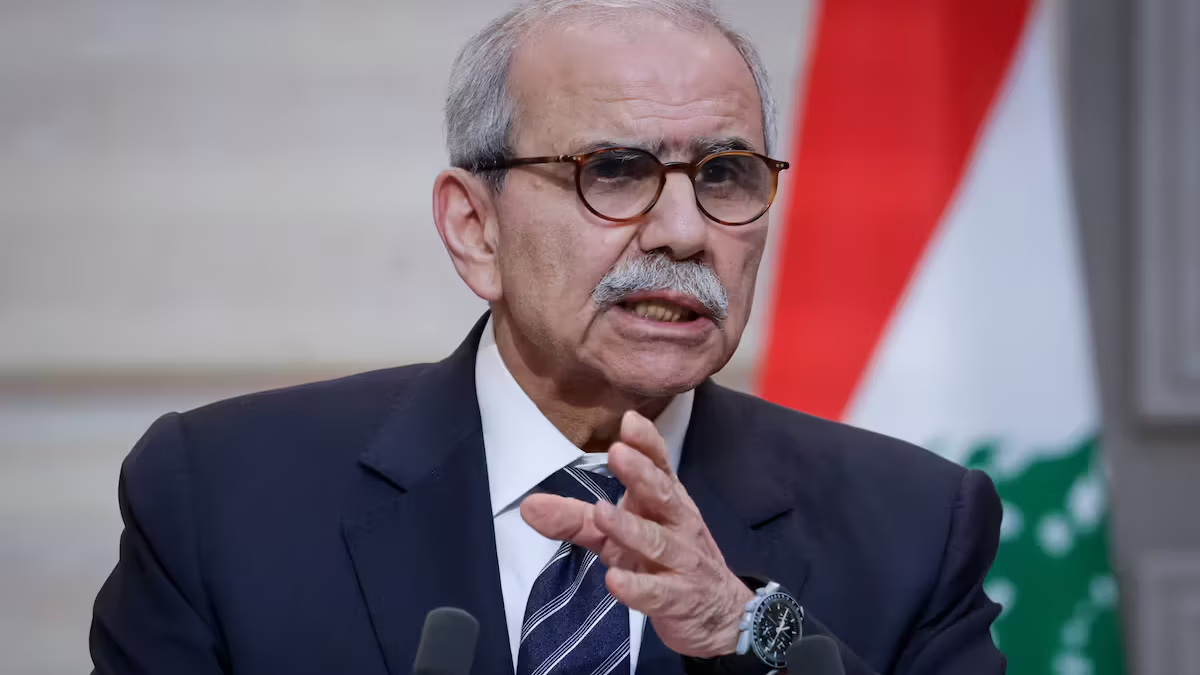
Lebanese Prime Minister Nawaf Salam considered it premature to envisage a high-level meeting between Lebanon and Israel, dampening hopes for a swift diplomatic breakthrough amid a highly tense regional context. This statement comes as some international officials, including Donald Trump, recently mentioned the possibility of such rapprochement.
In remarks relayed by the Lebanese National News Agency, Nawaf Salam emphasized that any prospect of dialogue must first be based on an effective strengthening of the ceasefire. According to him, this condition is an essential prerequisite before opening new discussions between Lebanese and Israeli representatives, notably within the framework of meetings in Washington.
On the ground, the situation remains fragile. Despite the announcement of a ceasefire negotiated under the aegis of the United States on April 16, hostilities persist in southern Lebanon, where clashes regularly oppose Israel to Hezbollah, a movement supported by Iran. This instability complicates any attempt at diplomatic revival.
The head of the Lebanese government also recalled that Beirut’s minimal demand remains the establishment of a clear timetable for an Israeli withdrawal. This requirement reflects the official Lebanese position in a conflict marked by decades of tensions and confrontations.
Since the outbreak of hostilities in early March, following Hezbollah’s fire in support of Iran, Lebanese authorities, under the leadership of Nawaf Salam and President Joseph Aoun, have engaged in unprecedented level contacts with Israel. These efforts, however, reflect deep internal divisions in Lebanon, notably between Hezbollah and its political opponents.
In this uncertain context, prospects for an official meeting between top leaders of the two countries still appear distant, despite calls for de-escalation and resumption of dialogue promoted by the international community.