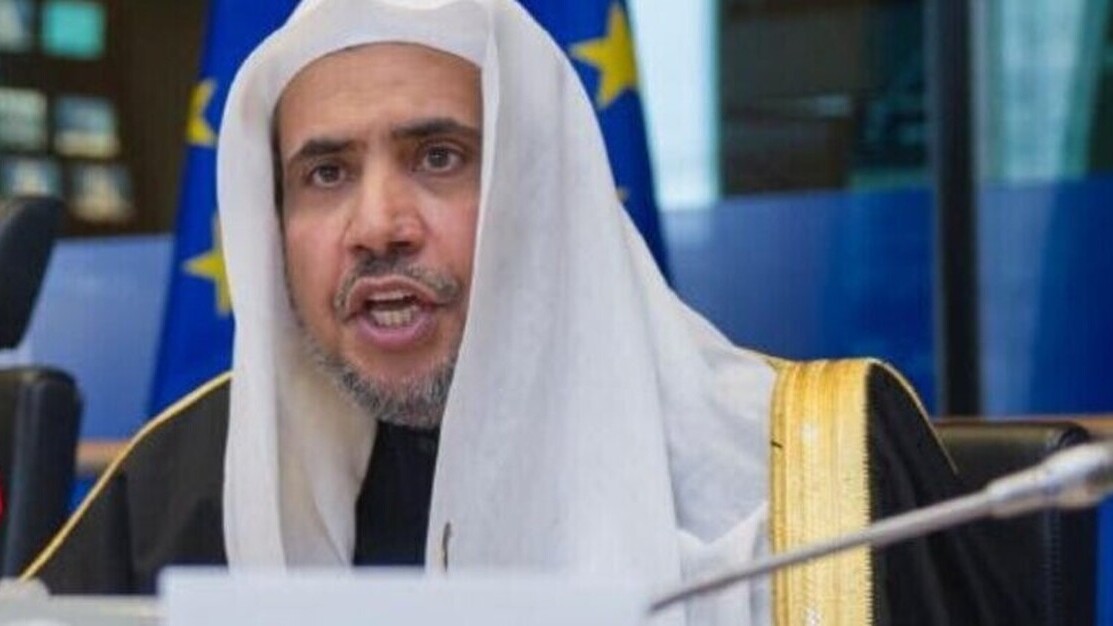
During a visit to Brussels, the Secretary-General of the Muslim World League expressed confidence in European institutions and fundamental texts to contain political excesses, while calling for respect of religious practices within the constitutional framework.
Sheikh Mohammad bin Abdulkarim Al-Issa traveled to Brussels on Friday for a series of meetings with political leaders, religious representatives, and civil society actors gathered around a high-level forum dedicated to dialogue and social cohesion. The Secretary-General of the Muslim World League, an organization based in Mecca and founded in 1962, made dialogue the central theme of his interventions, describing it as the “language of reason and wisdom.”
His visit takes place in a European political context marked by the rise of far-right parties. In Germany, the AfD topped regional elections in Saxony-Anhalt and Mecklenburg-Western Pomerania in September. In France, a presidential election is expected in 2027, while legislative elections are approaching in Italy, Poland, and Greece.
In response to these developments, the Saudi official sought to downplay concerns. “Regarding discussions about the emergence of a hard right in certain European countries, we are generally not worried. Each European country has a modern constitution that no one can override,” he said. He added that any deviation from constitutional values would prompt “society to express itself and restore order,” also citing the role of constitutional courts as institutional safeguards.
Al-Issa supported his point by referring to similar situations observed in other countries, where constitutional control mechanisms combined with an active civil society helped correct government excesses.
The issue of religious freedom also played a central role in his discussions. The topic is especially sensitive as the Italian government recently approved a decree banning face coverings in schools, except for medical or educational reasons. Council President Giorgia Meloni explicitly mentioned the burqa and niqab when announcing this measure. Sheikh Al-Issa called for “respect for the practices specific to each religion, provided they do not contradict the Constitution,” considering that European fundamental texts generally guarantee the fulfillment of religious rites.