

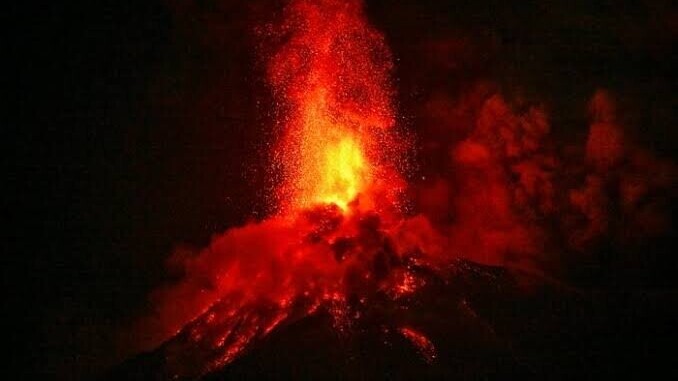
The eruption of the Fuego volcano in Guatemala ended on Wednesday, August 5, after fifty hours of intense activity. More than 1,700 evacuated residents were able to return to their villages, with no casualties or material damage reported.
Guatemala's National Institute of Volcanology announced Wednesday the end of the eruption of Fuego, Central America's most active volcano, which rises to 3,763 meters and is located 35 kilometers from the capital. "After 50 hours, the eruption is over," the institution stated in an official press release.
The eruption began on Monday, before intensifying overnight from Monday to Tuesday. Torrents of lava then cascaded down the volcano's slopes, while immense columns of gas and ash rose into the sky. Faced with this escalating activity, authorities issued the highest alert level for the most exposed areas and ordered the evacuation of more than 1,700 residents from surrounding villages.
On Wednesday, the institute confirmed a return to "normal levels" of activity, while maintaining warnings about residual volcanic flows and ash dispersion, which could disrupt air traffic. The head of the National Conred disaster management agency, Claudinne Ogaldes, deemed the return of residents "safe" given the "visible decrease" in activity. Several families had already anticipated these announcements by leaving their shelters even before the official press conference.
On the slopes of the volcano, in the municipality of San Juan Alotenango, 61-year-old farmer Bernabé Marroquin cultivates his land without showing any particular concern. "For us, it's become a habit for the volcano to become active and inactive," he told AFP. "We live with the volcano; we know when it's angry and when it's calm," he added, specifying that his house had never been affected by an eruption.
Not everyone shares this sentiment. Isabel Pérez, 69, a resident of the hamlet of El Porvenir, had to take refuge in a shelter and makes no secret of her fear. She is demanding that the authorities provide her with a safe place to resettle with her family, far from the threats posed by the volcano.
Fuego remains associated with one of the deadliest disasters in the country's recent history. On June 3, 2018, a violent eruption triggered a lava flow that razed an entire village, killing 215 people and leaving as many missing. More recently, in June 2025, some 800 people had already been evacuated during a previous phase of activity.








Community
Comments
Write a comment
Be the first to comment on this article.